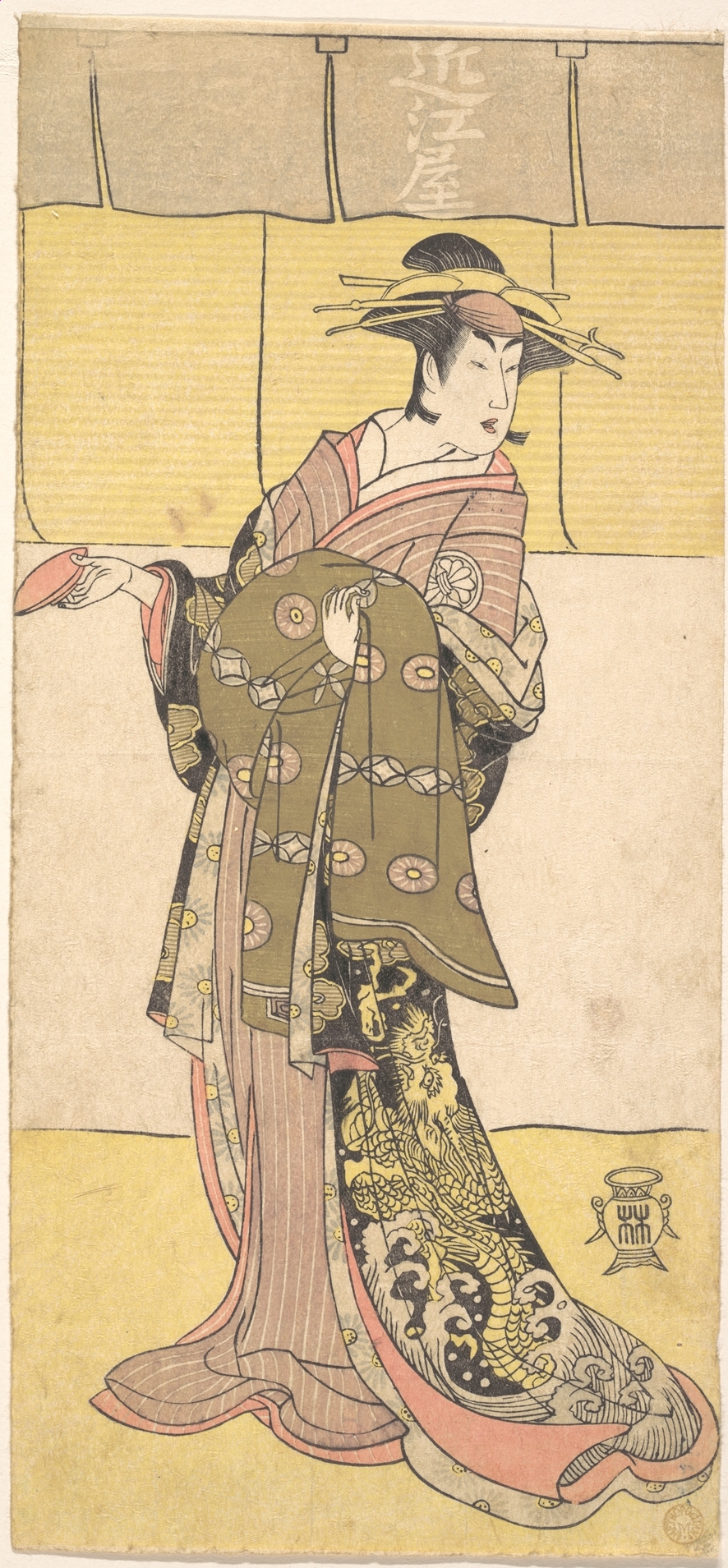
The Actor Segawa Kikunojō as a Courtesan of the Ōmiya Brothel: A Couture Analysis
Introduction: The Intersection of Kabuki and Fashion
In the annals of global fashion history, few artifacts bridge the realms of performance, identity, and textile artistry as seamlessly as the Japanese woodblock print (nishiki-e) titled The Actor Segawa Kikunojō as a Courtesan of the Ōmiya Brothel. Created in the late 18th or early 19th century, this standalone study captures a pivotal moment in Edo-period culture, where the boundaries between male and female, actor and character, and reality and spectacle dissolved into a singular, mesmerizing visual statement. At Katherine Fashion Lab, we dissect this print not merely as an artistic relic but as a couture narrative—a testament to the sophisticated interplay of silhouette, symbolism, and social commentary that defines haute couture even today.
The Silhouette: Layered Opulence and Theatrical Volume
The print’s central figure, the actor Segawa Kikunojō, embodies a courtesan of the Ōmiya brothel through a meticulously constructed ensemble that prioritizes volume and verticality. The kimono, rendered in rich ink and color on paper, features an exaggerated obi (sash) tied in a dramatic front knot—a hallmark of courtesan attire designed to showcase wealth and status. The obi’s width and intricate patterning, likely woven with gold and silver threads in reality, create a structural anchor that divides the silhouette into two distinct zones: the upper body, with its flowing, almost ethereal sleeves, and the lower body, where the kimono’s train trails into a cascade of fabric. This juxtaposition of rigid formality and fluid motion mirrors the dual nature of the courtesan’s role—both a commodity and a performer of desire.
From a couture perspective, the silhouette anticipates the architectural gowns of later centuries, such as those by Rei Kawakubo or Issey Miyake, who similarly deconstruct and reassemble traditional forms. The print’s emphasis on the sleeves (furisode), which hang dramatically past the wrists, transforms the body into a canvas for textile expression. The actor’s posture—slightly turned, with one hand gesturing toward the viewer—enhances the fabric’s dynamic flow, suggesting movement even within the static medium. This is not merely clothing; it is a statement of presence, a precursor to the runway’s demand for garments that command attention through scale and texture.
Color and Pattern: The Language of Symbolism
The palette of this woodblock print is a masterclass in strategic restraint. Dominated by deep indigos, muted greens, and accents of vermilion and gold, the colors serve dual purposes: aesthetic harmony and coded messaging. The indigo base of the kimono, a color associated with both the commoner class and the ukiyo (floating world) of pleasure districts, grounds the figure in a specific socioeconomic reality. Yet, the intricate patterns—likely including chrysanthemums, waves, or cranes—elevate the garment to a symbol of sophistication. Chrysanthemums, for instance, denote longevity and nobility, while waves suggest the transient nature of life and love, echoing the ephemeral beauty of the courtesan’s profession.
In couture analysis, such deliberate color and pattern choices parallel the work of Alexander McQueen, who used floral motifs to explore mortality, or Yohji Yamamoto, whose monochromatic palettes evoke both mourning and rebellion. The print’s use of gold highlights on the obi and hair ornaments underscores the courtesan’s economic value, transforming her into a living advertisement for the Ōmiya brothel’s prestige. This commodification of beauty through fashion is a recurring theme in haute couture, where garments often signify not just taste but also access to exclusive networks of power and desire.
Textile as Performance: The Role of Nishiki-e in Fashion History
As a nishiki-e (brocade picture), this print is itself a textile-like artifact, produced through multiple woodblocks to achieve a richness of texture and detail that mimics woven fabric. The medium’s name, derived from “brocade,” underscores the symbiotic relationship between printmaking and fashion in Edo Japan. Artists like Utamaro and Sharaku (the latter often associated with actor portraits) treated the kimono as a primary subject, using it to convey character, status, and narrative. In this standalone study, the absence of a background forces the viewer to focus entirely on the actor’s costume, transforming the garment into the sole protagonist.
This focus on textile as performance aligns with contemporary couture’s obsession with surface embellishment. The print’s intricate linework—each fold of the kimono rendered with precision—anticipates the hand-embroidery and beading that define haute couture. The obi’s knot, tied in a style known as taiko musubi (drum knot), is not just functional but ornamental, a precursor to the sculptural bows and drapes seen in Christian Lacroix or Vivienne Westwood. Here, fashion becomes a form of theater, where every stitch and fold is a deliberate act of storytelling.
Gender Fluidity and the Couture Body
Perhaps the most radical aspect of this print is its subject: a male actor (onnagata) performing femininity. Segawa Kikunojō’s portrayal of a courtesan challenges binary notions of gender, suggesting that fashion is a tool for constructing identity rather than expressing an innate self. The actor’s makeup—white oshiroi base, red lips, and meticulously painted eyebrows—and hairstyle, adorned with elaborate kanzashi (hairpins), complete the transformation. Yet, the print does not erase masculinity; instead, it celebrates the artifice, inviting the viewer to appreciate the skill required to blur these boundaries.
In the context of modern couture, this resonates with designers like Jean Paul Gaultier and Rick Owens, who have long used androgyny and drag as sources of inspiration. The actor’s costume is not a disguise but a performance of power—a reminder that fashion is always a negotiation between the wearer and the gaze. The courtesan’s role as an object of desire is subverted by the actor’s agency, much like a couture garment that both adorns and empowers its wearer.
Conclusion: The Enduring Legacy of Edo-Period Couture
The Actor Segawa Kikunojō as a Courtesan of the Ōmiya Brothel is more than a historical document; it is a blueprint for understanding how fashion operates as a system of signs. From the layered silhouette to the symbolic color palette, every element of this woodblock print speaks to the sophistication of Edo-period aesthetics and their relevance to contemporary couture. At Katherine Fashion Lab, we see in this image a precursor to the runway’s most daring experiments—garments that challenge identity, celebrate craftsmanship, and demand a second look. The actor’s gaze, both inviting and aloof, reminds us that fashion is always a performance, and the best couture leaves us questioning where the fabric ends and the self begins.