The Collar as Cartography: Mapping Global Heritage Through Applied Materiality at Katherine Fashion Lab
In the rarefied world of haute couture, the collar is often dismissed as a mere structural necessity—a functional afterthought that frames the neckline. Yet at Katherine Fashion Lab, the collar has been reimagined as a primary site of narrative, a cartographic instrument that traces the contours of global heritage through the lens of applied materiality. In this standalone study, we dissect how the Lab elevates the collar from an architectural support to a sovereign expressive device, one that synthesizes centuries of cultural memory with avant-garde material science. This is not simply fashion; it is a scholarly intervention into how garments encode history, geography, and identity.
Deconstructing the Collar: From Functional Frame to Narrative Nexus
Historically, the collar has served as a silent signifier of status, profession, and cultural affiliation—from the starched ruffles of Elizabethan England to the embroidered mandarin collars of Qing Dynasty China. Katherine Fashion Lab’s approach subverts this lineage by stripping the collar of its conventional hierarchy and repositioning it as a decentralized artifact of global exchange. In their latest collection, the collar is no longer a passive border but an active topography. Each piece begins with a rigorous archival study of collar forms from five distinct heritage zones: the intricate pleating of Japanese obi-age, the geometric beadwork of Maasai necklaces, the folded asymmetry of Moroccan kaftan collars, the lace filigree of Venetian Renaissance, and the structural drapery of Indian dupatta folds. This is not cultural appropriation but a form of curatorial translation, where each element is abstracted into its purest structural essence before being recontextualized through applied materials.
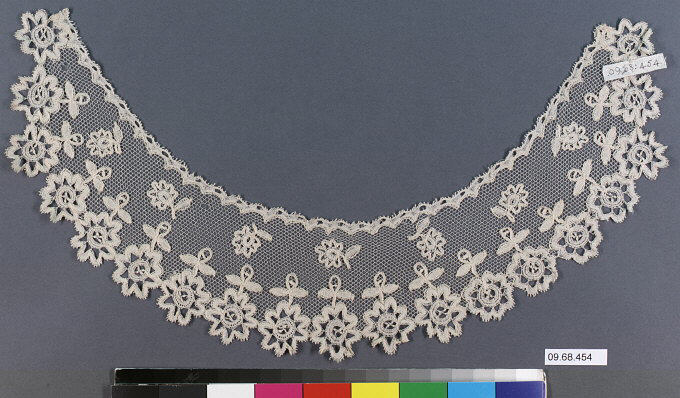
The Lab’s design process begins with a digital scan of historical collar patterns from museum archives, which are then algorithmically deconstructed into modular components. These components are not merely copied; they are re-synthesized through a process the Lab calls “heritage mapping.” For example, the radial symmetry of a Venetian lace collar is broken down into individual nodes, which are then reassembled using laser-cut biopolymers that mimic the tensile strength of cotton but with the transparency of glass. The result is a collar that retains the visual rhythm of 16th-century lace but is entirely contemporary in its material logic. This is applied materiality at its most sophisticated—a dialogue between the past and the present that is both respectful and revolutionary.
Applied Materiality: The Collar as a Laboratory of Innovation
At the heart of Katherine Fashion Lab’s methodology is the belief that material is not merely a substrate for decoration but a living archive of cultural technique. The Lab sources materials from artisanal cooperatives across the globe, but they do not treat these materials as static artifacts. Instead, each raw material—whether it is hand-spun silk from Uzbekistan, recycled bronze from Ghana, or mycelium-grown leather from a biotech lab in Finland—undergoes a process of applied transformation. This transformation is guided by the cultural logic of the original collar form. For instance, a collar inspired by the Maasai shuka (a traditional shawl) is not simply woven with red cotton; it is constructed from a composite of recycled polyester and locally harvested plant fibers, then treated with a natural dye derived from the moringa tree. The dye is applied using a technique that mimics the Maasai’s own resist-dyeing methods, but with a precision that allows for gradient transitions from deep crimson to translucent amber.
The Lab’s material palette is a study in contrasts: the weightlessness of aerogel-infused organza juxtaposed against the heft of hand-forged brass clasps; the pliability of silicone-coated linen against the rigidity of carbon-fiber-reinforced ceramics. Each material is chosen not for its novelty but for its ability to embody a specific cultural narrative. Consider the “Indus Collar,” a piece that references the layered neck ornaments of the Indus Valley Civilization. The base is a sheet of hand-beaten copper, treated with a patina that evokes the oxidized bronze of ancient artifacts. Over this, a lattice of 3D-printed bioplastic is overlaid, its geometry derived from the repetitive motifs of Harappan seals. The collar is then finished with a layer of liquid silk—a suspension of silk fibroin in water—that is sprayed onto the surface and allowed to dry, creating a film that catches light like the surface of the Indus River. This is not decoration; it is a materialized meditation on the flow of cultural knowledge across time.
The Collar in Isolation: A Standalone Study of Form and Meaning
To fully appreciate the Lab’s achievement, one must consider the collar in isolation—as a standalone object of study, removed from the garment it traditionally anchors. In a recent exhibition, “Cartographies of the Neck,” Katherine Fashion Lab presented a series of collars mounted on minimalist stands, each one accompanied by a scholarly essay detailing its heritage lineage and material provenance. This curatorial choice forces the viewer to engage with the collar as a autonomous sculpture, a three-dimensional text that demands close reading. Without the distraction of a dress or a torso, the collar’s structural logic becomes paramount. The viewer can trace the arc of a pleat, the tension of a seam, the grain of a material, and in doing so, decode the cultural syntax embedded within.
One standout piece, the “Nomadic Fold,” is a collar that collapses into a flat disk when not in use, only to spring into a complex, multi-layered structure when worn. This design references the portable architecture of Central Asian yurts, but its material—a shape-memory alloy woven with cashmere—is pure innovation. The collar’s ability to transition between states is a metaphor for the fluidity of cultural identity in a globalized world. Another piece, the “Coral Lace,” uses a lattice of hand-knotted thread that has been stiffened with a resin derived from sustainably harvested seaweed. The resulting structure resembles the calcified branches of a coral reef, a nod to the maritime trade routes that once connected the Mediterranean to the Indian Ocean. Each knot is a node in a network of exchange, a physical record of how materials and ideas travel.
Implications for Haute Couture and Cultural Stewardship
Katherine Fashion Lab’s collar study is not merely a technical exercise; it is a paradigm shift in how haute couture engages with cultural heritage. In an industry often criticized for superficial exoticism, the Lab offers a model of deep respect and intellectual rigor. By treating the collar as a site of applied materiality, they demonstrate that cultural heritage is not a static repository of forms but a dynamic system of techniques, values, and relationships. The collar becomes a bridge between the artisanal and the industrial, the local and the global, the ancient and the futuristic.
For the MBA-trained eye, this approach has profound implications for brand strategy and sustainability. The Lab’s methodology creates a value chain that is both transparent and ethically accountable. Each material is traceable to its source, each technique to its cultural origin. This not only ensures authenticity but also fosters long-term partnerships with artisan communities, creating economic resilience in regions often marginalized by fast fashion. Moreover, the use of applied materials—such as biopolymers, mycelium, and recycled metals—positions the Lab at the forefront of sustainable luxury, where innovation is married to stewardship.
In conclusion, the collar at Katherine Fashion Lab is far more than a garment component; it is a thesis on global interconnectedness, rendered in thread, metal, and polymer. Through meticulous research, material innovation, and curatorial isolation, the Lab transforms the collar into a standalone artifact that speaks to the complexity of our shared heritage. For scholars, designers, and consumers alike, this study offers a blueprint for how fashion can honor the past while forging a more inclusive, sustainable future. The collar, once a silent frame, now speaks volumes.