Heritage Analysis: The Tutankhamun Faience Cartouche Necklace
Introduction: A Confluence of Amulets and Authority
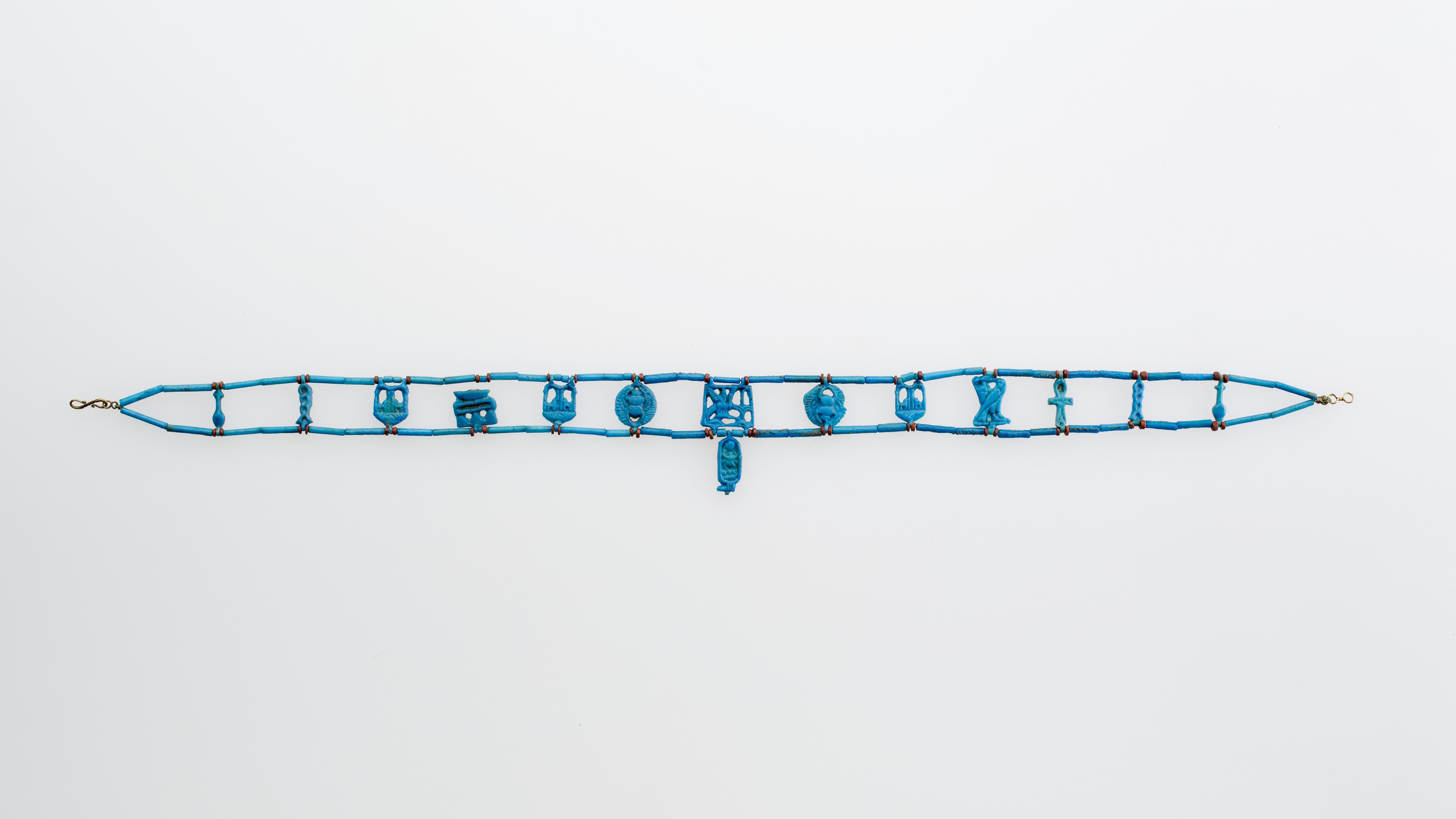
The subject of this strategic heritage analysis is a necklace restrung with a curated selection of amulets and a central faience cartouche bead bearing the throne name of Tutankhamun. This artifact, though reconstructed in a modern context, draws its symbolic and material power from the deep well of Ancient Egyptian civilization. For Katherine Fashion Lab, this piece represents more than a historical curiosity; it is a blueprint for the 2026 high-end luxury market, where narrative depth, spiritual resonance, and artisanal authenticity are paramount. This analysis will dissect the symbolic power, historical adornment, spiritual meaning, and strategic implications for a luxury brand seeking to leverage heritage as a competitive advantage.
Symbolic Power: The Cartouche as a Seal of Eternity
The cartouche, an elongated oval enclosing a royal name, was one of the most potent symbols in Pharaonic Egypt. It functioned as a protective ring, a magical boundary that shielded the king’s name—and thus his essence—from erasure and malevolent forces. In the case of Tutankhamun, the cartouche bead inscribed with his nomen, Tutankhamun Heqaiunushema ("Living Image of Amun, Ruler of Upper Heliopolis"), or his prenomen, Nebkheperure, carries the weight of a dynasty restored. The amulets accompanying the cartouche—likely including the Eye of Horus (wedjat), the ankh, the djed pillar, and the scarab—amplify this protective power. Each amulet was not merely decorative but a talismanic device, believed to confer specific benefits: the wedjat for healing and protection, the ankh for life, the djed for stability, and the scarab for rebirth.
For a luxury brand, the symbolic power of this necklace lies in its ability to communicate exclusivity, protection, and eternal value. The cartouche, as a personalized royal insignia, offers a template for bespoke luxury—a "name" that cannot be replicated. The amulets, each with a distinct function, suggest a layered narrative that appeals to the modern consumer’s desire for meaning and intention in their purchases.
Historical Adornment: Faience as the Medium of the Gods
Faience, a non-clay ceramic material made from crushed quartz or sand, was the medium of choice for amulets, scarabs, and inlay work in Ancient Egypt. Its brilliant blue-green color, achieved through copper oxide glazing, was associated with the Nile, the sky, and the primordial waters of creation. The material was not merely aesthetic; it was considered a substance of divine light, a "tjehenet" or "shining thing" that could capture the sun’s rays. The faience cartouche bead of Tutankhamun, likely produced in a royal workshop at Amarna or Thebes, exemplifies the pinnacle of this craft. The bead’s surface, though weathered, retains a luminous quality that speaks to its intended function as a conduit for spiritual energy.
Historically, such a necklace would have been worn by a member of the elite or the priesthood, serving as both a status marker and a personal amuletic arsenal. The restrung version, however, introduces a critical shift: it transforms a funerary or ritual object into a wearable piece of adornment. This recontextualization is significant for Katherine Fashion Lab, as it mirrors the 2026 luxury trend of reclaiming and reinterpreting heritage for contemporary wear. The challenge lies in respecting the material’s sacred origins while making it accessible to a modern clientele.
Spiritual Meaning: The Amuletic Network
The spiritual architecture of this necklace is its most profound asset. In Ancient Egyptian belief, amulets were not passive ornaments; they were active agents in the wearer’s journey through life and into the afterlife. The arrangement of amulets on a single string created a "network of protection," where each piece reinforced the others. The cartouche, as the central bead, anchored this network with the king’s authority—a reminder that the wearer was under the aegis of the divine ruler. The accompanying amulets, such as the tyet (the Knot of Isis) or the heart scarab, were chosen for their specific roles in safeguarding the soul during the Weighing of the Heart ceremony.
For the 2026 luxury consumer, this spiritual dimension offers a powerful counter-narrative to mass-produced fashion. The necklace becomes an object of intention, a tool for personal transformation. Katherine Fashion Lab can position it not as mere jewelry but as a "wearable talisman" for the modern era—a piece that offers protection, clarity, and a connection to ancient wisdom. This aligns with the growing demand for mindful luxury, where consumers seek products that support their mental, emotional, and spiritual well-being.
Strategic Implications for 2026 High-End Luxury
To translate this heritage analysis into a viable 2026 luxury strategy, Katherine Fashion Lab must consider three core pillars: narrative integrity, material authenticity, and experiential exclusivity.
Narrative Integrity: The story of Tutankhamun’s cartouche and its amulets must be told with scholarly rigor. Collaborations with Egyptologists, museum curators, and conservators will lend credibility. The brand should produce a "heritage dossier" for each piece, detailing the symbolic meaning of every amulet and the historical context of the faience. This transforms the necklace from a commodity into an educational artifact, appealing to the intellectually curious elite.
Material Authenticity: Faience, as a medium, is notoriously difficult to replicate. Katherine Fashion Lab should invest in reviving ancient techniques, working with master artisans who understand the chemistry and spiritual significance of the material. Limited-edition runs, using hand-ground quartz and copper glazes fired at low temperatures, will ensure that each bead retains the "shining" quality of the original. This commitment to craft justifies a premium price point and differentiates the brand from mass-market imitations.
Experiential Exclusivity: The purchase of this necklace should be an event. Consider a private presentation in a space designed to evoke an Egyptian tomb or temple, complete with scent, sound, and lighting. Clients could choose their amulets in a ritualized "selection ceremony," guided by a heritage curator. This experience, combined with the necklace’s spiritual meaning, creates an emotional bond that transcends the transaction. The 2026 luxury consumer is buying not just a product but a moment, a story, and a piece of eternity.
Conclusion: The Cartouche as a Strategic Compass
The necklace restrung with amulets and a faience cartouche bead of Tutankhamun is a microcosm of what Katherine Fashion Lab can achieve in the 2026 market. It is a testament to the enduring power of symbolic adornment, the sacred nature of materials, and the human need for protection and meaning. By honoring the artifact’s origins while reimagining its purpose, the brand can create a luxury offering that is both timeless and timely. The cartouche, once a seal of a king’s eternity, now becomes a seal of the brand’s commitment to heritage, craftsmanship, and spiritual depth. In a world of disposable trends, this necklace stands as a permanent reminder that true luxury is eternal.