The Artisanal Alchemy of Crochet: A Couture Analysis by Katherine Fashion Lab
Introduction: The Renaissance of Handcraft in High Fashion
In an era dominated by rapid digital production and synthetic textiles, the resurgence of crochet within the couture sphere represents a profound cultural and aesthetic statement. Katherine Fashion Lab’s standalone study on crochet work—rooted in a global heritage of handcraft—illuminates how this seemingly humble technique transcends its domestic origins to become a pillar of architectural sophistication and textile innovation. This analysis deconstructs the technical mastery, historical lineage, and strategic positioning of crochet as a luxury material, arguing that its intrinsic value lies not in novelty but in the deliberate celebration of human touch and time as the ultimate luxury commodities.
Historical Context: From Global Vernacular to Couture Vocabulary
Crochet’s journey from folk tradition to high fashion runway is a narrative of cultural permeability and artistic elevation. Originating as a practical craft in regions from the Middle East to South America, crochet was historically a medium for communal storytelling, economic survival, and domestic artistry. The global heritage of crochet—spanning Irish lace, Tunisian crochet, and South American filet techniques—provides a rich lexicon of stitches, patterns, and structural possibilities. Katherine Fashion Lab’s study foregrounds this diversity, recognizing that each loop and chain carries the weight of generations of anonymous artisans. In the couture context, this heritage is not merely decorative but foundational: it imbues each garment with a narrative of resilience and craftsmanship that machine-made textiles cannot replicate.
The transition of crochet into haute couture, particularly during the 1960s and 1970s with designers like Ossie Clark and later, the avant-garde interventions of Yohji Yamamoto and Rei Kawakubo, reframed crochet as a tool for deconstructing garment architecture. However, Katherine Fashion Lab’s approach diverges from these precedents by treating crochet not as a nostalgic nod to bohemia but as a rigorous, structural material capable of producing sculptural forms that challenge conventional draping and tailoring. This repositioning is critical for understanding the material’s current relevance in a market saturated with digital prints and mass-produced embellishments.
Technical Mastery: The Architecture of Loops and Tension
At the heart of crochet’s couture potential is its unique structural grammar. Unlike woven fabrics, which rely on the interlacing of perpendicular threads, crochet constructs fabric through a continuous series of interlocking loops. This fundamental difference grants the material extraordinary malleability and tensile strength. Katherine Fashion Lab’s analysis emphasizes that the tension of the yarn, the gauge of the hook, and the pattern of stitches become the primary determinants of the garment’s form, weight, and movement. In the hands of a master artisan, a single-ply cotton thread can morph into a rigid bodice or a diaphanous sleeve, depending on the manipulation of loop density and stitch orientation.
The study further deconstructs the three-dimensional potential of crochet. Unlike flat textiles, crochet can be worked in the round, creating seamless, sculptural volumes that eliminate the need for darts or seams. This property is particularly valuable in couture, where the elimination of unnecessary construction lines enhances the fluidity and organic silhouette of a garment. For instance, a crochet gown can be engineered to follow the body’s contours without the rigidity of boning, offering a paradoxical combination of structure and softness. The material’s inherent elasticity allows for dynamic movement, while its openwork structure introduces a play of light and shadow that is impossible to achieve with solid textiles.
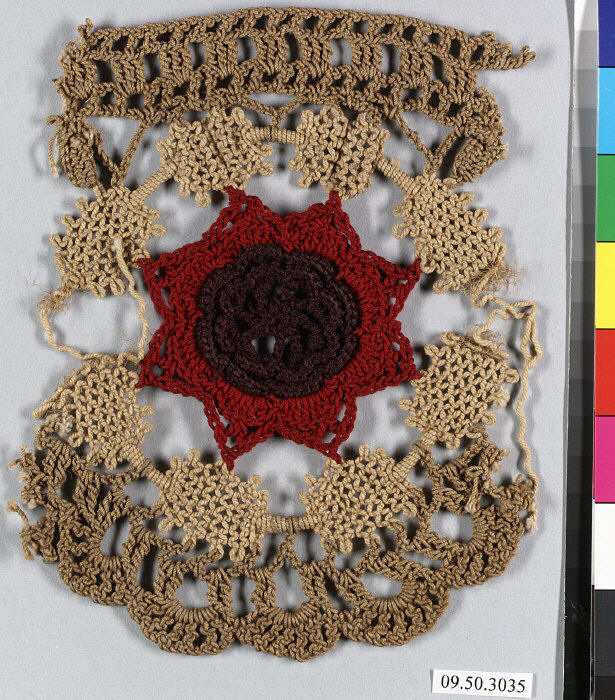
Moreover, the integration of mixed stitches—such as combining single crochet for density with double crochet and picot stitches for texture—enables the creation of complex, patterned surfaces that mimic the intricacy of embroidery or lace. Katherine Fashion Lab’s research highlights how these techniques can be scaled to produce everything from micro-scale, delicate trims to macro-scale, graphic motifs that define the garment’s overall aesthetic. The result is a textile that is simultaneously a fabric and a pattern, blurring the boundary between material and ornament.
Materiality and Sustainability: The Ethical Imperative of Handwork
In the contemporary luxury market, the provenance of materials and the ethics of production are no longer secondary considerations but central to brand identity. Crochet, by its very nature, is a slow-fashion technique. A single couture crochet dress can require hundreds of hours of labor, a fact that Katherine Fashion Lab positions as a counter-narrative to the fashion industry’s chronic overproduction. The study argues that the time-intensiveness of crochet transforms each garment into a finite, irreplaceable object—a stark contrast to the disposability of fast fashion. This temporal investment resonates with a clientele seeking authenticity and meaning in their acquisitions.
Furthermore, the material diversity of crochet—ranging from organic cotton and linen to silk, wool, and even recycled fibers—aligns with sustainability goals without compromising luxury. The study notes that crochet’s openwork structure inherently reduces fabric weight and material usage, making it a more resource-efficient choice for voluminous silhouettes. When executed with natural, biodegradable yarns, a crochet garment offers a lifecycle that is both aesthetically and ecologically responsible. Katherine Fashion Lab’s strategic positioning of crochet as a sustainable luxury material challenges the perception that high fashion must be wasteful, proposing instead that handcraft is the ultimate form of design responsibility.
Global Heritage as Design Currency: Cultural Sensitivity and Innovation
The global roots of crochet present both an opportunity and a responsibility for the contemporary designer. Katherine Fashion Lab’s standalone study emphasizes that cultural appropriation is a risk only when heritage is decontextualized or commodified without acknowledgment. Instead, the lab advocates for a model of cultural exchange that honors the origins of the craft while allowing for creative evolution. For example, the intricate, geometric patterns of Tunisian crochet—a technique that combines elements of knitting and crochet—can be reinterpreted in modern silhouettes without erasing its North African and Mediterranean lineage. Similarly, the open, airy stitches of Irish crochet can inform a summer couture collection while crediting the 19th-century Irish women who developed the technique as a means of economic survival.
The study also explores how contemporary technology can augment, rather than replace, traditional handwork. Laser-cut templates and digital pattern drafting can assist in the design phase, but the actual crochet execution remains manual, ensuring that the human element—the slight irregularities in tension, the subtle variations in stitch—remains intact. This hybrid approach respects the craft’s heritage while enabling the precision required for couture-level fit and finish. The result is a collection that feels both timeless and forward-looking, rooted in global traditions but speaking to a global audience.
Conclusion: Crochet as the Future of Couture Craftsmanship
Katherine Fashion Lab’s analysis concludes that crochet is not a nostalgic relic but a vital, evolving medium for couture expression. Its ability to combine structural rigor with ethereal beauty, its alignment with sustainability, and its deep connection to global heritage make it uniquely suited to the demands of the modern luxury consumer. In a market where individuality and authenticity are paramount, crochet offers a tangible link to the hands that made it—a reminder that true luxury is not about excess but about the deliberate, loving investment of time and skill. As the fashion world continues to grapple with its environmental and ethical footprint, crochet stands as a beacon of what is possible when heritage, materiality, and design converge. The loop, it turns out, is not a closed circle but an open invitation to reimagine the very fabric of fashion.