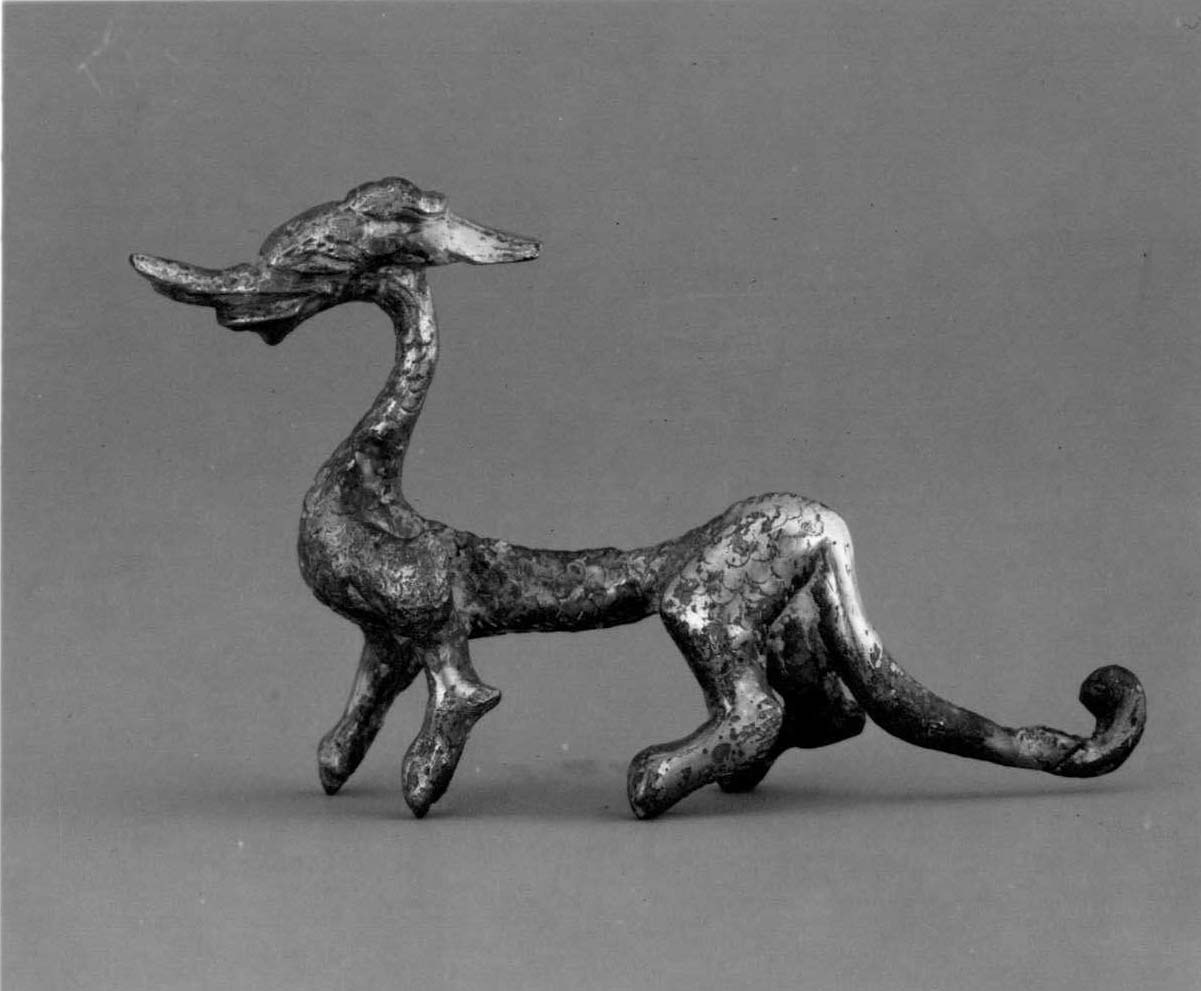
Heritage Analysis: The Dragon in Gilt Bronze
Symbolic Power and Imperial Authority
The dragon, or long, in Chinese culture is not a creature of malevolence as in Western mythology, but a paramount symbol of auspicious power, imperial authority, and cosmic harmony. When rendered in gilt bronze, a medium historically reserved for ritual vessels and elite adornment, the dragon transcends mere decoration to become a talisman of supreme legitimacy. In imperial China, the five-clawed dragon was the exclusive emblem of the Son of Heaven, representing his mandate to rule over the terrestrial realm. Gilt bronze, achieved through the labor-intensive process of mercury gilding, imbued the dragon with a luminous, eternal quality—a visual metaphor for the emperor’s divine radiance and the unbroken lineage of dynastic power. For Katherine Fashion Lab, this symbolism offers a potent lexicon for 2026 high-end luxury: the dragon can be strategically deployed not as a generic motif, but as a signifier of unassailable authority, visionary leadership, and transcendent value. In a luxury market increasingly defined by exclusivity and heritage, the gilt bronze dragon communicates a narrative of power that is both ancient and aspirational.
Historical Adornment and Craftsmanship
The historical use of gilt bronze for dragon adornment is deeply rooted in Chinese ritual and courtly life. During the Han dynasty (206 BCE–220 CE), gilt bronze was used for incense burners and belt hooks shaped as dragons, signifying the wearer’s connection to the heavens. By the Tang (618–907) and Ming (1368–1644) dynasties, the craft reached its zenith: dragons coiled around ceremonial swords, adorned imperial crowns, and embellished the guan (official headwear) of high-ranking officials. The lost-wax casting technique allowed for intricate scales, flowing manes, and dynamic postures, while the gilding process—often involving multiple layers of gold-mercury amalgam—created a finish that resisted tarnish and symbolized immortality. For Katherine Fashion Lab, the historical context of such adornment provides a blueprint for exclusive, handcrafted luxury. The 2026 strategy should emphasize artisanal provenance and limited production, mirroring the ancient reverence for master craftsmen. Each piece bearing the dragon motif must be positioned as a collectible artifact, not a mass-produced accessory. This aligns with the growing consumer demand for tangible heritage and investment-grade fashion.
Spiritual Meaning and Cosmic Resonance
Beyond political power, the dragon in Chinese cosmology embodies spiritual and elemental forces. It is one of the four celestial animals, associated with the east, spring, and the element of wood. The dragon controls rain, rivers, and seas, making it a symbol of life-giving vitality and transformation. In Daoist and Buddhist traditions, the dragon is a guardian of sacred texts and a vehicle for enlightened beings. Gilt bronze, with its reflective, sun-like surface, amplifies this spiritual dimension: it captures light and suggests a bridge between the earthly and the divine. For Katherine Fashion Lab, the dragon’s spiritual meaning offers a differentiating narrative in the luxury market, where consumers increasingly seek meaningful symbolism and emotional resonance. The 2026 strategy should frame the dragon not merely as a status symbol, but as a personal talisman for inner strength, renewal, and protection. Marketing campaigns can evoke themes of ancestral wisdom, cosmic balance, and transformative energy, appealing to a clientele that values holistic well-being alongside material excellence.
2026 High-End Luxury Strategy: Strategic Recommendations
To leverage the dragon in gilt bronze for a 2026 luxury strategy, Katherine Fashion Lab must adopt a multi-dimensional approach that respects heritage while innovating for contemporary desires. First, material integrity is paramount. Gilt bronze should be positioned as a signature medium, with transparent storytelling about its sourcing and craftsmanship. Collaborate with master metalworkers from heritage ateliers in Suzhou or Beijing to produce limited-edition collections, each piece numbered and authenticated. Second, symbolic layering must be intentional. The dragon motif should be integrated into statement jewelry, belt buckles, and hardware for handbags, but always with a clear design rationale—e.g., a coiled dragon clasp representing eternal protection, or a dragon-scale pattern evoking resilience. Third, narrative exclusivity should drive marketing. Develop a heritage film series or curatorial booklet that traces the dragon’s journey from imperial ritual to modern luxury, emphasizing the spiritual and cultural weight of the gilt bronze technique. Fourth, experiential retail can amplify the value: invite clients to private viewings of historical dragon artifacts, followed by bespoke consultations for custom pieces. Finally, position the dragon collection as investment-worthy heirlooms, with a certificate of cultural provenance and a limited repurchase guarantee, appealing to ultra-high-net-worth individuals who view luxury as a form of cultural stewardship. By executing these strategies, Katherine Fashion Lab can transform the dragon from a decorative motif into a strategic asset that commands premium pricing, deepens brand equity, and sets a new standard for heritage-driven luxury in 2026.