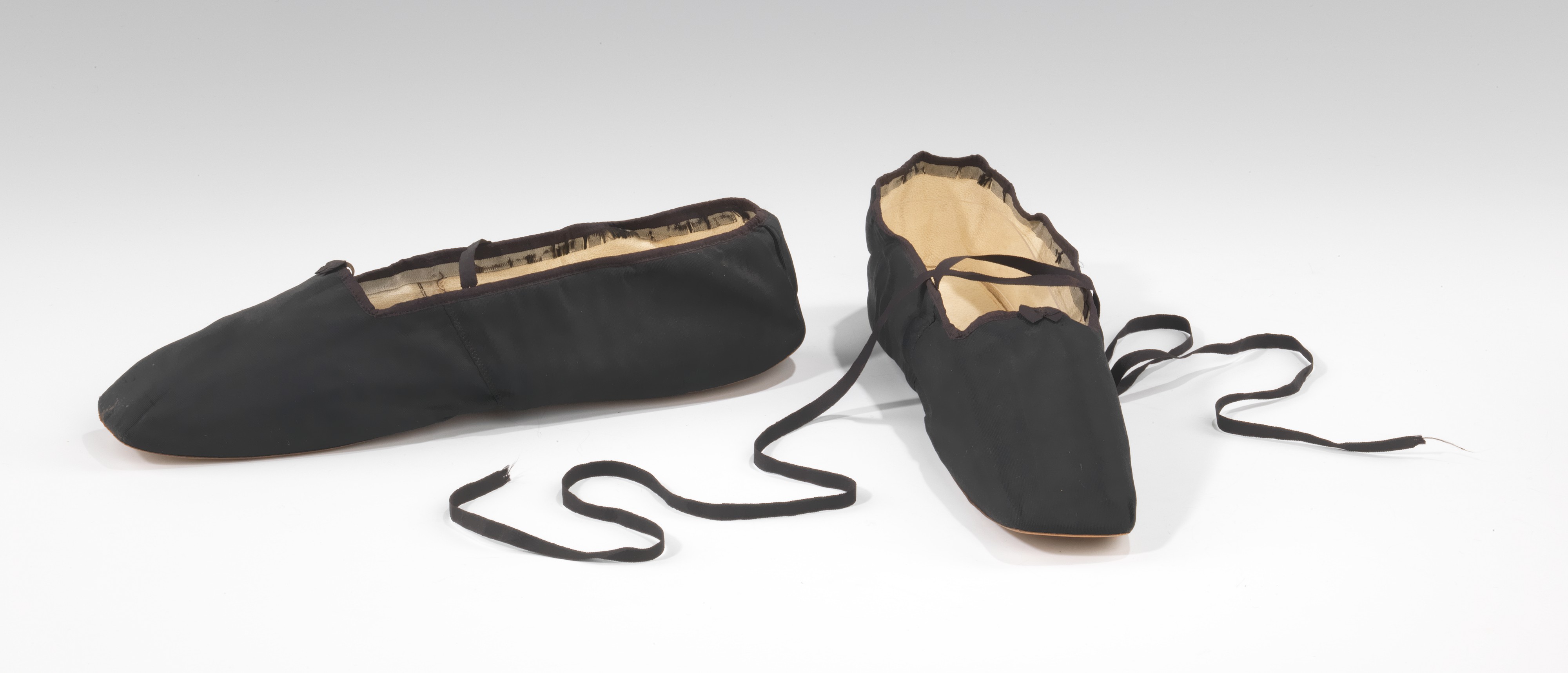
The Poetics of Prestige: Deconstructing the French Silk Evening Slipper
In the rarefied echelons of haute couture, few artifacts possess the quiet authority of the French silk evening slipper. At Katherine Fashion Lab, we approach such objects not merely as footwear, but as distillations of cultural capital, technical mastery, and sartorial philosophy. This standalone study dissects the evening slipper’s anatomy, provenance, and symbolic resonance, revealing why this seemingly modest accessory commands the reverence of connoisseurs and curators alike.
Historical Provenance: The French Atelier’s Legacy
The evening slipper, or mule de soir, emerged from the crucible of 18th-century French court culture, where Versailles’ rigid etiquette demanded a footwear vocabulary of both opulence and discretion. Unlike the robust riding boot or the utilitarian clog, the slipper was designed for interior spaces—salons, boudoirs, and ballrooms—where the whisper of silk against parquet floors signified status as much as comfort. French ateliers, particularly those in Lyon and Paris, perfected the craft, leveraging the nation’s monopoly on grande luxe silk weaving. By the mid-19th century, the evening slipper had transcended mere footwear to become a canvas for artisanal virtuosity, with embroiderers, dyers, and last-makers collaborating in a choreography of precision that remains unmatched.
This historical lineage endows the slipper with a narrative weight that mass-produced alternatives cannot replicate. Each pair carries the implicit memory of hands—those of the weaver who tensioned the silk, the cobbler who shaped the last, the embroiderer who threaded gold or silver filigree. In a contemporary context, to own such a slipper is to participate in a lineage of taste that predates industrial fashion, aligning the wearer with a tradition of discerning patronage.
Materiality and Mastery: The Silk Imperative
The choice of silk is not incidental but foundational. French silk, particularly from the renowned Soieries de Lyon, offers a drape, luster, and tactile complexity that synthetics or lesser weaves cannot approximate. For the evening slipper, the silk is often a duchesse satin or a moire antique, each with distinct optical properties. Duchesse satin, with its high thread count and glossy finish, catches ambient light in a way that animates the foot’s movement, creating a subtle shimmer that reads as both refined and seductive. Moire, with its watermarked pattern, introduces a depth that shifts with perspective, rewarding close inspection.
Beyond aesthetics, silk’s structural properties are critical. The fiber’s natural resilience allows the slipper to maintain its shape without the rigidity of leather, while its breathability prevents moisture accumulation during extended wear—a practical consideration for the long evenings of galas and receptions. The lining, often a silk charmeuse or a fine kid leather, ensures a frictionless glide against the foot, reducing the risk of blisters and enhancing the sensation of weightlessness. This marriage of form and function is the hallmark of French atelier philosophy: no detail is too small to be optimized.
Design Lexicon: Silhouette, Embellishment, and Restraint
The French evening slipper’s design vocabulary is one of calculated restraint. Unlike the baroque excesses of some Italian or American evening shoes, the French variant privileges line over ornament. The silhouette is typically elongated and tapered, with a low vamp that exposes the instep, creating a visual elongation of the leg. The heel, if present, is rarely more than two inches—a Louis heel or a stiletto—chosen for its ability to arch the foot without compromising stability. The toe is most often rounded or softly pointed, avoiding the aggressive angularity of fashion-forward shapes in favor of a timeless profile.
Embellishment, when deployed, is executed with surgical precision. A single crystal buckle, a hand-painted floral motif, or a metallic thread embroidery at the vamp may constitute the entirety of decoration. This is not a failure of imagination but a deliberate strategy: the slipper is designed to complement, not compete with, the gown. The wearer’s confidence is meant to emanate from the overall ensemble, with the slipper serving as a quiet anchor rather than a statement piece. In this, the French evening slipper embodies the dictum that true luxury is invisible—it enhances without announcing itself.
Cultural Capital and the Modern Wardrobe
In the context of contemporary fashion, the French silk evening slipper occupies a paradoxical position. On one hand, it is an object of extreme specialization, often custom-ordered and requiring months of lead time. On the other, it represents a democratization of access to a heritage craft, as ateliers like Maison Goyard, Roger Vivier, and smaller independent maisons continue to produce limited runs for a global clientele. For the modern collector, the slipper is both a portfolio asset—rare editions appreciate in value—and a tool of social signaling, communicating membership in a tribe that values quality over quantity, history over hype.
The slipper’s resurgence in recent years, driven by the red-carpet appearances of celebrities and the editorial lens of fashion magazines, has also sparked a dialog between tradition and innovation. Contemporary designers are experimenting with sustainable silk sourcing, vegan alternatives that mimic silk’s properties, and digital embroidery techniques that allow for unprecedented complexity. Yet, the purist will argue that nothing substitutes for the hand of an artisan who has spent decades mastering the material. This tension is productive, forcing the industry to question what constitutes authenticity in a world of rapid reproduction.
Conclusion: The Slipper as Artifact and Aspiration
The French silk evening slipper, as analyzed through the lens of Katherine Fashion Lab, is far more than a functional accessory. It is a repository of cultural memory, a testament to material science, and a barometer of aesthetic judgment. Its value lies not in its price tag, but in the synthesis of history, craftsmanship, and design intelligence it represents. For the discerning individual, to slip one’s foot into such a slipper is to step into a story that began centuries ago in the silk workshops of Lyon, and that continues, with each careful step, to write itself anew.
In a fashion landscape increasingly dominated by disposability and digital simulacra, the French silk evening slipper stands as a counter-narrative—an argument for slowness, for touch, for the enduring power of the handmade. It is, in the final analysis, a study in how the smallest object can carry the greatest weight.