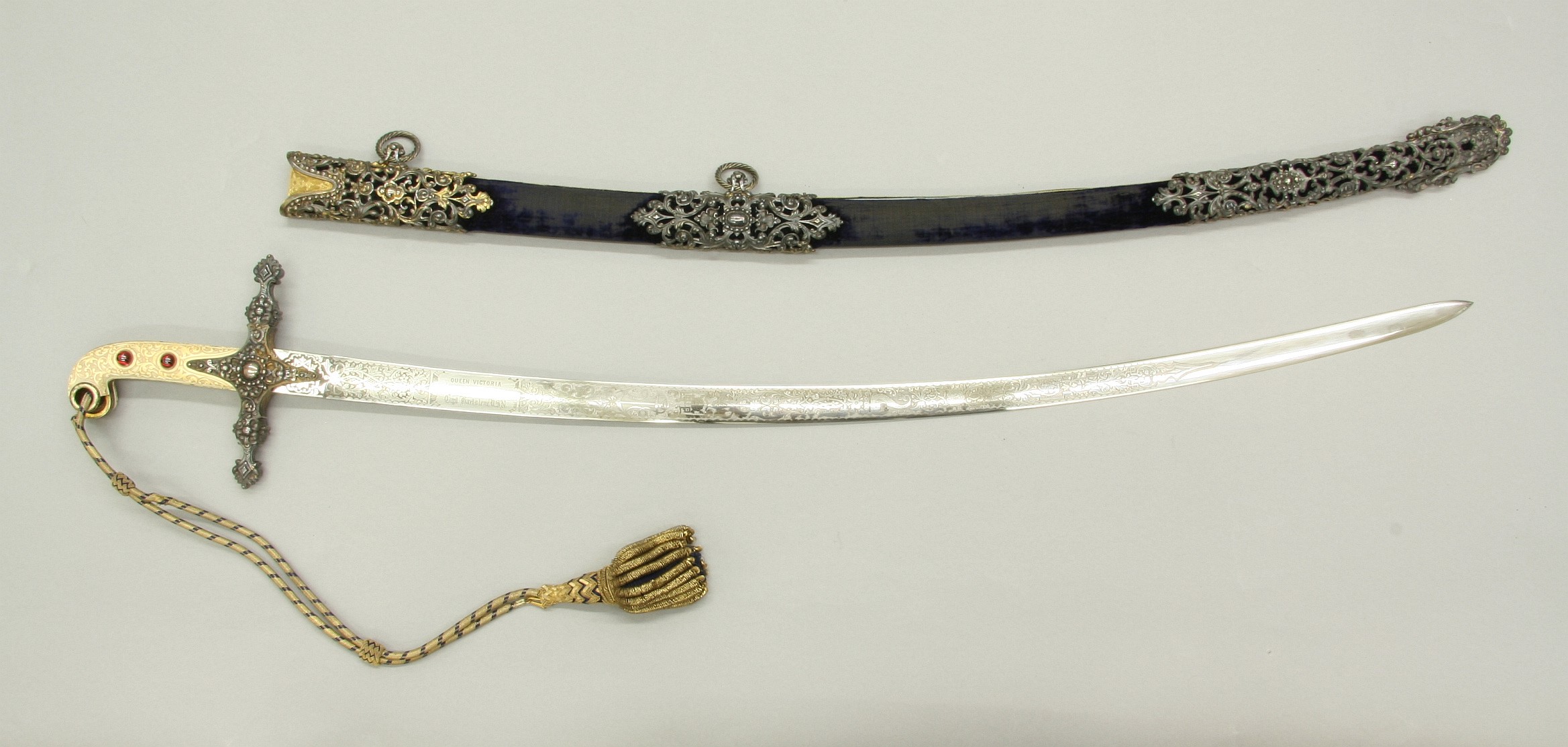
Heritage Analysis: The Hartstene Saber as a Blueprint for 2026 Luxury Strategy
This analysis examines the Saber Presented to Captain H. J. Hartstene by Queen Victoria in 1856 as a case study in symbolic power, historical adornment, and spiritual meaning. The artifact—crafted in London from silver, steel, velvet, ivory, and gold—represents a convergence of imperial authority, diplomatic ritual, and artisanal mastery. For Katherine Fashion Lab, this object offers a strategic framework for redefining high-end luxury in 2026: one that prioritizes narrative depth, material integrity, and transcendent symbolism over transient trends.
Symbolic Power: The Saber as an Instrument of Imperial Diplomacy
Context of the Gift
Queen Victoria’s presentation of this saber to Captain Hartstene in 1856 was not a casual gesture. It occurred within the fraught geopolitical landscape following the Crimean War (1853–1856). Hartstene, an American naval officer, had commanded the Arctic and Release in search of the lost British explorer Sir John Franklin. By gifting a ceremonial saber, Victoria simultaneously acknowledged Hartstene’s humanitarian service and reinforced British imperial prestige. The saber thus functioned as a portable monument—a physical assertion of the Crown’s global reach and its capacity to bestow honor upon foreign allies.
Design as Power Narrative
The saber’s construction from silver, steel, gold, ivory, and velvet is no mere aesthetic choice. Each material carries a specific symbolic weight: silver signifies purity and diplomatic sincerity; steel represents martial strength; gold denotes sovereign wealth; ivory evokes exotic luxury and colonial resource extraction; and velvet signals ceremonial refinement. Together, these elements create a hierarchy of meaning. The blade—the weapon’s core—is steel, but its hilt is sheathed in precious metals and organic materials, softening the instrument of violence into an object of statecraft. This duality is critical for luxury strategy: power must be both visible and refined.
Strategic Implication for 2026
Katherine Fashion Lab can leverage this model by designing collections that embed narratives of authority and alliance within their physical forms. For example, a 2026 capsule line could incorporate contrasting materials—hardened metals paired with soft silks, or fossilized ivory alternatives with polished steel—to tell stories of tension and resolution. The saber teaches that luxury objects are not merely commodities; they are diplomatic agents that confer status and forge relationships. A high-end strategy must therefore invest in provenance storytelling, positioning each piece as a “gift” that carries institutional or personal significance.
Historical Adornment: The Saber as Wearable Sculpture
Craftsmanship and the Body
While the saber is a weapon, its design prioritizes adornment over utility. The hilt is ergonomically shaped to fit the hand, but the intricate engraving, the polished silver guard, and the velvet-wrapped scabbard transform it into a wearable sculpture. In Victorian ceremonial contexts, such sabers were worn at the hip during formal audiences, parades, and state dinners. The object thus mediated between the body and the state, making the wearer a living emblem of imperial order.
The Role of Material Hierarchies
The saber’s adornment follows a clear hierarchy: the most precious materials (gold, ivory) are reserved for the hilt and pommel—the parts closest to the bearer’s hand and heart. The steel blade, though functional, is less ornamented. This reflects a Victorian understanding of adornment as gradated intimacy: the closer a material is to the body, the more valuable and symbolic it should be. This principle is directly transferable to fashion. A luxury garment or accessory must allocate its rarest materials to points of physical and emotional contact—collars, cuffs, linings, and closures—while using durable but less precious materials elsewhere.
Strategic Implication for 2026
Katherine Fashion Lab should adopt a “gradated luxury” design philosophy. For instance, a 2026 evening gown might feature gold-thread embroidery at the neckline and cuffs, with silk velvet panels on the bodice and a steel-gray organza skirt. This approach honors the saber’s logic: the object’s most intimate zones become its most precious. Furthermore, the saber’s scabbard—often overlooked—teaches that containment is part of adornment. Luxury packaging, storage, and presentation should be designed with equal rigor, transforming the unboxing experience into a ritual of unveiling.
Spiritual Meaning: The Saber as a Conduit for Transcendence
Sacralization of the Object
In Victorian Britain, ceremonial sabers were often blessed or consecrated before presentation, imbuing them with quasi-sacred status. The Hartstene saber, as a royal gift, carried the divine right of kings into the secular realm of international relations. Its ivory hilt—derived from elephant tusk—also carried spiritual connotations: ivory was associated with purity, wisdom, and immortality in both Christian and non-Western traditions. The velvet scabbard, often deep crimson or royal blue, evoked the blood of martyrs or the heavens, respectively.
Ritual and Memory
The saber’s spiritual meaning is activated through ritual. When Hartstene received it, he likely performed a ceremonial acceptance—bowing, drawing the blade, or saluting. These gestures transformed the object from a static artifact into a dynamic spiritual agent. Today, the saber resides in museum collections, but its original power lay in its ability to anchor memory: it commemorated a specific voyage, a diplomatic exchange, and a moment of cross-Atlantic goodwill. For luxury brands, this suggests that objects must be designed to host rituals—whether through annual maintenance ceremonies, personalized engraving events, or digital storytelling that reactivates the object’s history.
Strategic Implication for 2026
Spiritual meaning in luxury is often overlooked in favor of aesthetics or exclusivity. The saber demonstrates that transcendence is a marketable asset. Katherine Fashion Lab can create “ritual-ready” products: a coat that comes with a ceremonial folding guide, a necklace that includes a blessing card, or a fragrance that is “activated” by a specific gesture. In 2026, consumers increasingly seek objects that offer meaning beyond materialism. By embedding spiritual narratives—whether through material symbolism (ivory alternatives representing wisdom) or ritual design—the brand can differentiate itself in a crowded market.
2026 High-End Luxury Strategy: Integrating the Saber’s Lessons
Material Integrity and Provenance
The saber’s value derives from the authenticity and scarcity of its materials. For 2026, Katherine Fashion Lab must commit to sourcing materials with verifiable provenance—ethically sourced ivory alternatives (tagua nut, fossilized mammoth tusk), recycled precious metals, and artisanal velvet from heritage mills. The saber’s silver and gold were likely hallmarked by London assay offices; similarly, every Katherine Fashion Lab piece should include a digital or physical “hallmark” that traces its material journey.
Narrative Architecture
Each collection should be structured like the saber’s story: a protagonist (the wearer), a gift (the object), and a context (the diplomatic or personal occasion). This narrative architecture allows the brand to command higher price points because the object is no longer a commodity but a cultural artifact. For example, a 2026 “Diplomatic Corps” collection could feature pieces inspired by historical gifts between nations, with accompanying booklets detailing the original exchange.
Ritualized Customer Experience
Luxury retail in 2026 must move beyond transaction. Inspired by the saber’s ceremonial presentation, Katherine Fashion Lab should offer ritualized purchase experiences. This could include private appointments where the client’s “gift” is presented in a velvet-lined case, with a curator explaining the object’s symbolism. Post-purchase, the brand could host annual “maintenance ceremonies” where clients bring their pieces for cleaning, re-engraving, or storytelling updates—creating a lifelong relationship.
Sustainability as Spiritual Integrity
The ivory in the Hartstene saber is now ethically problematic. For 2026, Katherine Fashion Lab must reinterpret spiritual materials without exploiting endangered species. Using sustainable alternatives—such as lab-grown gemstones, plant-based ivory substitutes, or recycled gold—can carry their own spiritual narratives of renewal and responsibility. This aligns with the saber’s original meaning: objects of power must also be objects of care.
Conclusion
The Saber Presented to Captain H. J. Hartstene by Queen Victoria in 1856 is far more than a historical artifact. It is a masterclass in symbolic power, historical adornment, and spiritual meaning—each element meticulously crafted to serve imperial, diplomatic, and transcendent purposes. For Katherine Fashion Lab, this object provides a strategic blueprint for 2026 high-end luxury: one that prioritizes narrative depth, material integrity, and ritual engagement over fleeting trends. By adopting the saber’s principles—gradated luxury, ritual design, and provenance storytelling—the brand can position itself as a purveyor of not just fashion, but of legacy.