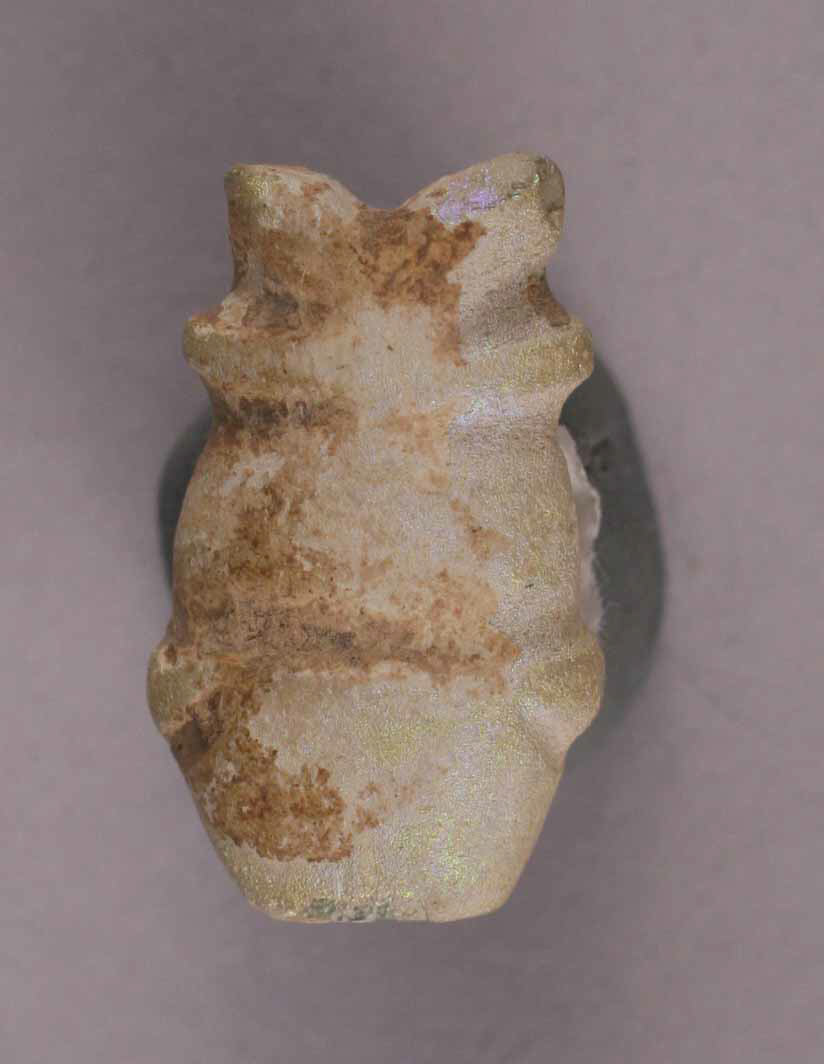
The Bead: A Microcosm of Global Heritage at Katherine Fashion Lab
In the rarefied atmosphere of haute couture, where every stitch is a statement and every material a manifesto, the bead often serves as a humble accent—a glint of light on a train, a whisper of texture on a bodice. Yet, in the Standalone Study conducted by Katherine Fashion Lab, the bead is elevated from mere embellishment to the principal subject of inquiry. This analysis deconstructs the bead not as a decorative afterthought, but as a sovereign entity: a carrier of Global Heritage, a testament to artisanal mastery, and a medium for material innovation. Specifically, we examine the cut and drilled glass bead—a paradox of fragility and resilience, transparency and opacity—to understand how it encapsulates centuries of cross-cultural exchange within a single, luminous form.
Materiality and the Lexicon of Light: Glass as a Narrative Medium
The choice of glass as the foundational material is neither arbitrary nor merely aesthetic. Glass, in its molten state, is a liquid that captures history; it is the product of sand, fire, and human intention. For the Standalone Study, Katherine Fashion Lab selects beads that are cut and drilled—processes that demand precision and patience. The cutting facet introduces a controlled chaos, refracting light into prismatic shards that dance with the wearer’s movement. The drilling, a delicate act of piercing the bead’s core, creates a void that is paradoxically full of potential: a channel for thread, a passage for narrative.
From a material science perspective, glass beads offer a unique dialogue between hardness and fragility. Unlike metals, they do not tarnish; unlike textiles, they do not fray. Yet they can shatter under pressure, a metaphor for the delicate balance of cultural preservation in a globalized world. The cut facets amplify this tension: each geometric plane catches a different wavelength, creating a visual symphony that is both ancient and avant-garde. In the context of Global Heritage, this glass bead is a direct descendant of the Venetian conterie beads traded along the Silk Road, the Czech pressed-glass beads that democratized adornment in the 19th century, and the African trade beads that became symbols of status and spirituality. The bead, therefore, is not a single object but a palimpsest of global histories, each cut and drill marking a point of contact between cultures.
The Art of the Void: Drilling as a Cultural Connector
To understand the bead’s role in couture, one must first understand the drilled hole. In the Standalone Study, the drilling process is not merely functional; it is a conceptual act. The hole transforms the bead from a closed, self-contained object into an open system—a node in a larger network. This is where Global Heritage becomes tangible. Consider the Venetian beadmakers of Murano, who perfected the technique of lampworking to create beads with minute, uniform holes, enabling intricate netting and embroidery. Contrast this with the hand-drilled beads of the Maasai, where the hole’s irregularity becomes a signature of individual craftsmanship. Katherine Fashion Lab’s study honors both traditions by emphasizing the drilled bead as a universal connector—a physical link between the maker’s hand and the wearer’s body, between the past and the present.
In couture construction, the drilled bead offers a structural advantage. When sewn onto fabric, the hole allows the bead to sit flush against the surface, creating a seamless integration of texture. Yet, in the Standalone Study, the bead is often presented in isolation or in clusters, suspended in space, emphasizing its three-dimensionality. This approach subverts the traditional hierarchy of fashion, where beads serve the garment. Here, the garment serves the bead, becoming a canvas for its light-play and historical resonance.
Cut and Clarity: The Geometry of Global Exchange
The cut of the glass bead is where artistry meets engineering. A bead’s cut determines its refractive index—how it captures and disperses light. In the Standalone Study, Katherine Fashion Lab categorizes cuts into three archetypes: the round, the faceted, and the irregular. The round cut, often associated with seed beads, offers a soft, diffused glow, reminiscent of the polished stones used in ancient Mesopotamian jewelry. The faceted cut, with its sharp angles, mimics the precision of diamond cutting—a technique that traveled from Indian lapidaries to European glass workshops. The irregular cut, deliberately asymmetric, evokes the raw, organic forms of pre-industrial beadwork, where imperfection was a mark of authenticity.
This typology is not merely academic; it has profound implications for couture design. A garment that employs faceted beads, for instance, will shimmer with a fractured, crystalline light, ideal for evening wear that demands drama. In contrast, irregularly cut beads create a matte, textured surface that absorbs rather than reflects light, lending itself to daywear or sculptural pieces. The Standalone Study pushes this further by experimenting with cut glass beads in monochromatic palettes—clear, frosted, or tinted—to strip away color and force the viewer to focus on the interplay of light and shadow. The result is a meditation on form, where the bead becomes a lens through which we perceive the garment’s architecture.
Global Heritage as a Design Ethos: From Trade Routes to Runways
The Global Heritage embedded in these beads is not a passive inheritance but an active design principle. Katherine Fashion Lab’s analysis traces the lineage of the cut and drilled glass bead to three pivotal regions: West Africa, where Venetian and Bohemian beads were integrated into royal regalia and ceremonial objects; India, where glass beadmaking flourished in the ancient port towns of Gujarat, supplying trade routes to Southeast Asia and the Middle East; and Europe, where the Industrial Revolution mechanized bead production, making them accessible for mass-market fashion.
In the Standalone Study, these histories are not romanticized but critically examined. The bead becomes a symbol of both cultural exchange and colonial extraction—a reminder that beauty often travels on the back of commerce and conflict. By foregrounding the bead as the subject, Katherine Fashion Lab invites a postcolonial reading of couture, where the adornment is no longer a passive object but an active participant in global dialogues. The cut and drilled glass bead, in this context, is a micro-monument to human connectivity—a small, luminous artifact that carries the weight of centuries.
Structural Integrity and Couture Construction: The Bead as Architecture
From a technical couture perspective, the bead’s structural properties dictate its application. The cut glass bead is denser than its ceramic or plastic counterparts, requiring reinforced tension points in embroidery. Katherine Fashion Lab’s study documents how the drilled hole, when combined with a specific thread gauge, can create a self-supporting lattice—a technique reminiscent of netting in 18th-century French passementerie. This lattice can be used to construct entire panels of a garment, where the beads form a flexible yet rigid armor-like surface.
In the Standalone Study, beads are also examined for their acoustic properties. When cut and drilled glass beads are sewn densely, they produce a soft, percussive sound with movement—a rustle that is both tactile and auditory. This sonic dimension adds another layer to the couture experience, transforming the garment into a performative instrument. The bead, therefore, is not just seen but heard, felt, and remembered.
Conclusion: The Bead as a Standalone Statement
In elevating the cut and drilled glass bead to the status of a standalone subject, Katherine Fashion Lab challenges the fashion industry to reconsider the hierarchies of materials. The bead is not a detail; it is a universe. It is a repository of Global Heritage, a feat of material science, and a conduit for cultural storytelling. Through this analysis, we see that the bead’s power lies not in its size but in its ability to contain multitudes—to be at once a fragment of history and a visionary element of future couture. As the Lab’s work demonstrates, the smallest object often holds the most profound truths, and in the hands of a master curator, a bead can become a world.