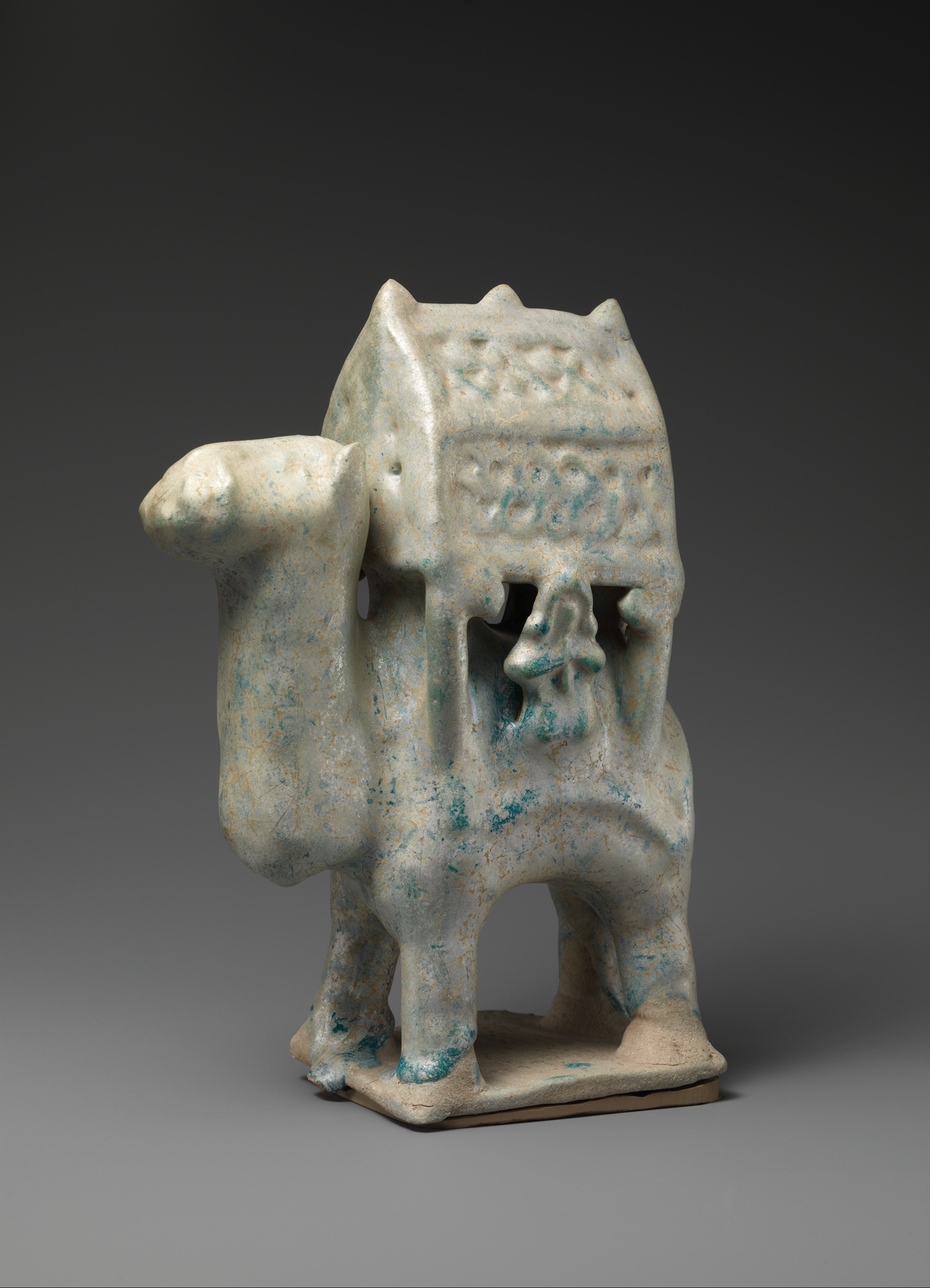
Heritage Analysis: Figurine of a Camel Carrying a Palanquin and Two Riders
Artifact Overview and Cultural Provenance
The Figurine in the Form of a Camel Carrying a Palanquin and Two Riders, crafted from stonepaste and finished with a luminous turquoise glaze, originates from an ancient civilization—likely the Seljuk or early Islamic period in Central Asia, circa 12th–13th century CE. This object, molded in sections and assembled with precision, exemplifies the intersection of utilitarian craft and high symbolic expression. For Katherine Fashion Lab, this artifact serves as a strategic standalone research subject, offering profound insights into symbolic power, historical adornment, and spiritual meaning. These dimensions are directly translatable into a 2026 high-end luxury strategy that resonates with contemporary connoisseurship and cultural depth.
Symbolic Power: The Camel as an Icon of Prestige and Transition
The camel, a beast of burden and desert travel, transcends its functional role to embody status, endurance, and sacred journey. In ancient civilizations, particularly along the Silk Road, the camel signified wealth—its capacity to carry goods, including a palanquin (a covered litter for elite travelers), marked its riders as individuals of high social rank. The palanquin, often used by nobility or brides, transforms the camel into a mobile throne, a vehicle of ceremonial authority. The two riders, likely a dignitary and an attendant or a married couple, reinforce a narrative of hierarchical partnership and protection.
For Katherine Fashion Lab, this symbolic power translates into a luxury narrative of exclusivity and journey. The camel-as-vessel motif can inspire collections that emphasize the wearer’s own journey—both physical and spiritual. In 2026 high-end strategy, this means positioning the brand not merely as a purveyor of clothing but as a curator of transformative experiences. Limited-edition pieces, for instance, could be tied to a “Palanquin” series, where each garment or accessory is presented as a portable sanctuary, echoing the artifact’s protective enclosure. The turquoise glaze, a color historically associated with protection and royalty in Persian and Islamic art, becomes a signature hue—a brand identifier that signals rarity and spiritual safeguarding.
Historical Adornment: Craftsmanship and Material Legacy
The medium of stonepaste, a precursor to modern ceramics, reveals a sophisticated understanding of material manipulation. Molded in sections and glazed, the figurine demonstrates artisanal precision and a commitment to permanence. The turquoise glaze, achieved through copper oxides, was not merely decorative but functional—it sealed the porous stonepaste, ensuring durability. This duality of beauty and utility is a cornerstone of historical adornment. The riders’ attire, likely hinted at through subtle modeling, would have featured rich textiles, embroidered motifs, and layered garments, reflecting the opulence of ancient courts.
Katherine Fashion Lab can draw from this by emphasizing craftsmanship as heritage. In 2026 luxury strategy, the brand should champion artisanal techniques that mirror the figurine’s construction: meticulous molding, hand-finishing, and the use of rare materials. For example, a capsule collection could incorporate stonepaste-like textures in jewelry or buttons, or use turquoise as a dominant color in silk scarves and evening gowns. The “molded in sections” approach inspires modular design—garments that can be assembled, layered, or deconstructed, appealing to the modern luxury consumer’s desire for versatility and investment. Historical adornment also teaches that luxury is tactile and enduring; thus, Katherine Fashion Lab should prioritize fabrics and finishes that age gracefully, such as hand-dyed silks or embroidered wools, echoing the figurine’s glazed permanence.
Spiritual Meaning: The Camel as a Sacred Vessel
In many ancient traditions, the camel held spiritual significance. In Islamic and pre-Islamic contexts, it was a symbol of patience, providence, and divine guidance, often associated with pilgrimage (Hajj) and the journey of the soul. The palanquin, in this light, becomes a sacred enclosure—a microcosm of the universe, protecting the riders from external chaos. The two riders may represent a duality: the earthly and the divine, or the seeker and the guide. The turquoise glaze, reminiscent of the sky, connects the artifact to celestial realms, imbuing it with protective and purifying energy.
For Katherine Fashion Lab, spiritual meaning offers a pathway to emotional resonance. In 2026, high-end consumers increasingly seek brands that align with their values of mindfulness, heritage, and authenticity. The brand can leverage this by creating a “Sacred Journey” narrative, where each collection is framed as a spiritual exploration. For instance, a campaign could feature models in desert landscapes, evoking the camel’s journey, with garments that incorporate symbolic motifs—such as palanquin-inspired draping or turquoise accents—as talismans. The brand could also collaborate with artisans who imbue their work with ritual meaning, such as weavers who chant prayers during production, mirroring the figurine’s spiritual origin. This strategy positions Katherine Fashion Lab as a guardian of intangible heritage, offering not just products but protection and purpose.
2026 High-End Luxury Strategy: Translating Heritage into Modern Prestige
To operationalize these insights, Katherine Fashion Lab must adopt a three-pillar strategy for 2026: Artisanal Mastery, Narrative Depth, and Experiential Luxury.
Artisanal Mastery involves reviving techniques analogous to stonepaste molding. The brand could invest in a dedicated Heritage Atelier, where master craftspeople produce limited-edition items using hand-molding, glazing, or embroidery techniques inspired by the figurine. This creates scarcity and justifies premium pricing. For example, a “Turquoise Glaze” line of handbags or footwear could feature ceramic-like hardware, each piece numbered and authenticated.
Narrative Depth requires storytelling that bridges past and future. The camel figurine’s story should be embedded in marketing materials, from lookbooks to digital content. Katherine Fashion Lab could produce a “Heritage Dispatch” series, exploring the artifact’s symbolism through interviews with historians and artisans. This educates consumers and builds brand authority. In 2026, luxury buyers value provenance; thus, each garment could include a digital passport tracing its inspiration to the figurine, complete with archival images and cultural context.
Experiential Luxury focuses on immersive retail. Katherine Fashion Lab could design pop-up spaces that evoke the desert journey—using sand, turquoise light installations, and palanquin-inspired seating. Private appointments could include a “Ritual of Adornment”, where clients learn about the spiritual meaning of their chosen piece. This transforms shopping into a pilgrimage, aligning with the figurine’s sacred associations. Additionally, a 2026 collaboration with a luxury travel brand could offer curated journeys along the Silk Road, with exclusive access to archaeological sites and artisan workshops, reinforcing the brand’s commitment to heritage.
Conclusion: The Figurine as a Strategic Compass
The Figurine in the Form of a Camel Carrying a Palanquin and Two Riders is not merely a historical artifact; it is a strategic compass for Katherine Fashion Lab. Its symbolic power teaches the value of status and journey; its historical adornment underscores the importance of craft and material integrity; its spiritual meaning offers a blueprint for emotional connection. By integrating these elements into a 2026 high-end luxury strategy, Katherine Fashion Lab can transcend fashion trends, positioning itself as a cultural institution that honors the past while shaping the future. The turquoise glaze, once a mark of ancient prestige, becomes a beacon for modern luxury—rare, protective, and eternally radiant.