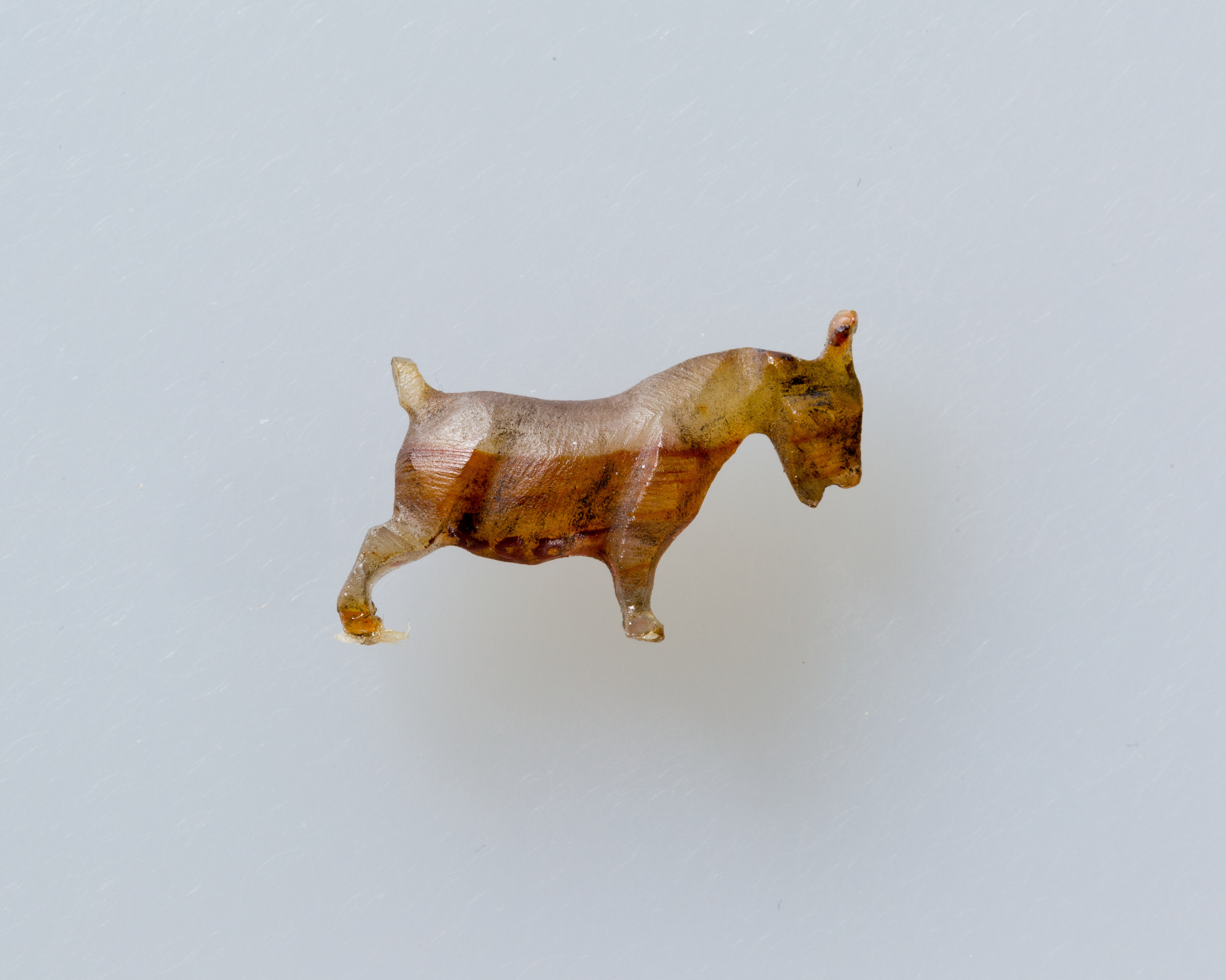
Heritage Analysis: The Goat Amulet in Agate
Introduction: The Amulet as a Strategic Artifact
In the realm of heritage luxury, few objects possess the layered symbolic resonance and material authority of the ancient goat amulet carved from agate. This artifact, originating from an undefined yet deeply resonant ancient civilization, represents a convergence of spiritual meaning, historical adornment, and proto-luxury craftsmanship. For Katherine Fashion Lab, a strategic standalone research into this object reveals not merely an archaeological curiosity, but a blueprint for 2026 high-end luxury strategy. The goat amulet, as a talisman of fertility, virility, and protection, offers a potent narrative that bridges prehistory with contemporary desires for authenticity, meaning, and exclusivity. This analysis deconstructs the amulet’s symbolic power, its role in historical adornment, its spiritual underpinnings, and its actionable implications for luxury brand positioning in the near future.
Symbolic Power: The Goat as a Multivalent Emblem
The goat, across ancient civilizations from Mesopotamia to the Indus Valley, was rarely merely an animal. It was a living glyph for abundance, resilience, and cosmic connection. In the context of the agate amulet, the goat’s horns often symbolized lunar cycles, while its robust constitution represented earthly fertility and the capacity to thrive in harsh landscapes. This duality—lunar and terrestrial, wild and domesticated—endows the amulet with a symbolic power that transcends simple superstition. For Katherine Fashion Lab, understanding this polysemy is critical. The goat amulet is not a passive ornament; it is an active agent of meaning, a wearable talisman that communicates status, spiritual alignment, and a connection to primal forces. In 2026, luxury consumers increasingly seek objects that serve as anchors of identity rather than mere indicators of wealth. The goat amulet’s symbolic power offers a template: a single, compact form that carries immense narrative weight, capable of being reinterpreted for modern contexts without losing its ancient gravitas.
Historical Adornment: Agate as the Medium of Prestige
Agate, a banded chalcedony, was prized in antiquity for its hardness, translucency, and the natural striations that made each piece unique. The choice of agate for a goat amulet was not incidental. Ancient lapidaries understood that agate’s layered bands echoed the geological time of the earth itself, imbuing the amulet with an aura of permanence and cosmic order. Historical adornment practices placed such amulets on necklaces, bracelets, or sewn into garments, often near the heart or solar plexus, to maximize protective and generative energies. The goat amulet, therefore, was not a casual accessory but a ritual object integrated into daily life. For Katherine Fashion Lab, this historical context underscores the importance of material integrity. Agate’s natural patterning ensures that no two amulets are identical, a quality that aligns perfectly with the luxury sector’s shift toward hyper-personalization and artisanal uniqueness. The 2026 luxury consumer will not accept mass-produced symbolism; they demand objects that feel excavated from a personal or collective past. The agate goat amulet, with its geological authenticity, satisfies this desire for material truth.
Spiritual Meaning: Protection, Fertility, and Transcendence
The spiritual meaning of the goat amulet is rooted in its function as an apotropaic device—a protector against evil, illness, and misfortune. In many ancient belief systems, the goat’s horns were thought to deflect negative energies, while its association with the god Pan or similar deities linked it to the wild, untamed aspects of nature that could be harnessed for personal power. Additionally, the goat’s prolific breeding made it a symbol of fertility, not only in a biological sense but also in terms of creative and financial abundance. This spiritual dimension transforms the amulet from a decorative item into a tool for intentional living. For Katherine Fashion Lab, this offers a strategic opportunity: to position the amulet not as a relic but as a contemporary spiritual technology. In 2026, the wellness and spirituality market is projected to exceed $1 trillion globally, with affluent consumers actively seeking objects that facilitate mindfulness, protection, and intentionality. The goat amulet, reinterpreted with modern materials or in collaboration with contemporary artists, can serve as a tangible focus for these practices. The spiritual meaning becomes a value proposition, allowing the brand to enter the conversation around conscious consumption without resorting to clichés.
Strategic Implications for 2026 High-End Luxury
The goat amulet’s heritage provides a robust foundation for a 2026 luxury strategy that prioritizes narrative depth, material honesty, and emotional resonance. Katherine Fashion Lab can leverage this artifact in several key areas:
1. Limited Edition “Talisman” Collections: By producing a small series of goat amulets in agate—or in high-end materials like gold, platinum, or black jade—the brand can create scarcity while honoring the original craftsmanship. Each piece could be numbered and accompanied by a provenance card detailing its symbolic meaning and the ancient civilization it references. This taps into the luxury market’s growing appetite for “investable” objects that combine art, history, and material value.
2. Narrative-Driven Marketing: The amulet’s story is its greatest asset. A campaign centered on “The Protector” or “The Fertility of Creativity” could feature immersive storytelling—short films, artist collaborations, and interactive digital content—that educates consumers on the amulet’s spiritual and historical significance. This approach differentiates Katherine Fashion Lab from competitors who rely on superficial trend cycles.
3. Integration with Wellness and Ritual: The amulet could be positioned as a companion for meditation, creative work, or personal milestones. Packaging could include a guide to its spiritual uses, perhaps in collaboration with a well-known astrologer or mindfulness practitioner. This aligns with the 2026 trend of “functional luxury,” where objects serve both aesthetic and practical spiritual roles.
4. Co-Creation with Artisans and Archaeologists: Partnering with contemporary lapidaries and cultural historians ensures authenticity and ethical sourcing. This also allows for a “modern heritage” narrative, where ancient techniques are revived with sustainable practices—a key concern for the Gen X and Millennial luxury demographic.
Conclusion: The Amulet as a Strategic Lens
The goat amulet in agate is far more than a historical artifact; it is a strategic lens through which Katherine Fashion Lab can view the future of luxury. Its symbolic power offers a narrative of resilience and abundance; its material medium speaks to uniqueness and geological time; its spiritual meaning addresses the modern hunger for purpose and protection; and its historical context provides a credible foundation for exclusivity. In 2026, when luxury consumers will increasingly demand objects that are not only beautiful but also meaningful, the goat amulet stands as a testament to the enduring value of heritage. By integrating this artifact into a cohesive brand strategy—through limited editions, narrative marketing, wellness integration, and artisan collaboration—Katherine Fashion Lab can position itself at the intersection of history and innovation, crafting a luxury experience that is both ancient and urgently contemporary. The goat amulet, ultimately, is not a relic to be displayed; it is a strategy to be worn.