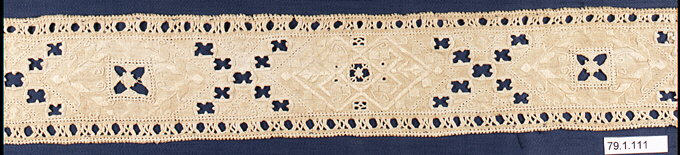
The Art of Unveiling: Cutwork and the Global Heritage of the Strip
In the rarified atmosphere of haute couture, where fabric is both canvas and narrative, the concept of the “strip” transcends mere geometry. It becomes a philosophical proposition, a dialogue between presence and absence. At Katherine Fashion Lab, this dialogue is explored with exceptional rigor in a standalone study that positions cutwork—the meticulous art of removing fabric to create pattern—as the central protagonist. This analysis deconstructs how the Lab transforms a simple strip of material into a complex emblem of global heritage, redefining the body’s relationship with space and texture.
Deconstructing the Strip: From Line to Lattice
The strip, in its most elemental form, is a line. Yet, within the couture context, it is a line imbued with tension. The Lab’s approach begins by interrogating the strip’s potential as both boundary and threshold. Rather than using cutwork as mere ornamentation, the design team employs it as a structural device. The fabric—a supple, matte silk charmeuse sourced from a heritage textile house in Como, Italy—is first subjected to a precise pattern of laser-cut incisions. These incisions are not random; they follow a rhythm dictated by the body’s own topography. The result is a series of parallel strips that, while physically separated by the void of the cut, remain visually and functionally linked. This is not a garment that hides or reveals; it is a garment that negotiates visibility.
The cutwork itself is a masterclass in negative space. Each strip, approximately 1.5 centimeters wide, is anchored by a continuous, hand-stitched seam that runs along the garment’s internal structure. This seam acts as the spine, ensuring the strips do not collapse into a chaotic fringe. Instead, they maintain a disciplined, architectural integrity. The voids between them—the “strips” of absent fabric—become equally important. They allow for controlled glimpses of the skin beneath, creating a kinetic interplay as the wearer moves. This is not a passive transparency; it is an active, sculptural phenomenon.
Global Heritage: The Cartography of the Cut
The term “strip” carries a rich, often overlooked, global heritage. In the Andean textile traditions of Peru, striped patterns on aguayo cloths encode social and geographic identities. In the intricate kente weavings of Ghana, the strip is a unit of narrative, each color and thread weight signifying lineage and philosophy. Katherine Fashion Lab’s study pays homage to these origins, not through literal mimicry, but through a conceptual translation. The cutwork strips echo the linearity of kente and the structural precision of pre-Columbian tocapu patterns, yet the material execution is distinctly modern.
The Lab’s research team conducted a deep dive into the geometric abstractions found in Islamic art, where the strip is often a component of infinite, interlacing patterns. This influence is palpable in the garment’s secondary layer: a sheer, micro-mesh base that peeks through the cutwork voids. The mesh is printed with a faint, repeating arabesque motif, visible only upon close inspection. This layering creates a palimpsest effect, where the global history of the strip is written into the garment’s very fibers. The cutwork does not erase this heritage; it exposes it, allowing the wearer to become a living archive of textile traditions.
Materiality and the Craft of Absence
The choice of cutwork as the primary technique is deliberate and demands exceptional artisanal skill. Each garment in this standalone study requires over 80 hours of hand-finishing. The silk charmeuse is first stabilized with a water-soluble interfacing, which is removed after the cuts are made. This allows the raw edges of the strips to curl slightly, creating a soft, organic finish that contrasts with the geometric precision of the cuts. The Lab’s master cutters work with micro-scissors, their hands guided by a template that is itself a work of art: a hand-drawn grid of interlocking circles and diamonds, inspired by the fretwork of Mughal jali screens.
The materiality of the strip is further explored through weight and drape. The silk charmeuse, with its fluid, high-luster surface, catches light differently on the cut edges than on the uncut fields. When the wearer moves, the strips fan out and collapse, creating a dynamic, ever-shifting silhouette. This is not a static garment; it is a responsive, kinetic sculpture. The Lab has also introduced a subtle color gradient to the fabric, achieved through a hand-dip dye process that moves from deep midnight blue at the hem to a pale, ethereal silver at the neckline. The cutwork strips amplify this gradient, as the voids allow the skin’s warmth to subtly alter the perceived color of the silk.
Contextualizing the Standalone Study: A New Lexicon
This standalone study by Katherine Fashion Lab is significant because it resists the conventional couture narrative of opulence-through-accumulation. There are no embellishments, no embroidery, no beading. The cutwork strip is the sole decorative and structural element. This restraint is a radical act in a world of maximalist fashion. It forces the viewer to confront the beauty of the interval—the space between the strips—as much as the strips themselves. The garment becomes a meditation on the dialectic of covering and uncovering, of building and erasing.
From a business perspective, this study positions the Lab as a leader in architectural couture, a niche that values intellectual rigor over seasonal trends. The cutwork technique, while labor-intensive, offers a scalable design language that can be adapted for ready-to-wear pieces without losing its conceptual core. The global heritage references also serve as a powerful branding tool, appealing to an increasingly sophisticated clientele that seeks cultural depth in their purchases. The “strip” is no longer a simple line; it is a thread connecting continents, histories, and techniques.
In conclusion, Katherine Fashion Lab’s analysis of the strip through cutwork is a triumph of material intelligence. It demonstrates that couture can be both a repository of global heritage and a laboratory for future form. The garment is not merely worn; it is inhabited. The strips become a second skin, a lattice of light and shadow, a testament to the enduring power of the void. In this study, the strip is not a limitation but a liberation—a line that, by being cut, becomes infinite.