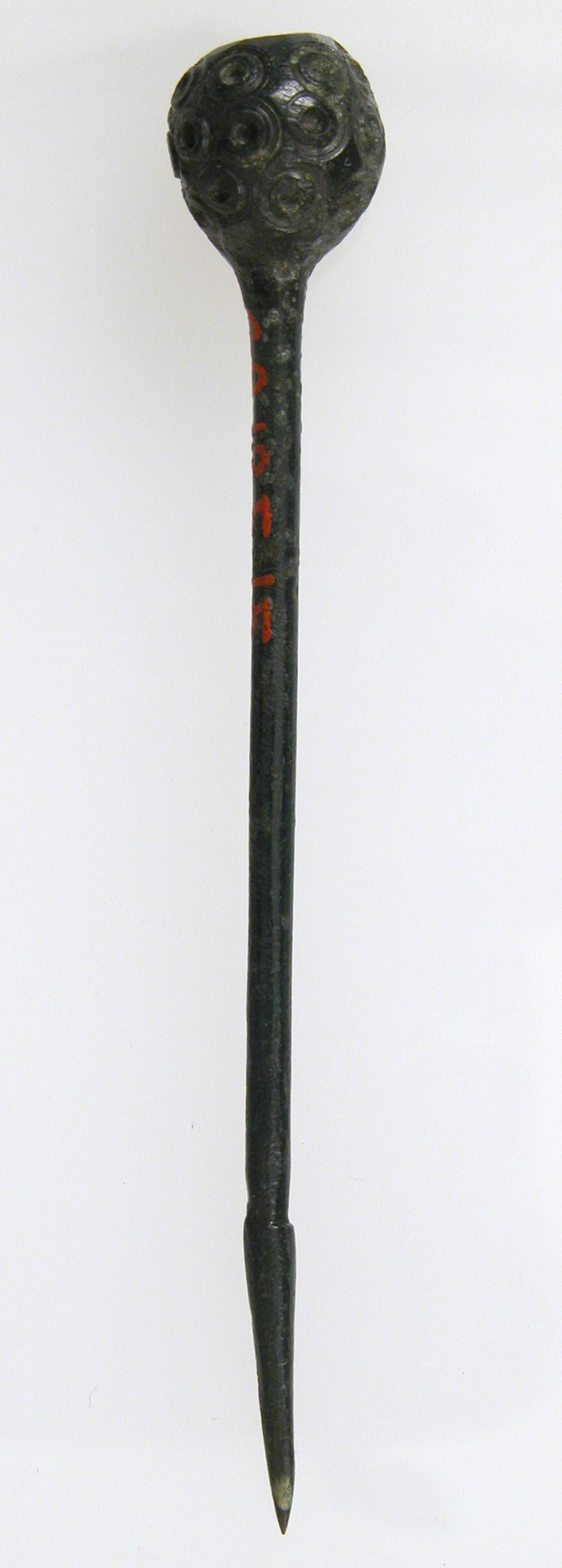
Executive Heritage Analysis: The Irish Copper-Alloy Pin
This analysis, prepared for Katherine Fashion Lab, examines the Irish copper-alloy pin as a singular object of profound symbolic, historical, and spiritual significance. Positioned within a strategic standalone research framework, the pin is not merely a functional fastener but a concentrated artifact of cultural memory and power. The findings below inform a 2026 high-end luxury strategy, translating ancient Irish adornment into a contemporary emblem of heritage, protection, and status.
Symbolic Power: The Pin as a Marker of Sovereignty and Identity
In ancient Irish society, the pin—particularly the penannular brooch or simple copper-alloy pin—served as a potent symbol of personal and tribal sovereignty. Unlike modern jewelry, which often prioritizes aesthetic value, the Irish pin was a declaration of rank, allegiance, and authority. Copper alloy, while less precious than gold or silver, was a material of considerable value, often reserved for the warrior class and skilled artisans. Its durability and warm, earthy luster conveyed resilience and connection to the land.
The act of wearing a pin was deeply performative. A chieftain’s pin, often large and intricately decorated, secured a heavy woolen cloak, signifying his role as protector and lawgiver. For a woman of status, the pin fastened a brat (cloak) or léine (tunic), marking her as a keeper of household and lineage. The pin’s placement—at the shoulder, breast, or neck—also carried meaning. A pin worn at the left shoulder indicated a married or betrothed woman, while a central chest placement denoted a warrior or leader ready for counsel or combat. This geography of adornment transformed the pin into a silent language of power, visible only to those who understood the code.
For high-end luxury strategy, this symbolic power translates into a narrative of quiet authority. The 2026 Katherine Fashion Lab collection can leverage the pin as a signature piece that communicates exclusivity and lineage without overt branding. Each pin, cast in copper alloy and finished with patina or enamel, becomes a talisman of personal sovereignty—an heirloom that confers status not through flash but through historical resonance.
Historical Adornment: Craft, Trade, and the Copper-Alloy Tradition
The historical context of the Irish copper-alloy pin is rooted in the Bronze Age and early medieval periods (c. 2000 BCE–800 CE). Copper was one of the first metals worked in Ireland, sourced from mines in counties Kerry, Cork, and Wicklow. Alloyed with tin, it produced bronze; but unalloyed or low-tin copper was also widely used for everyday and ceremonial objects. The pin’s form evolved from simple straight pins with looped heads to the more elaborate ring-pin and brooch types, each reflecting regional styles and technological advancements.
Archaeological evidence from sites such as the Crannóg settlements and the Hill of Tara reveals that pins were not only functional but also objects of trade and tribute. Copper-alloy pins have been found in Viking hoards, indicating their value as currency and diplomatic gifts. The insular art style—characterized by interlace patterns, zoomorphic forms, and geometric motifs—was often engraved or cast into the pin’s head, linking the wearer to a broader Celtic Christian and pre-Christian visual vocabulary.
For the luxury market, this historical depth offers a rich design lexicon. The 2026 strategy should emphasize craftsmanship over mass production. Each pin can be hand-finished by master metalsmiths, with design elements referencing specific archaeological finds—such as the Tara Brooch or the Lough Shinny pin—but reinterpreted through a modern, minimalist lens. The use of copper alloy, often overlooked in high jewelry, becomes a deliberate choice: a material that patinas beautifully, telling a story of age and use, aligning with the slow luxury trend of 2026.
Spiritual Meaning: The Pin as Protective Talisman and Soul Anchor
Beyond its social function, the Irish pin held profound spiritual significance. In pre-Christian and early Christian Ireland, the pin was considered a protective object, often blessed or inscribed with symbols to ward off evil. The tri-spiral (triskelion) and cross-in-circle motifs, common on copper-alloy pins, were believed to channel divine energy and safeguard the wearer during travel, battle, or childbirth. The act of pinning a garment was itself a ritual: it secured not just cloth but the soul’s integrity, preventing spiritual harm from entering through a gap in the fabric.
In early Irish law, the Brehon Laws specified that a pin could be used as a legal symbol—a physical marker of an oath or contract. To “break one’s pin” was to break a promise, a spiritual transgression with social consequences. This connection between the pin and moral binding elevates the object from accessory to ethical artifact. The pin’s metal, copper, was also associated with the goddess Brigid, a deity of smithcraft, poetry, and healing. Wearing a copper pin was thus an invocation of her protection and inspiration.
For the 2026 luxury strategy, this spiritual dimension offers a unique positioning. The pin can be marketed not as a mere ornament but as a personal amulet—a piece that the wearer chooses for intention, whether protection, creativity, or commitment. Katherine Fashion Lab could offer a ritual commissioning service, where each pin is inscribed with a personal symbol or blessing, echoing the ancient practice of bespoke talismanic jewelry. This taps into the growing consumer desire for meaningful luxury—objects that serve as anchors for mindfulness and identity in an increasingly fragmented world.
2026 High-End Luxury Strategy: The Pin as a Category Reinvented
The Irish copper-alloy pin, when strategically positioned, can redefine a classic accessory for the 2026 luxury market. The following key pillars emerge from this heritage analysis:
1. Material Narrative. Copper alloy should be celebrated, not hidden. Its natural patina—ranging from rose gold to verdigris—becomes a signature of authenticity. Each pin will age uniquely, making it a companion piece that reflects the wearer’s journey. Marketing materials should highlight the material’s Irish provenance, sustainability (copper is infinitely recyclable), and historical lineage.
2. Design Language. The pin’s form should be sculptural and architectural, referencing ancient shapes but stripped of overt Celtic clichés. Think clean lines, asymmetric heads, and subtle interlace patterns rendered in high-relief. The pin can be offered in multiple scales: a miniature version for lapel or scarf, and a statement piece for cloak or gown.
3. Storytelling and Provenance. Each pin should come with a digital heritage passport, tracing its design inspiration to a specific archaeological artifact or myth. Collaborations with Irish historians, museums, or contemporary artists can deepen authenticity. Limited-edition releases tied to Celtic festivals (Samhain, Imbolc) create urgency and cultural resonance.
4. Ritual and Customization. Offer a “Binding” service, where the buyer selects a personal intention (protection, creativity, love) and the pin is inscribed with a corresponding Ogham character or Celtic knot. This transforms the purchase into a ceremony, aligning with the 2026 trend of experiential luxury.
5. Pricing and Exclusivity. Position the pin at a premium tier ($800–$3,000), justified by handcraft, heritage, and limited production. Copper alloy, when presented as a precious metal with history, commands respect. The pin becomes an entry-level heirloom—a gateway to a larger collection of Irish-inspired pieces.
Conclusion: The Pin as a Strategic Asset
The Irish copper-alloy pin is a microcosm of cultural power: a symbol of sovereignty, a historical artifact of trade and craft, and a spiritual talisman of protection. For Katherine Fashion Lab, this object offers a clear path to differentiate in the saturated luxury market of 2026. By honoring its material, form, and meaning, the brand can create a signature category that resonates with discerning clients who seek not just beauty, but depth. The pin is not a relic—it is a reinvention, ready to be fastened onto the future of high-end fashion.