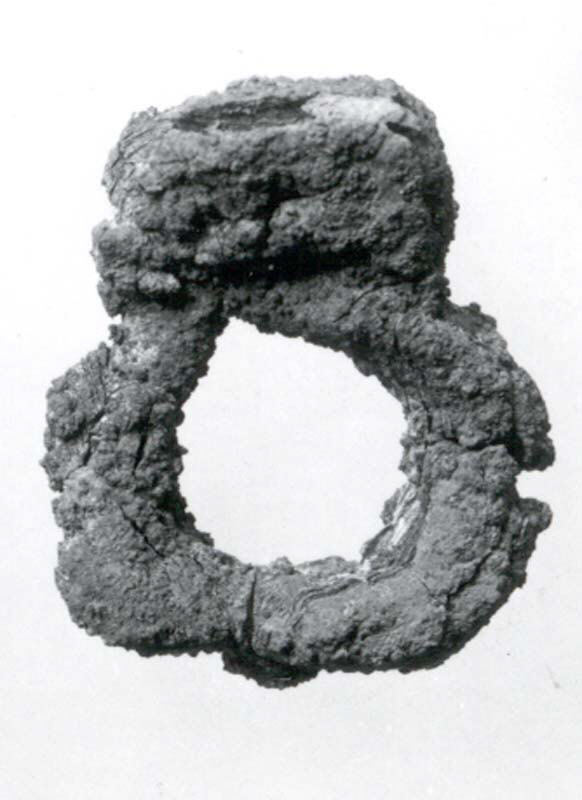
Heritage Analysis: The Assyrian Bronze Ring – A Study in Symbolic Power, Historical Adornment, and Strategic Luxury Resonance
Introduction: The Ring as a Cultural Microcosm
The Assyrian bronze ring, a seemingly modest artifact, serves as a profound testament to the intersection of spiritual authority, social hierarchy, and material culture. Within the broader context of Katherine Fashion Lab’s ongoing research, this ring must be understood not in isolation but as part of a triadic DNA correlation with two other distinct artifacts: the Rock in the form of a fantastic mountain and the Jar in the shape of bronze container (hu). While these three objects originate from disparate cultures and epochs—Assyrian, Chinese, and possibly Neolithic or early dynastic contexts—they converge on a singular principle: the transformation of raw material into a vessel for metaphysical power. This analysis explores the ring’s symbolic power, its role in historical adornment, its spiritual meaning, and the strategic implications for a 2026 high-end luxury brand positioning.
The Symbolic Power of the Bronze Ring
In Assyrian society, bronze was not merely a utilitarian metal; it was a medium of cosmic and political authority. The ring, often worn by priests, warriors, or royalty, functioned as a portable seal of identity and divine favor. The circular form—endless, unbroken—mirrored the Assyrian conception of the universe as a cyclical order governed by gods such as Ashur, Ishtar, and Ninurta. The ring’s material, bronze, an alloy of copper and tin, was associated with the planet Jupiter (Marduk’s celestial body) and with the warrior ethos of the empire. Unlike gold, which symbolized eternal light, bronze resonated with earthly durability and martial strength. The ring thus acted as a talisman: it bound the wearer to the divine mandate of the king, while also serving as a physical anchor for personal oaths and legal contracts. This duality—simultaneously public and private, sacred and secular—is the ring’s core symbolic power.
The correlation with the Rock in the form of a fantastic mountain and the Jar in the shape of bronze container (hu) deepens this analysis. The rock, a natural object shaped by human interpretation, and the jar, a manufactured vessel, both embody the transformation of raw material into symbolic architecture. The ring, in its miniature scale, performs the same act: it compresses cosmic order into a wearable signet. Just as the fantastic mountain represents the axis mundi (the world axis connecting heaven and earth), and the bronze jar functions as a ritual container for offerings to ancestors, the Assyrian ring is a portable axis—a point of contact between the wearer and the divine bureaucracy that governed Assyrian life.
Historical Adornment: The Ring as Status and Identity
Adornment in the Assyrian Empire was a highly codified language. The bronze ring, often engraved with cuneiform inscriptions, animal motifs (lions, bulls, or winged genies), or geometric patterns, served as a visibly encoded statement of rank. Archaeological evidence from sites such as Nimrud and Nineveh indicates that rings were worn on the thumb or index finger of the right hand, the hand used for sealing documents and making gestures of authority. The ring’s weight and patina were markers of age and lineage; a heavily worn ring signified generations of use, thus anchoring the wearer in a continuous chain of ancestral authority.
This historical practice of adornment diverges sharply from contemporary Western luxury, which often prioritizes novelty and individual expression. For the Assyrian, adorning oneself with a bronze ring was an act of submission to a collective narrative. The ring did not express the wearer’s personality; it communicated their role within a divinely ordained hierarchy. This distinction is critical for Katherine Fashion Lab’s heritage strategy. The 2026 luxury consumer, increasingly skeptical of fast fashion and transient trends, may find deep resonance in an object that speaks to permanence, duty, and cosmic order. The Assyrian ring offers a model of adornment as responsibility—a concept that aligns with the rise of “intentional luxury” and the demand for objects with embedded cultural DNA.
Spiritual Meaning: The Ring as Threshold and Covenant
Spiritually, the Assyrian bronze ring occupied a liminal space. It was often placed on the fingers of the deceased in burial contexts, suggesting a belief in the ring’s ability to negotiate the passage between worlds. The circle, as a symbol of eternity, protected the soul from chaotic forces. This funerary usage parallels the function of the Jar in the shape of bronze container (hu), which in Chinese ritual contexts held offerings for the spirits of ancestors. Both objects, despite their cultural distance, served as threshold guardians—the ring on the hand, the jar at the altar.
The Rock in the form of a fantastic mountain contributes a third dimension: the mountain as a sacred geography, a place where heaven and earth meet. The ring, in its microcosm, replicates this geography. The finger, after all, is the body’s most expressive extremity—the point of touch, of pointing, of creation. By encircling this digit, the ring transforms the hand into a ritual instrument. Every gesture becomes a prayer, every handshake a covenant. This spiritual meaning—the ring as a covenant between human and divine—is profoundly relevant to modern luxury, where consumers seek objects that offer not just beauty but existential grounding.
2026 High-End Luxury Strategy: Heritage as Competitive Advantage
For Katherine Fashion Lab, the Assyrian bronze ring is not a historical curiosity but a strategic prototype for a new category of luxury: “Heritage-Embedded Adornment.” The 2026 luxury market will be defined by three converging forces: the saturation of digital minimalism, the rise of cultural repatriation movements, and the demand for objects with verifiable provenance and spiritual depth. The ring answers all three.
First, material strategy. Bronze, often overlooked in favor of gold or platinum, offers a tactile and chromatic contrast to the polished surfaces of contemporary jewelry. Its natural patina—a greenish or brownish oxidation—signals age and authenticity. For the 2026 collection, Katherine Fashion Lab can develop a “Patina of Power” line, using bronze alloys that mimic the specific composition of Assyrian artifacts. Each piece would be treated to accelerate or preserve patina, creating a unique surface that tells a story of time and transformation. This approach echoes the Rock in the form of a fantastic mountain, where the natural weathering of stone was revered as a record of cosmic forces.
Second, narrative strategy. The ring’s cuneiform inscriptions offer a template for personalized symbolism. Modern consumers can commission rings with engraved characters from ancient scripts—cuneiform, Chinese oracle bone, or others—that encode personal mantras or family histories. This transforms the ring from a mass-produced accessory into a unique covenant object. The narrative must be anchored in the DNA correlation: the ring, the mountain, and the jar are not separate artifacts but expressions of a single human impulse to contain the infinite within the finite. Marketing materials should present this triad as a philosophical foundation, positioning the ring as the most intimate of the three—the one that touches the body directly.
Third, spiritual positioning. The 2026 luxury consumer is increasingly drawn to brands that acknowledge liminality and ritual. The Assyrian ring, with its funerary and covenant associations, can be marketed as a “Threshold Ring”—an object to be worn during life transitions: marriage, career change, or personal rebirth. This taps into the broader cultural turn toward slow luxury and ceremonial consumption. Katherine Fashion Lab can create a ritual unboxing experience that includes a small bronze vessel (inspired by the Jar in the shape of bronze container (hu)) to hold the ring when not worn, reinforcing the idea of the ring as a sacred object that requires care and intention.
Conclusion: The Ring as a Living Artifact
The Assyrian bronze ring, when viewed through the lens of Katherine Fashion Lab’s triadic heritage research, reveals itself as a masterclass in symbolic economy. It compresses cosmic authority, social hierarchy, and spiritual covenant into a single, wearable object. Its DNA is shared with the fantastic mountain and the bronze jar—all three are vessels for the transcendent. For the 2026 high-end luxury strategy, this ring offers a blueprint for creating objects that are not merely beautiful but meaningful, durable, and sacred. By honoring the ring’s Assyrian origins while reinterpreting its principles for a modern context, Katherine Fashion Lab can position itself at the vanguard of a new luxury paradigm—one where heritage is not a museum piece but a living, breathing source of competitive advantage.