The Art of the Edge: Deconstructing Border in Haute Couture
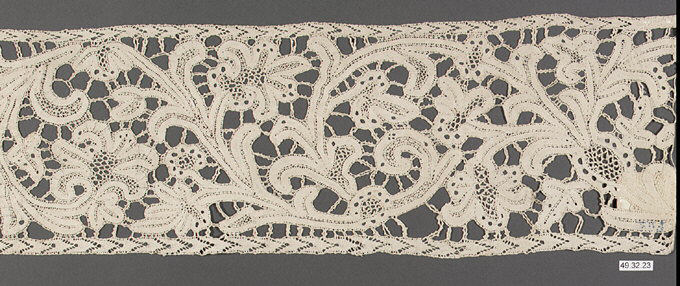
In the rarefied world of haute couture, the concept of “border” is far more than a mere geographical or political demarcation. It is a philosophical and aesthetic frontier, a liminal space where structure meets fluidity, tradition confronts innovation, and the tangible meets the ethereal. For the Katherine Fashion Lab’s standalone study, the subject of Border, sourced from a Global Heritage and executed in the exquisite mediums of Bobbin lace and Milanese lace, becomes a profound meditation on the very nature of containment and release. This analysis dissects how these ancient lace-making techniques, born from the hands of artisans across continents, are reimagined to define, dissolve, and ultimately celebrate the boundaries of the human form.
The Philosophical Edge: Border as a Contested Space
To understand the couture application of border, one must first recognize its dual identity. A border can be a barrier—a definitive line that separates inside from outside, self from other. Yet, it can also be a bridge, a permeable membrane that invites interaction and exchange. In the Katherine Fashion Lab’s collection, this dichotomy is resolved through lace. The bobbin and Milanese laces, with their intricate networks of threads, are not solid walls but intricate webs. They create a border that breathes. The negative spaces—the holes, the twists, the loops—become as significant as the thread itself. This is a border that does not imprison; it frames. It is a threshold, a point of transition that honors the body’s architecture while allowing the eye to travel beyond.
The choice of Global Heritage as the origin is deliberate. Bobbin lace, with its roots in 16th-century Flanders and Italy, and Milanese lace, a pinnacle of Italian craftsmanship from the Lombardy region, are not merely decorative. They are repositories of cultural memory. Each twist of the thread carries the legacy of generations of women (and men) who transformed flax and silk into symbols of status, piety, and artistry. By invoking this heritage, the Lab positions the border as a living archive, a line that connects the wearer to a vast, transnational lineage of human creativity.
Materiality in Dialogue: Bobbin Lace vs. Milanese Lace
The technical distinction between Bobbin lace and Milanese lace is critical to the aesthetic outcome. Bobbin lace, created by braiding and twisting threads wound on bobbins over a pillow, is characterized by its geometric precision and sharp, often angular motifs. It produces a dense, structured edge—a border that declares itself with clarity. In contrast, Milanese lace, a machine-made variant that mimics handcraft, is known for its continuous, flowing patterns and softer, more rounded contours. It yields a border that undulates, that curves and yields to the body’s natural lines.
In the Lab’s study, these two materials are not used in isolation but in strategic dialogue. Consider a gown where the neckline, sleeves, and hem are defined by a sharply defined border of bobbin lace. This edge acts as a structural anchor, a crisp declaration of the garment’s silhouette. The bobbin lace’s tight, almost architectural motifs (diamonds, stars, or stylized flora) create a visual stop, a frame that contains the more fluid interior of the garment. Meanwhile, Milanese lace is employed for internal borders—the seams, the waistline, or the transition between panels. Here, its softer, more organic patterns (scrolls, vines, and undulating ribbons) allow the garment to flow seamlessly from one zone to the next, dissolving the harshness of a cut while still defining a transition.
This interplay creates a hierarchy of boundaries. The bobbin lace border is the primary frame, the statement. The Milanese lace border is the secondary, connective tissue, the breath. Together, they articulate a complex narrative of containment and release. The body is not merely encased; it is orchestrated. The eye is guided from one border to the next, experiencing the garment as a series of thresholds rather than a single, monolithic shell.
Form and Function: The Border as Architectural Element
From a structural perspective, the border in this collection serves multiple, sophisticated functions. First, it is a stabilizing agent. Lace, by its nature, is delicate and prone to distortion. A well-defined border—whether a bobbin-lace edging or a Milanese-lace hem—provides the necessary tension to hold the fabric’s shape. It acts as a corset of thread, a gentle but firm guide that prevents the garment from losing its intended silhouette. This is particularly evident in a bias-cut gown, where the Milanese lace border at the hem can be weighted or reinforced to create a graceful, sweeping line that defies gravity.
Second, the border becomes a sculptural device. In the Lab’s designs, borders are not flat. They are lifted, folded, and layered. A bobbin-lace border at the cuff of a sleeve might be extended into a three-dimensional ruffle, a petal-like extension that transforms the edge into a dynamic, moving form. Similarly, a Milanese-lace border at the waist might be gathered and shaped to create a subtle peplum, a flared hip that redefines the body’s proportions. The border is no longer a passive line; it is an active participant in the garment’s volume and movement.
Third, the border functions as a narrative device. The motifs within the lace—the flowers, the geometric patterns, the scrolls—are not random. They are chosen to echo the theme of border. A bobbin-lace motif of interlocking rings symbolizes unity across divides. A Milanese-lace pattern of winding vines suggests growth and expansion beyond limits. The border becomes a textual space, a place where the story of heritage and innovation is told in the language of thread.
Global Heritage: A Tapestry of Cross-Cultural Borders
The Global Heritage origin of this study is not merely a footnote; it is the intellectual core. The Lab draws from a world of lace-making traditions: the point de France of 17th-century Versailles, the Chantilly lace of the 19th century, the filet lace of the Mediterranean, and the tape lace of the Americas. Each tradition brings its own vocabulary of borders. The French tradition emphasizes symmetry and courtly elegance; the Italian, a more organic, Renaissance-inspired fluidity; the Belgian, a meticulous precision. By synthesizing these influences, the Lab creates a border that is polyglot, a line that speaks multiple languages of form and meaning.
This cross-cultural approach also challenges the notion of a single, authoritative border. In a globalized world, borders are increasingly contested and fluid. The Lab’s lace borders, with their intricate interweavings, become a metaphor for hybridity. They are not pure, not singular, but a beautiful, complex fusion. A single garment might feature a bobbin-lace border inspired by Flemish geometrics, a Milanese-lace inset echoing Italian Renaissance scrolls, and a hand-finished edge reminiscent of Irish crochet. The result is a border that is transnational, a testament to the fact that creativity knows no single origin.
Conclusion: The Border as a Beginning, Not an End
In the Katherine Fashion Lab’s analysis, the subject of Border, rendered in Bobbin lace and Milanese lace, transcends its literal definition. It becomes a philosophical inquiry into the nature of edges, limits, and transitions. The border is not a termination point; it is a threshold. It is the place where the garment meets the world, where the body’s form is both defined and liberated. Through the meticulous craft of lace, the Lab demonstrates that the most profound boundaries are not walls but woven invitations—invitations to look closer, to move beyond, and to appreciate the delicate, intricate art of the edge. This is couture as cartography, mapping not territories of land, but territories of the self, one thread at a time.