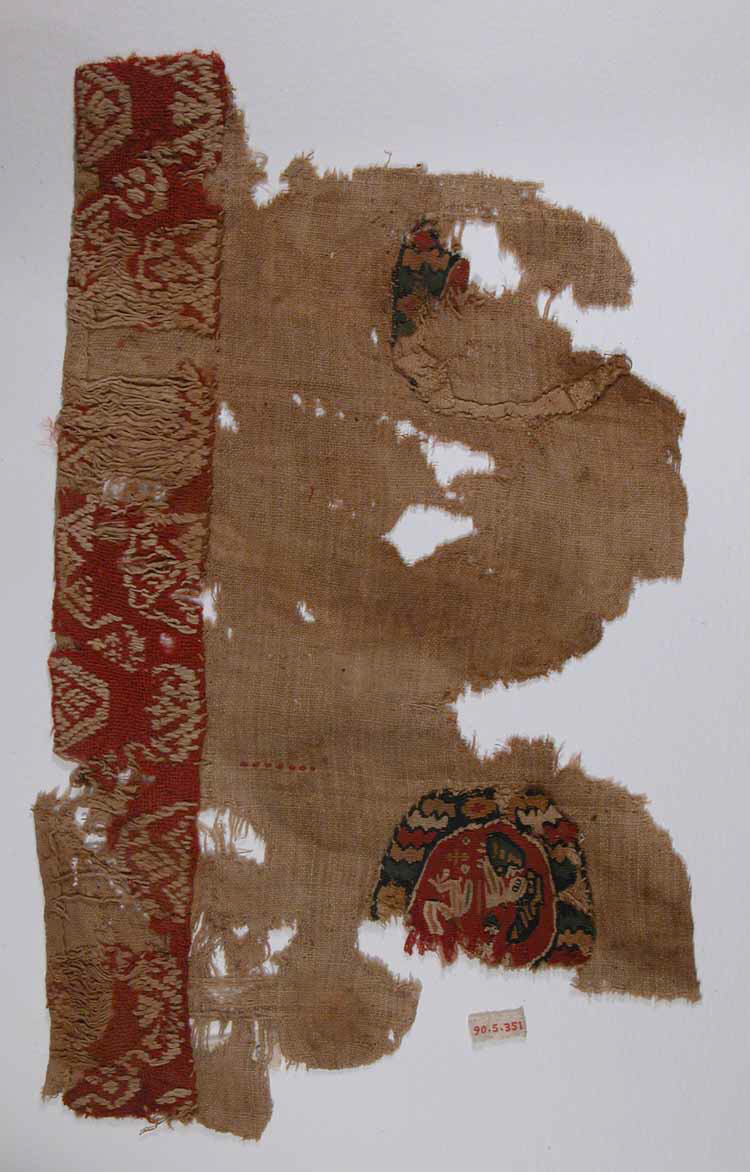
Executive Summary: The Fragment as a Strategic Artifact
This heritage analysis examines a fragment of a tunic from an ancient civilization, composed of wool and linen in plain and tapestry weaves. For Katherine Fashion Lab, this artifact transcends its physical remnants to become a strategic template for 2026 high-end luxury strategy. The fragment’s symbolic power, historical adornment, and spiritual meaning offer a blueprint for crafting narratives of authenticity, exclusivity, and transcendence—qualities increasingly vital in a saturated luxury market. By decoding the tunic’s cultural DNA, we can reposition Katherine Fashion Lab as a curator of timeless, meaningful luxury rather than a mere producer of seasonal collections.
Symbolic Power: Weaving Authority and Identity
Material as Metaphor
The choice of wool and linen in this tunic fragment is not arbitrary. In ancient civilizations, wool often symbolized earthly connection, warmth, and communal labor, while linen represented purity, light, and ritual status. The combination in a single garment—achieved through plain and tapestry weaves—suggests a deliberate fusion of mundane and sacred. For Katherine Fashion Lab, this duality offers a powerful symbolic framework: luxury as the integration of heritage and innovation. In 2026, high-end consumers seek brands that embody contradictions—tradition and futurism, craftsmanship and technology. The tunic’s material dialogue can inspire a capsule collection where wool and linen are juxtaposed with advanced bio-fabrics or digitally printed motifs, signaling that true power lies in synthesis.
Patterns of Prestige
Tapestry weave, often reserved for elite garments in ancient societies, allowed for intricate geometric or figurative designs that communicated lineage, social rank, or tribal affiliation. The fragment’s surviving pattern—likely a repeating motif of stylized flora or celestial symbols—served as a visual language of authority. For Katherine Fashion Lab’s 2026 strategy, this translates into signature iconography: a proprietary motif woven into every piece, creating instant brand recognition and a sense of belonging among clients. This echoes the logic of heraldry or monograms but with deeper cultural resonance, positioning each garment as a wearable artifact of personal and collective identity.
Historical Adornment: The Tunic as a Status System
Draped Hierarchy
The tunic’s cut—likely a simple T-shape with side seams—may appear modest, but its adornment function was anything but. In ancient civilizations, the length, sleeve width, and weave density signified rank: longer tunics for priests or rulers, shorter for laborers. The fragment’s fine tapestry bands at the neck or hem would have marked the wearer as elite. For Katherine Fashion Lab, this logic of adornment as stratification is a direct challenge to the democratization of luxury. In 2026, high-end strategy should reintroduce visible markers of exclusivity—not through logos, but through bespoke details: hand-finished edges, limited-edition weave patterns, or custom-dyed hues derived from historical palettes. The tunic teaches us that adornment is not decoration but a system of meaning.
Wear and Repair as Narrative
The fragment’s frayed edges and faded dye are not flaws but records of use. Ancient tunics were often mended, repurposed, or passed down, imbuing them with generational stories. For Katherine Fashion Lab, this suggests a 2026 luxury strategy centered on longevity and stewardship. Instead of disposable trends, offer a “tunic registry” where clients can return pieces for repair, personalization, or re-weaving with new narrative elements. This transforms the garment from a commodity into an heirloom, aligning with the rising demand for circular luxury. The fragment becomes a metaphor for the brand’s commitment to preserving both craft and client history.
Spiritual Meaning: The Tunic as a Conduit
Ritual and Transcendence
In many ancient civilizations, tunics were not merely clothing but ritual objects. Wool and linen garments were worn during ceremonies, funerals, or initiations, believed to channel divine energy or protect the wearer from malevolent forces. The tapestry motifs often depicted gods, ancestors, or cosmic patterns, transforming the tunic into a portable sanctuary. For Katherine Fashion Lab, this spiritual dimension offers a profound differentiation: luxury as a vehicle for inner transformation. In 2026, create a “Ritual Collection” where each piece is designed with intentional symbolism—a woven eye for protection, a hemmed spiral for growth, a hidden pocket for a personal talisman. Partner with cultural historians to ensure authenticity, and market the collection as an investment in spiritual well-being, not just aesthetics.
The Fragment as Relic
The incomplete nature of the fragment—its torn edges and missing sections—adds to its spiritual power. Ancient cultures often revered fragments as relics, believing they retained the essence of the whole. For Katherine Fashion Lab’s strategy, this suggests a curatorial approach to luxury: offer “fragment editions” where garments are deliberately incomplete, inviting the client to co-author the narrative. For example, a tunic might come with a raw edge meant to be embroidered by the wearer, or a missing sleeve to be replaced with a custom textile. This mirrors the spiritual practice of kintsugi (golden repair) and positions the brand as a facilitator of personal meaning, not a dictator of trends.
2026 High-End Luxury Strategy: From Artifact to Archetype
Strategic Pillars
Based on the tunic fragment’s analysis, Katherine Fashion Lab’s 2026 strategy should rest on three pillars: Material Narrative, Adornment as Identity, and Spiritual Stewardship. The first involves sourcing rare wool and linen from heritage farms and documenting their journey from fleece to fabric. The second requires a client consultation system that maps individual histories onto garment design, much like ancient tunics encoded personal status. The third demands a loyalty program centered on ritual—private ceremonies for new collection launches, guided meditations wearing the garments, or partnerships with wellness retreats.
Market Positioning
In a 2026 luxury landscape dominated by digital saturation and AI-generated designs, the fragment’s tactile, imperfect, and symbolic nature becomes a luxury asset. Katherine Fashion Lab should position itself as the “Archaeologist of Fashion”—a brand that excavates forgotten meanings and recontextualizes them for the modern elite. Pricing should reflect this: a tunic from the “Fragment Collection” could start at $5,000, justified by hand-weaving, historical research, and a certificate of symbolic provenance. Target clients are not just wealthy but culturally literate—collectors of art, patrons of museums, seekers of authentic experiences.
Collaborations and Storytelling
Partner with archaeological institutes to authenticate weave patterns and with spiritual leaders to develop garment blessings. Use immersive storytelling: each tunic comes with a digital “excavation journal” detailing the ancient civilization’s beliefs, the weaver’s technique, and the intended spiritual function. This transforms the purchase into an educational and emotional journey, reinforcing the brand’s authority in heritage luxury.
Conclusion: Weaving the Future from the Past
The fragment of a wool and linen tunic from an ancient civilization is far more than a textile remnant—it is a strategic Rosetta Stone for Katherine Fashion Lab’s 2026 high-end luxury strategy. Its symbolic power teaches us to weave meaning into materials; its historical adornment reveals luxury as a system of identity; its spiritual meaning invites us to treat garments as relics. By honoring the fragment’s legacy—its incompleteness, its ritual purpose, its material integrity—Katherine Fashion Lab can lead a luxury revolution that values depth over display, narrative over novelty, and transcendence over trend. The future of luxury is not in the new, but in the timelessly reimagined.