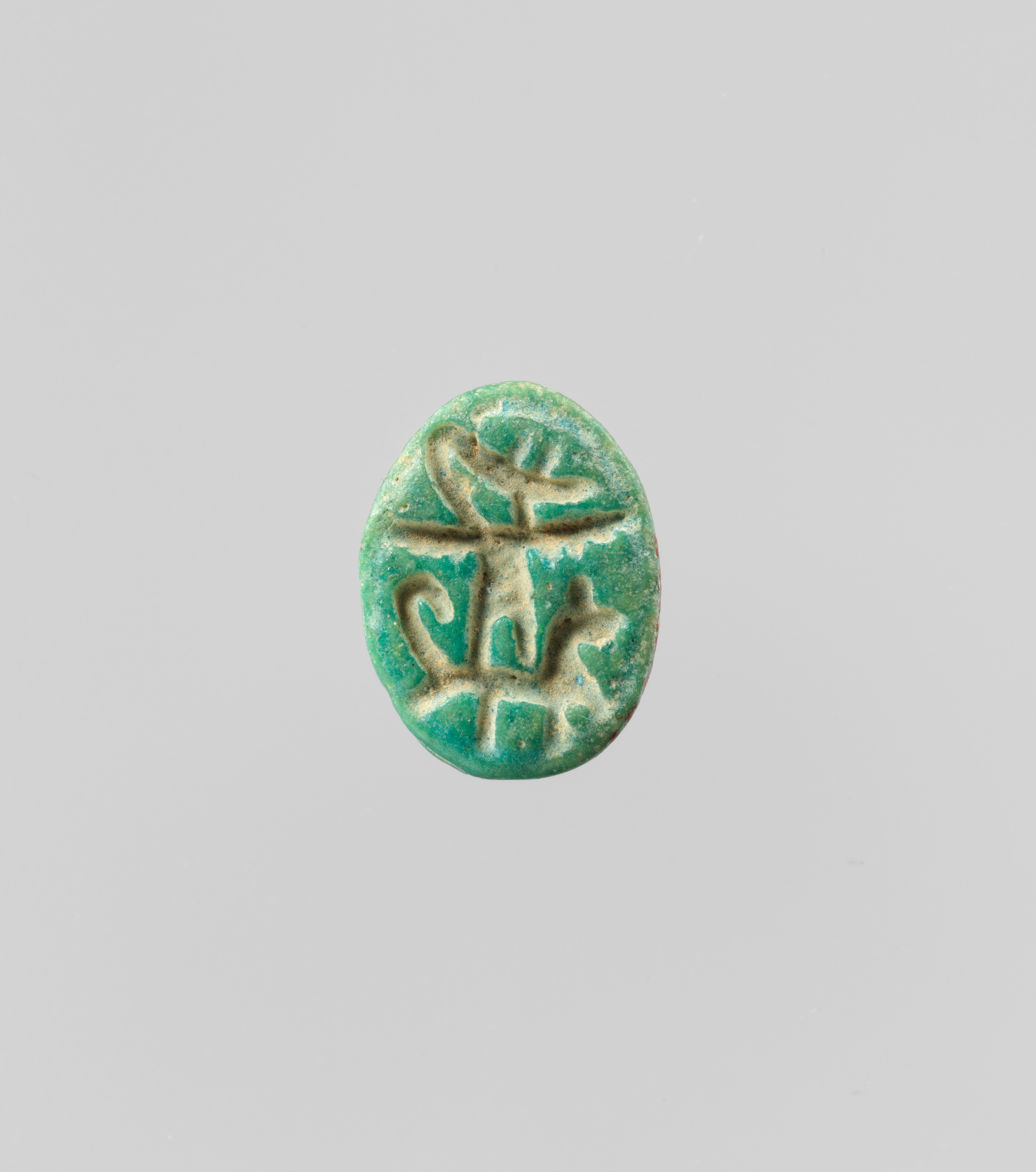
Heritage Analysis: Scarab with Figure of Seth-Baal on a Lion
This report presents a comprehensive heritage analysis of an exceptional artifact: a faience scarab bearing the figure of Seth-Baal astride a lion. Dated to the Late Bronze Age (circa 1550–1200 BCE), this object emerges from the cultural crossroads of the Eastern Mediterranean, where Egyptian, Canaanite, and Near Eastern iconographies merged. As a strategic standalone research piece for Katherine Fashion Lab, this analysis decodes the artifact’s symbolic power, historical adornment functions, and spiritual meanings, then translates these insights into a 2026 high-end luxury strategy. The scarab’s hybrid imagery—combining the Egyptian dung beetle (khepri) with the storm deity Seth-Baal mounted on a lion—offers a potent narrative for modern luxury: the fusion of protection, dominion, and transformation.
Symbolic Power: The Hybrid Iconography of Seth-Baal
Deconstructing the Scarab and the Deity
The scarab, in ancient Egyptian cosmology, represented the sun god Khepri, who rolled the sun across the sky each day, symbolizing rebirth, regeneration, and eternal creation. Its amuletic function was deeply protective, often placed over the heart of the deceased to ensure safe passage into the afterlife. When combined with the figure of Seth-Baal, a syncretic deity merging the Egyptian god of chaos, storms, and foreign lands (Seth) with the Canaanite storm god Baal, the scarab’s meaning amplifies dramatically. Seth-Baal was not merely a destructive force; he was a guardian of boundaries, a deity who controlled the unpredictable elements of nature and warfare. The lion, as the mount, further intensifies this symbolism: the lion in ancient Near Eastern and Egyptian art signified royal authority, solar power, and untamed strength. Thus, the scarab with Seth-Baal on a lion becomes a talisman of controlled chaos—a union of cosmic order (the scarab) and raw, sovereign power (the deity and lion).
Power as a Luxury Narrative
For Katherine Fashion Lab, this symbolic power translates directly into a luxury brand archetype: the Guardian of Transformation. In 2026, high-end consumers seek authenticity and narrative depth. The scarab’s message is clear: true luxury is not static perfection but the ability to harness disruptive forces—market volatility, cultural shifts, personal reinvention—and transform them into enduring value. A luxury collection inspired by this artifact would evoke controlled power, using motifs of the lion’s mane, the scarab’s wing cases, and the deity’s dynamic posture to suggest a brand that masters chaos rather than avoids it. This is a counter-narrative to safe minimalism; it is a call to bold, protective opulence.
Historical Adornment: The Amulet as Status and Identity
Material and Craftsmanship in Faience
Faience, a non-clay ceramic material composed of quartz, alkaline salts, and colorants, was a hallmark of ancient Egyptian and Levantine craftsmanship. Its brilliant blue-green glaze—achieved through a complex firing process—imitated turquoise and lapis lazuli, stones associated with the sky, Nile waters, and divine protection. The scarab’s small scale (typically 1–3 cm) belies its labor-intensive production: shaping the base, carving the hieroglyphs or figures, and applying the glaze required specialized knowledge. This was not a mass-produced trinket; it was a bespoke object of power, often commissioned by elites or royalty. The Seth-Baal motif, in particular, indicates a patron who navigated multiple cultural spheres—perhaps a Canaanite chieftain under Egyptian influence or an Egyptian official stationed in the Levant. Worn on a necklace, bracelet, or ring, the scarab was a public declaration of the wearer’s cosmopolitan identity and divine favor.
Adornment as Strategic Branding in 2026
Katherine Fashion Lab can leverage this historical precedent to redefine luxury adornment. In 2026, the luxury consumer craves objects that tell a story of cultural fluency and personal power. A high-end jewelry line could reinterpret the scarab as a modular talisman: a faience-inspired ceramic or enamel pendant that can be attached to various accessories—bags, belts, or collars. The Seth-Baal figure could be rendered in precious metal (white gold or blackened silver) with lion motifs in diamond pavé, creating a visual tension between the ancient matte glaze and contemporary brilliance. This approach transforms the artifact from a static historical piece into a dynamic, wearable asset. The strategic message: the wearer is not merely adorned; they are empowered by heritage, a custodian of ancient wisdom in a modern context.
Spiritual Meaning: Protection, Transition, and Dominion
Amuletic Function in the Afterlife and Daily Life
The scarab’s spiritual role was dual: it protected the living from malevolent forces (disease, evil eye, enemy attack) and guided the dead through the Duat (underworld). The Seth-Baal figure adds a layer of liminal guardianship. Seth, despite his chaotic nature, was also a protector of the sun god Ra during his nightly voyage, wielding a spear to slay the serpent Apophis. Baal, in Canaanite myth, defeated the sea god Yam and death itself (Mot), ensuring agricultural cycles and cosmic order. The lion, as a solar symbol, reinforces the deity’s role as a conqueror of darkness. Thus, the scarab with Seth-Baal on a lion is a spiritual technology for navigating transitions—death, war, migration, or personal crisis. It promises that the wearer will emerge victorious, transformed, and reborn.
Spiritual Resonance for Modern Luxury Consumers
In 2026, the luxury market is increasingly drawn to experiential and spiritual well-being. High-net-worth individuals seek objects that offer psychological resilience and a sense of purpose. Katherine Fashion Lab can position this scarab narrative as a ritual of renewal. A limited-edition collection could include a “Seth-Baal Talisman” with a hidden compartment for a personal inscription (a modern “spell”) or a small gemstone representing the wearer’s intent. The marketing campaign should frame the piece not as mere jewelry but as a transitional artifact—for career changes, personal milestones, or moments of global uncertainty. The spiritual meaning becomes a luxury differentiator: the brand offers protection and transformation, not just aesthetics.
2026 High-End Luxury Strategy: The Scarab as a Strategic Asset
Brand Positioning: The House of Controlled Chaos
Katherine Fashion Lab should adopt a “Seth-Baal” brand archetype for this collection: a luxury house that embraces complexity, power, and cultural hybridity. The 2026 consumer is fatigued by generic luxury; they desire brands that take a stand and tell unresolved stories. The scarab’s syncretism—Egyptian, Canaanite, and Near Eastern—mirrors the globalized, hybrid identities of today’s elite. The strategy: launch a capsule collection titled “Khepri-Seth: The Guardian of Liminality.” Each piece (necklaces, cufflinks, brooches) features a scarab base with a removable Seth-Baal lion figure, allowing the wearer to customize the narrative (protection vs. power).
Material and Craft Strategy
Use high-fire ceramic glazes in deep turquoise, lapis, and obsidian black to echo faience, combined with sustainable, responsibly sourced gold. The lion figure should be sculpted in 18-karat gold with a matte finish to evoke ancient metalwork, while the scarab’s wings are engraved with micro-hieroglyphs (modernized as abstract geometric patterns). This balances historical authenticity with contemporary luxury standards. Price points: $8,000–$50,000, positioning the collection as investment-grade heritage art.
Marketing and Consumer Experience
Develop an immersive digital experience: an AR app that “activates” the scarab when scanned, revealing a 3D animation of Seth-Baal on the lion and a narrated myth. Partner with a museum (e.g., the Metropolitan Museum of Art or the Louvre) for a co-curated exhibition on protective amulets. Offer private consultations where clients can select their “spiritual intent” (protection, transformation, dominion) and receive a personalized talisman. This transforms the purchase into a ritual of empowerment, aligning with the 2026 trend toward meaningful luxury.
Conclusion: The Legacy of the Seth-Baal Scarab
The scarab with the figure of Seth-Baal on a lion is far more than a historical curiosity; it is a blueprint for luxury that transcends time. Its symbolic power—the union of cosmic order and raw dominion—offers a compelling narrative for a modern brand that dares to be protective, transformative, and culturally fluent. By honoring the artifact’s material heritage (faience), its spiritual function (guardianship of transitions), and its historical role as a status marker, Katherine Fashion Lab can create a 2026 strategy that is both archaeologically rigorous and commercially visionary. This is not revivalism; it is strategic recontextualization. The scarab teaches us that luxury’s highest purpose is to empower the wearer to navigate chaos and emerge reborn—a message as relevant in the boardroom as it was in the ancient temple.