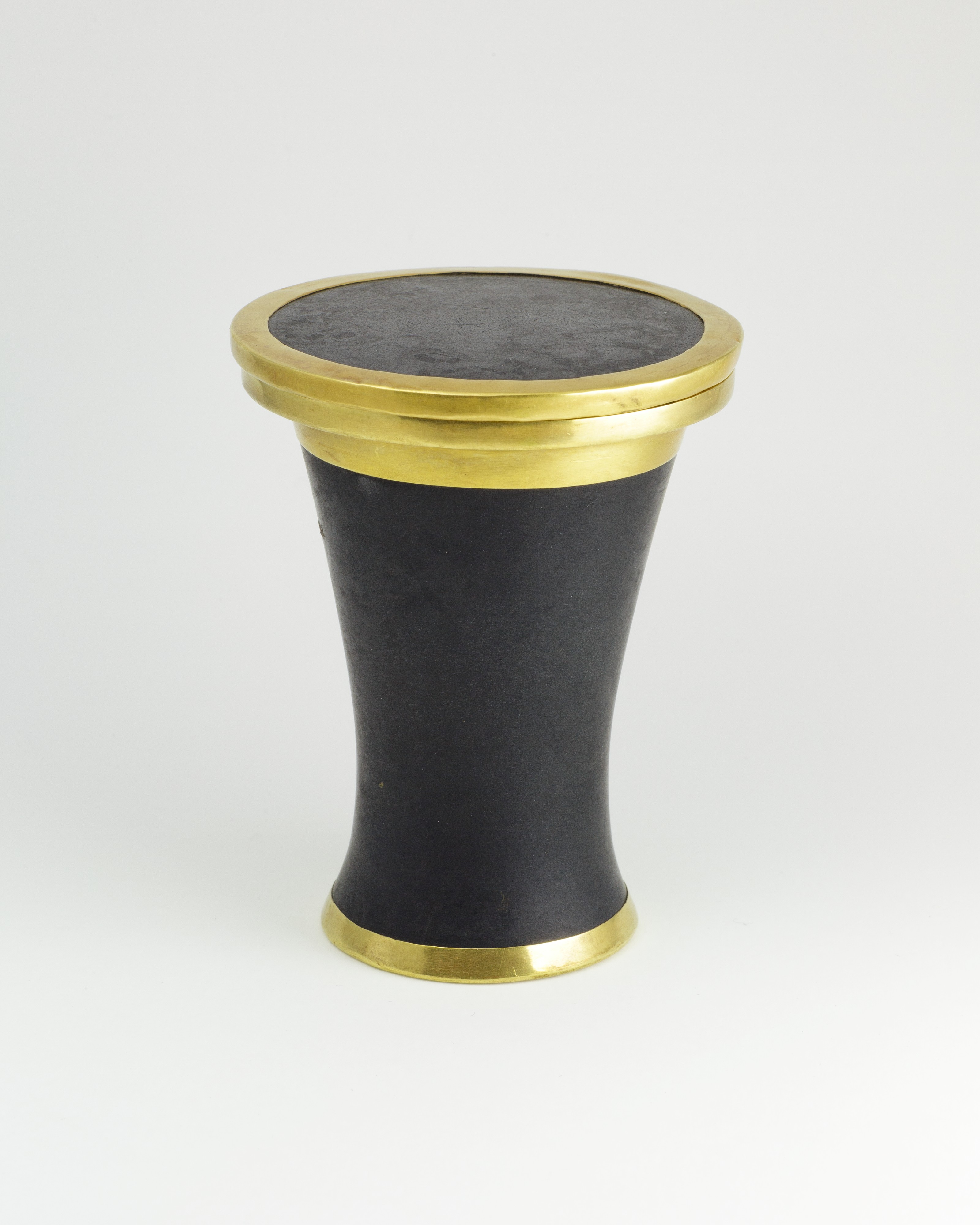
Heritage Analysis: The Ointment Jar of Sithathoryunet as a Strategic Archetype for Katherine Fashion Lab
In the rarefied air of high-end luxury, heritage is not merely a backdrop; it is a strategic asset, a narrative forge, and a source of irreducible codes. For Katherine Fashion Lab, the objective is not historical replication but the alchemical transformation of profound cultural patrimony into a resonant contemporary language. The Ointment Jar of Princess Sithathoryunet, a masterpiece from Egypt’s Middle Kingdom (c. 1887–1813 BCE), serves as an exemplary archetype for this process. Crafted from obsidian and gold, this object transcends its function as a cosmetic vessel to embody a complete philosophy of adornment—one that intertwines symbolic power, spiritual meaning, and regal identity. This analysis deconstructs its elements to inform a forward-looking 2026 luxury strategy centered on material integrity, symbolic depth, and spiritual resonance.
Deconstructing the Archetype: Symbolic Power and Historical Adornment
The jar’s immediate power derives from its material dichotomy and exquisite craftsmanship. Obsidian, a volcanic glass, was prized in antiquity for its rarity, mirror-like polish, and perceived mystical properties. Its deep black hue was associated with fertility, the life-giving Nile silt, and the nocturnal realm of deities. Gold, the flesh of the gods, represented eternal life and indestructibility. The combination is a deliberate statement: the impermeable, dark mystery of the obsidian body is captured, harnessed, and elevated by the luminous, divine gold of its mountings. This is not mere decoration; it is a cosmological statement rendered in miniature.
Furthermore, the object’s purpose as an ointment jar for kohl or perfumed unguents places it at the heart of ritualized adornment. In ancient Egypt, cosmetics were not superficial. They were apotropaic (warding off evil), medicinal, and deeply spiritual. The application of kohl protected the eyes from the sun and infection, but also invoked the divine sight of Horus. Unguents, often sacred and fragrant, purified the wearer and made them pleasing to the gods. Thus, Sithathoryunet’s jar contained substances that transformed the body into a sanctified, protected, and powerful entity. The vessel itself, by extension, became a sacred reliquary for this transformative power. Adornment was an act of spiritual preparation and a display of sovereign status—a dual function that luxury fashion continually seeks to emulate.
Spiritual Meaning and the Ritual of Possession
The spiritual narrative encoded within the jar extends beyond its contents to its very existence as a grave good from the princess’s tomb at Lahun. This context is crucial. The object was designed for eternity, to serve Sithathoryunet in the afterlife. Its flawless construction from non-corruptible materials speaks to a belief in permanence and legacy. For the modern luxury strategist, this translates into the concept of transgenerational value—creating items that are not for a season, but for a lifetime and beyond, intended to become heirlooms.
The ritual of using the jar—the act of unstopping it, anointing oneself—was a daily rite that connected the mortal to the divine. Katherine Fashion Lab can interpret this as the ritual of wearability and experience. High luxury in 2026 must move beyond the visual to curate the holistic experience of engagement with an object: its weight, its texture, its closure mechanism, the way it makes the wearer feel transformed. The product becomes a talisman, and the act of wearing it, a personal ritual of empowerment and identity affirmation.
Strategic Translation: A 2026 High-End Luxury Framework
Translating this archetype into a competitive 2026 strategy requires moving from inspiration to implementation. The following pillars form a potential framework for Katherine Fashion Lab:
Pillar 1: Radical Material Dialogues
Emulate the obsidian-and-gold dichotomy by pioneering unexpected, value-laden material pairings. This could mean juxtaposing cutting-edge sustainable polymers (echoing obsidian’s otherworldly, crafted origin) with ethically traced, fair-mined platinum or palladium (the modern equivalents of eternal gold). Research into lab-grown gemstones with unique inclusions or textured metals that tell a story of origin can create a new lexicon of luxury materials that speak of both innovation and depth.
Pillar 2: Adornment as Armor and Alchemy
Collections should be framed not as seasonal trends, but as “Modern Rituals” or “Personal Alchemies.” Develop narrative lines such as "The Protective Line" (structured outerwear and jewelry with talismanic forms, focusing on security and confidence), or "The Transformative Unguent" (luxurious foundational pieces—exquisite leathers, silks—that serve as a second skin, enhancing the wearer’s presence). Each piece should be accompanied by a narrative that explains its symbolic intent, much as the jar’s materials carried inherent meaning.
Pillar 3: The Sacred Vessel: Product as Legacy Object
Introduce an ultra-high-end category: the Heritage Vessel collection. This includes limited-edition handbags, vanity cases, and jewelry coffers designed as standalone art objects. These items would utilize premier materials, employ master artisans, and feature a distinct closure mechanism—a modern “seal”—that makes accessing them a deliberate ritual. They are marketed not as accessories, but as future heirlooms, complete with archival documentation and a brand-supported legacy service.
Pillar 4: The Sithathoryunet Client Journey: Curated Ritual
The acquisition process must mirror the object’s sacredness. This involves private, by-appointment consultations that are more akin to curatorial sessions, where the client’s personal narrative is discussed alongside the product’s heritage codes. Packaging should be an experience—layered, substantial, and reusable, designed to be kept. Post-purchase, clients could receive curated content on the historical archetypes that inspired their piece, forging a deeper intellectual and emotional connection.
Conclusion: From Tomb to Tomorrow
The Ointment Jar of Sithathoryunet stands as a testament to the highest principle of luxury: that true value lies at the intersection of the material, the symbolic, and the eternal. For Katherine Fashion Lab, its lessons are clear. The 2026 strategy must champion meaning over markup, ritual over rush, and legacy over liquidity. By re-framing adornment as a spiritual and empowering practice, and by crafting objects with the integrity and narrative depth of archaeological artifacts, the Lab can position itself not just within the fashion cycle, but within the broader, more powerful continuum of human culture and aspiration. In doing so, it will attract a discerning clientele that seeks not just to wear beauty, but to embody a story and possess a fragment of timelessness.