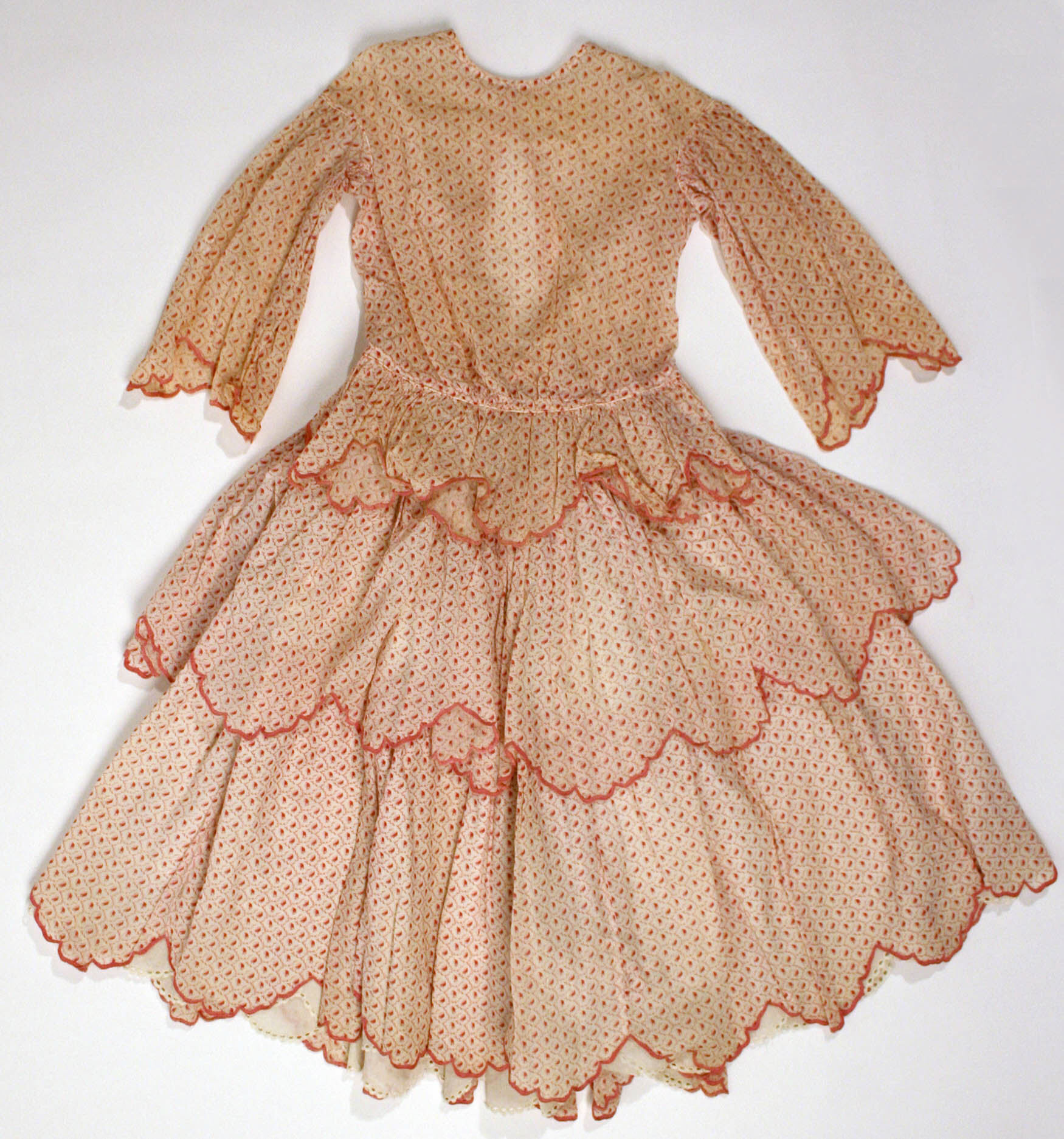
Deconstructing American Cotton: A Couture Analysis of the Katherine Fashion Lab Dress
In the rarefied atmosphere of high fashion, where silk, organza, and exotic leathers often dominate the atelier, the decision to elevate a humble, democratic fiber like cotton to couture status is a deliberate act of subversion. Katherine Fashion Lab’s standalone dress study, an American-origin garment constructed entirely from cotton, is not merely a piece of clothing; it is a thesis on materiality, national identity, and the redefinition of luxury. This analysis dissects the dress through the lenses of material provenance, structural design, and cultural resonance, arguing that the lab has transformed a quotidian fabric into a vessel for sophisticated, modern couture.
Material as Message: The Reclamation of American Cotton
The choice of cotton is the single most provocative element of this design. In a global market where Italian cashmere and French lace signify opulence, American cotton—particularly when sourced from regions like the Mississippi Delta or the Texas Plains—carries a complex historical weight. It is a fiber synonymous with both agricultural ingenuity and the painful legacy of plantation economics. Katherine Fashion Lab does not shy from this duality; instead, it reframes the narrative. The cotton used in this dress is not the mass-produced, mercerized thread of fast fashion. It is a bespoke, long-staple variety, likely Gossypium hirsutum, selected for its exceptional tensile strength and natural luster.
The fabric’s hand is critical to the couture argument. Through a proprietary finishing process—perhaps a light, enzymatic wash followed by mechanical softening—the cotton achieves a drape that rivals silk charmeuse. It holds a crease with the precision of a tailored wool but breathes with the ease of a summer shirting. This is not a fabric that merely covers; it behaves. The lab’s material science team has effectively engineered a textile that possesses the memory of linen and the fluidity of viscose, all while retaining the organic, breathable comfort that defines cotton’s democratic appeal. This transformation is the first act of couture: taking a raw, national resource and elevating it through technological artistry.
Structural Anatomy: The Architecture of Simplicity
At first glance, the dress presents as a study in minimalism—a sleeveless, midi-length silhouette with a clean neckline. Yet, a closer examination reveals a complex architectural underpinning. The bodice is constructed using a dartless patterning technique, where the garment’s shape is achieved entirely through the bias cut of the cotton panels. This requires an extraordinary degree of precision, as cotton on the bias has a tendency to stretch and distort. The lab has countered this with a hidden, internal structure: a fine, horsehair canvas fused to the interior of the front and back panels, providing a subtle, corset-like support without visible boning or seams.
The skirt employs a graduated godet system. From the hip to the hem, four triangular inserts—cut on the true bias—are sewn into the side seams. These godets are not merely decorative; they are functional, allowing the dress to flare gracefully during movement while maintaining a slender, columnar silhouette when the wearer is at rest. The hem itself is a work of hand-finishing. Rather than a standard machine-rolled edge, the lab has executed a shadow hem, where the fabric is folded twice and stitched with a single, invisible thread, creating a weightless finish that does not disrupt the cotton’s natural fall.
The closure is equally deliberate. A concealed, center-back zipper—made from a custom, matte brass alloy—is set into a placket reinforced with a narrow strip of self-fabric. This prevents the common issue of zipper ripple on lightweight cotton. Every stitch, from the French seams that encase raw edges to the hand-tacked shoulder pads (made from layers of cotton batting, not foam), speaks to a philosophy of invisible construction. The dress does not announce its complexity; it reveals it through wear.
The American Identity: Aesthetic and Ethical Considerations
This dress is unmistakably American in its ethos. It rejects the ornate, baroque tendencies of European couture houses in favor of a pragmatic elegance. The silhouette references the workwear of the 1940s—a utilitarian simplicity that values function over frivolity—but it is refined through the lens of contemporary minimalism. The color palette is restrained: a single, undyed, ecru tone that celebrates the natural hue of the cotton fiber. This is a deliberate rejection of synthetic dyes, aligning the garment with the principles of slow fashion and environmental stewardship.
From a supply chain perspective, the dress embodies a closed-loop system. The cotton is sourced from a regenerative farm in Georgia, processed in a New York mill that uses solar power, and assembled in a Brooklyn atelier that pays living wages. The dress is not just a product; it is a provenance document. The lab has included a QR code sewn into the side seam, linking to a digital trace of every step from seed to garment. This transparency is a form of modern luxury—a currency of trust in an era of greenwashing and opaque manufacturing.
Couture in Context: The Standalone Study
As a standalone study, this dress is a pedagogical tool. It exists outside the pressures of a seasonal collection, allowing the lab to explore a singular hypothesis: Can cotton, the fabric of American jeans and T-shirts, be recontextualized as a medium for haute couture? The answer, as evidenced by this piece, is a resounding yes. The dress succeeds because it does not mimic other luxury textiles. It does not pretend to be silk or lace. Instead, it amplifies its own nature—the crispness, the breathability, the subtle texture of the weave.
The garment’s versatility is another testament to its couture status. It can be styled with a leather belt for a day at the office, worn with bare feet for a coastal evening, or paired with a structured blazer for a gallery opening. This chameleon-like adaptability is the hallmark of a truly exceptional design. It is not a costume for a single occasion; it is a foundational piece that integrates into a modern wardrobe.
In conclusion, Katherine Fashion Lab’s cotton dress is a masterclass in restraint and innovation. It challenges the hierarchy of fabrics, proving that luxury is not inherent in the material but in the intention and execution applied to it. By grounding its design in American heritage, employing rigorous structural techniques, and committing to ethical production, the lab has created a garment that is both a cultural artifact and a wearable work of art. This dress is not just a study; it is a statement—a quiet, powerful declaration that the future of couture may well be woven from the most familiar of threads.