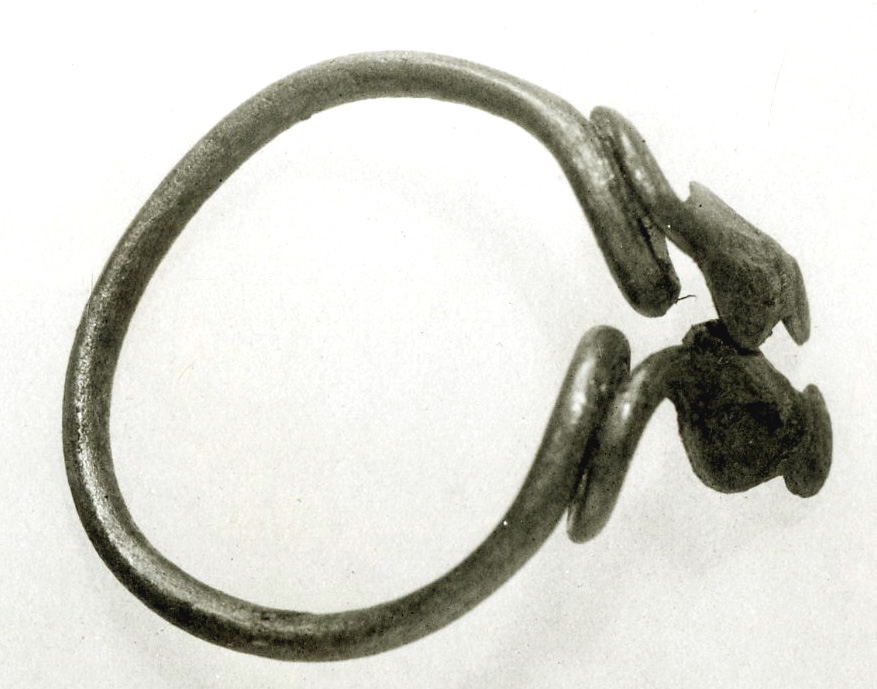
Executive Summary: Reforging Antiquity for the Modern Wrist
This strategic standalone research paper, prepared for Katherine Fashion Lab, presents a heritage analysis of the silver bracelet as a cultural artifact, tracing its lineage from ancient civilization to its potential recontextualization within a 2026 high-end luxury strategy. The analysis deconstructs the object across four critical vectors: its inherent symbolic power, its function as historical adornment, its deep-seated spiritual meaning, and its actionable potential for future-facing luxury positioning. We posit that silver, as a medium, is not merely a material choice but a narrative vessel—carrying connotations of lunar divinity, purity, and accessible prestige. By strategically excavating and reinterpreting these ancient codes, Katherine Fashion Lab can architect a collection that transcends mere accessory status, offering the modern connoisseur an artifact of profound personal symbolism and timeless authority.
I. Archeological Foundations: The Silver Bracelet in Ancient Civilization
The bracelet, one of humanity's most primordial adornments, emerged concurrently across early civilizations—from the Indus Valley and Mesopotamia to Ancient Egypt and the Greco-Roman world. Crafted in silver, its significance was immediately dualistic: a display of technical artistry and a dense repository of cultural meaning. Unlike gold, which was often reserved for divine or regal entities, silver occupied a nuanced space. Its source, mined from the earth, connected it to chthonic powers, while its luminous, moon-like sheen associated it with celestial cycles, femininity, and intuition. This inherent duality made silver the preferred medium for adornments that served as personal talismans and social signifiers. Artifacts reveal advanced techniques such as filigree, granulation, and repoussé, indicating that bracelet-making was a specialized, revered craft. The form itself—an unbroken circle—was universally recognized as a symbol of eternity, protection, and unity.
A. Symbolic Power and Social Adornment
In ancient contexts, the silver bracelet was rarely frivolous. It functioned as a non-verbal lexicon of power. In Sumerian and Akkadian societies, intricate silver cuffs denoted high social rank and military authority. For the Minoans, bracelets of spiraling silver wire symbolized elite status within a complex maritime culture. The symbolic power extended beyond hierarchy to encompass covenants and identity. In many cultures, bracelets were exchanged in oath-swearing ceremonies or given as diplomatic gifts, their solid form representing unbreakable bonds. As historical adornment, they were integral to the construction of public persona, articulating clan affiliation, marital status, and economic standing long before the advent of written contracts or identity cards. The wrist, a pivot point between hand and heart, was strategically chosen as the site for this declarative power.
B. Spiritual Meaning and Apotropaic Function
The spiritual meaning of the silver bracelet is perhaps its most potent heritage strand. Silver was believed to possess inherent purifying and protective properties. Ancient Egyptians inlaid silver bracelets with lapis lazuli and carnelian, not only for aesthetics but to channel the protective energies of the gods Isis and Hathor. In Greco-Roman traditions, silver was sacred to Artemis/Diana and Selene, lunar goddesses, making bracelets conduits for feminine divinity, chastity, and cyclical renewal. Crucially, these pieces served an apotropaic function—warding off the "evil eye" and malevolent spirits. The bracelet’s circular form was seen as a protective barrier, trapping good fortune and health within its circumference while deflecting harm. This transforms the object from ornament to artifact, a portable shrine and a shield for the soul.
II. Strategic Reinterpretation: A 2026 Luxury Framework for Katherine Fashion Lab
The 2026 luxury landscape will be defined by hyper-personalization, radical authenticity, and "quiet power" dressing. Consumers are investing in pieces with narrative depth and emotional resonance, moving away from overt logos toward what we term "insider symbolism." Katherine Fashion Lab's strategic opportunity lies in leveraging the ancient DNA of the silver bracelet to meet these advanced consumer needs. The goal is not replication, but resonant reimagination—creating heirlooms that speak the silent language of antiquity to the modern psyche.
A. From Adornment to Armament: The Symbolism of Personal Sovereignty
Our 2026 strategy must reframe the bracelet from accessory to intellectual and spiritual armament. Drawing on its ancient role as a badge of authority and covenant, collections can be developed around themes of "Modern Covenants" and "Sovereign Codes." Each piece should be presented not as a product, but as a ratified pact—with oneself, a partner, or a principle. Techniques like lost-wax casting, inspired by ancient molds, can create textures that feel archaeologically recovered. Engraving, a practice seen in Roman bracelets bearing inscriptions to Fortuna, can be updated with laser-micro-engraving of coordinates, personal mantras, or cryptographic symbols known only to the wearer. This invests the object with a non-transferable narrative, elevating its value beyond its material weight.
B. The Spiritual Techne: Re-enchanting the Material
To capture the spiritual meaning, we must embrace "re-enchantment" as a core design philosophy. This involves a deliberate, scholarly approach to symbolic language. Collections can be organized not by season, but by archetypal themes: The Luminary (channeling lunar cycles, with patinas that evolve like moon phases), The Aegis (focused on protection, incorporating symbolic forms like the Hamsa or Gordian knot reinterpreted in structural silver), and The Chthonic (connecting to earth energies, using raw, unpolished silver with organic inclusions). Collaborations with historians or cultural anthropologists can lend authentic credence. The accompanying brand mythology should educate the client on the heritage they are wearing, providing a "provenance card" detailing the historical inspiration, much like an artifact in a museum would have.
C. The 2026 Silver Standard: Materiality and Exclusivity
Silver’s historical position as "accessible prestige" is a strategic advantage in an era of both conscious consumption and aspiration. Our strategy must elevate it to a new luxury standard. This involves pioneering advanced silver alloys for enhanced durability and luster, sourcing traceable, ethically mined silver, and emphasizing artisanal techniques that showcase human mastery over the metal. Limited editions can be numbered and registered, drawing a direct parallel to the uniqueness of archaeological finds. Furthermore, the concept of "patina as a narrative" can be introduced—educating clients that the natural tarnishing and wear of silver is not a flaw, but a record of the object's journey, mirroring the way ancient bracelets bore the marks of their owners' lives. This philosophy champions imperfection and longevity, directly countering disposable fashion.
III. Conclusion: The Circle Unbroken
The silver bracelet, as analyzed through the lens of ancient civilization, is revealed as a complex instrument of identity, protection, and power. For Katherine Fashion Lab, this rich heritage is not a relic but a dynamic blueprint. The strategic imperative for 2026 is to synthesize these ancient truths—symbolic power, spiritual meaning, and masterful adornment—into a contemporary luxury language. By doing so, we transform the bracelet into a standalone category of immense value: a wearable archive for the discerning individual. It becomes a circle unbroken, connecting the wearer to a lineage of meaning, and offering not just an object of beauty, but a tool for self-definition in an uncertain world. This is the foundation for a collection that is academically rigorous, emotionally profound, and strategically disruptive in the high-end luxury arena.