Heritage Analysis: The Concertina as a Symbol of British Craftsmanship and Emotional Resonance
Introduction: The Concertina as a Cultural Artifact
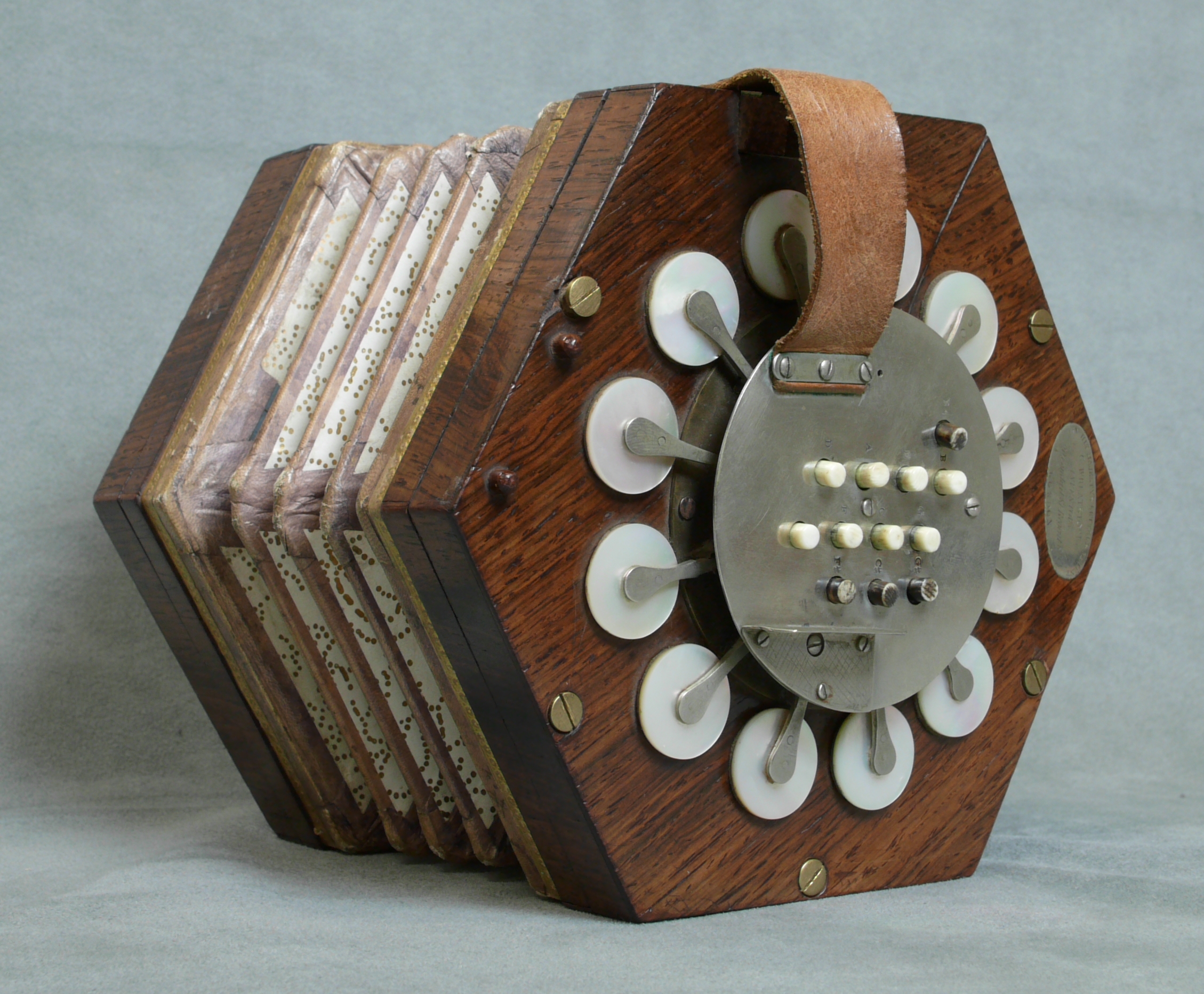
The concertina, a free-reed musical instrument patented in 1829 by Sir Charles Wheatstone, represents a unique intersection of British industrial innovation, artistic expression, and social history. Constructed from rosewood, nickel-silver, leather, paper, ivory, and tortoiseshell, and housed in a mahogany case, this instrument embodies a meticulous craftsmanship that transcends its functional purpose. For Katherine Fashion Lab, the concertina offers a compelling heritage asset—a symbol of emotional connectivity, historical adornment, and spiritual resonance that can be strategically leveraged for a 2026 high-end luxury strategy. This paper examines the concertina’s symbolic power, its role in historical adornment, its spiritual meanings, and its potential to inspire exclusive luxury positioning.
Symbolic Power: The Concertina as a Marker of Social and Cultural Identity
The concertina’s symbolic power lies in its dual identity as both a democratic instrument of the working class and a refined object of Victorian parlors. During the 19th century, it became synonymous with British folk music, sea shanties, and military bands, evoking themes of community, resilience, and nostalgia. Its portable size and expressive range allowed it to transcend class boundaries, from miners in Cornwall to officers in the British Army. This duality—accessible yet sophisticated—positions the concertina as a potent symbol of cultural inclusivity and heritage preservation.
For Katherine Fashion Lab, the concertina’s symbolic power can be reinterpreted as a metaphor for adaptive luxury. In an era where exclusivity often clashes with authenticity, the concertina represents a bridge between tradition and modernity. Its intricate construction—rosewood for warmth, nickel-silver for precision, and leather for durability—mirrors the layered craftsmanship that defines high-end fashion. By aligning with the concertina, Katherine Fashion Lab can signal a commitment to timeless artistry over transient trends, appealing to discerning consumers who value narrative depth.
Historical Adornment: The Concertina as an Object of Beauty and Status
Historically, the concertina was not merely an instrument but an adornment of personal identity. Its materials—rosewood, ivory, tortoiseshell, and nickel-silver—were chosen not only for acoustic properties but also for aesthetic appeal. The mahogany case served as a protective shrine, emphasizing the instrument’s value as a treasured possession. Victorian-era concertinas often featured intricate inlays, engraved metalwork, and decorative bellows, transforming them into wearable art when carried or displayed.
This emphasis on adornment aligns with Katherine Fashion Lab’s core competency in creating objects of desire. The concertina’s historical role as a status symbol—owned by royalty, aristocrats, and cultural icons like author Thomas Hardy—offers a blueprint for exclusivity through heritage. By incorporating design motifs from historical concertinas (e.g., geometric patterns, floral engravings, or tortoiseshell accents) into 2026 collections, the brand can evoke a sense of curated nostalgia. For example, limited-edition accessories or garments that echo the instrument’s rosewood warmth or nickel-silver sheen could serve as conversation pieces, linking wearers to a storied past.
Spiritual Meaning: The Concertina as a Vessel for Emotion and Connection
Beyond its physical form, the concertina holds profound spiritual meaning. In British folk tradition, it was often used in rituals of mourning, celebration, and storytelling, acting as a conduit for collective emotion. The bellows’ expansion and contraction mimic the rhythm of breath, symbolizing life cycles, transformation, and emotional release. The instrument’s ability to produce both melancholic drones and lively jigs reflects the duality of human experience—a theme resonant with contemporary luxury consumers seeking meaningful consumption.
For Katherine Fashion Lab, this spiritual dimension offers a unique positioning: the concertina as a symbol of authentic connection in a fragmented world. In 2026, high-end luxury strategies increasingly prioritize experiential storytelling over material accumulation. The concertina can inspire a narrative of inner harmony and shared humanity, perhaps through collaborations with musicians or artisans who restore vintage instruments. A capsule collection inspired by the concertina’s spiritual essence—featuring flowing silhouettes that mimic bellows, or tonal palettes of mahogany, ivory, and nickel—could evoke a sense of sacred craftsmanship. This approach aligns with the growing demand for slow luxury, where products are revered for their emotional and historical weight.
Strategic Implications for 2026 High-End Luxury
Leveraging the concertina’s heritage for a 2026 luxury strategy requires a multi-faceted approach that integrates symbolic, aesthetic, and spiritual elements. Below are key strategic recommendations for Katherine Fashion Lab:
1. Material Storytelling and Craftsmanship
The concertina’s materials—rosewood, nickel-silver, leather, paper, ivory, and tortoiseshell—offer a rich vocabulary for material storytelling. Katherine Fashion Lab can develop a 2026 collection that pays homage to these elements through sustainable alternatives (e.g., responsibly sourced wood, recycled metals, or bio-based leathers). By highlighting the artisan techniques used in concertina-making—such as hand-stitching bellows or engraving metal—the brand can position itself as a guardian of endangered crafts. This resonates with the luxury consumer’s desire for transparency and ethical opulence.
2. Limited-Edition Collaborations
Partnering with contemporary instrument makers or heritage restoration workshops can yield exclusive, co-branded pieces. For instance, a concertina-inspired handbag that incorporates a working miniature bellows or a jewelry line featuring nickel-silver filigree could serve as collectible art. Such collaborations reinforce the brand’s commitment to cultural preservation while generating scarcity-driven demand.
3. Experiential Retail and Immersive Narratives
In 2026, luxury retail must transcend transactional interactions. Katherine Fashion Lab could create pop-up experiences that evoke a Victorian music salon, where clients can handle restored concertinas, hear live performances, and learn about the instrument’s history. This sensory immersion deepens emotional engagement and positions the brand as a curator of heritage. Digital extensions, such as augmented reality filters that overlay concertina motifs onto garments, can further amplify reach among younger, tech-savvy consumers.
4. Spiritual and Emotional Branding
The concertina’s spiritual symbolism—breath, transformation, connection—can inform a brand narrative centered on inner luxury. Marketing campaigns might feature testimonials from musicians or historians, exploring how the instrument fosters mindfulness and community. This contrasts with the often-impersonal nature of high-fashion branding, offering a humanistic counterpoint that appeals to values-driven buyers.
Conclusion: The Concertina as a Blueprint for Heritage-Driven Luxury
The concertina is far more than a musical instrument; it is a cultural cipher that encodes British history, craftsmanship, and spirituality. For Katherine Fashion Lab, its strategic deployment in a 2026 luxury strategy offers a pathway to differentiation through authenticity. By embracing the concertina’s symbolic power, historical adornment, and spiritual meaning, the brand can create a narrative that resonates with the modern luxury consumer’s quest for depth, beauty, and connection. In an industry often criticized for superficiality, the concertina reminds us that true luxury is not merely possessed—it is felt, remembered, and passed down.