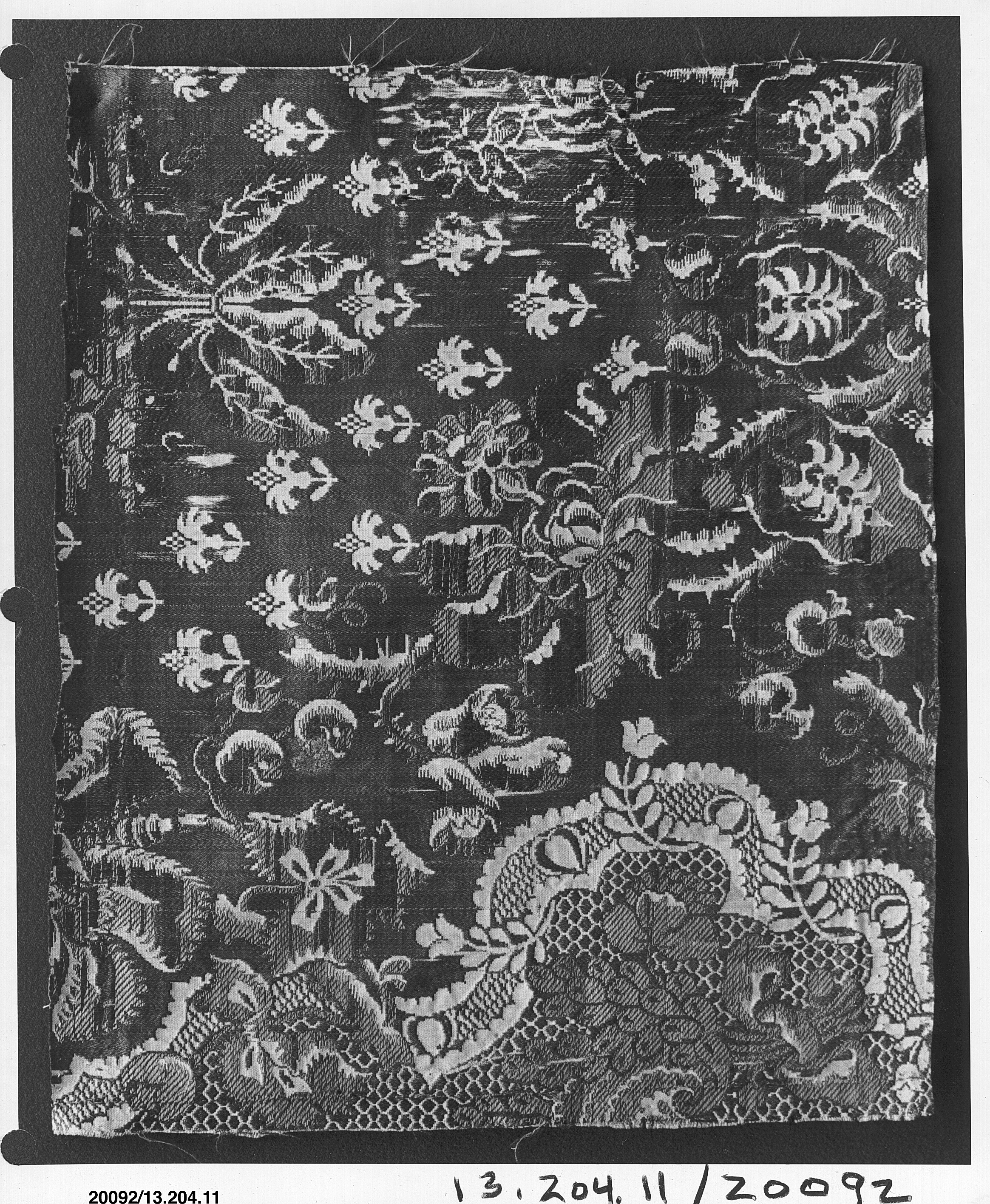
Fragment: The Art of Incomplete Grandeur
In the rarefied world of haute couture, where precision and perfection are often revered as the highest virtues, Katherine Fashion Lab’s latest standalone study, “Fragment,” offers a radical reimagining of what luxury can represent. By centering the collection on the concept of the fragment—a broken piece, a remnant, an incomplete whole—the Lab challenges the very foundations of fashion’s traditional narrative. This is not a collection about mending or restoring; it is about celebrating the inherent beauty of what remains, the poetics of absence, and the narrative power of the unfinished. The choice of silk as the primary material elevates this discourse from mere conceptual art to a tactile, wearable meditation on heritage and transformation.
Deconstructing the Fragment: A Philosophical Framework
The fragment, as a design principle, operates on multiple levels within this study. First, it is a literal gesture: garments are constructed from asymmetrical panels, raw edges are left unhemmed, and intricate silk weaves are deliberately interrupted by voids or sheer zones. Yet, the fragment is also a metaphorical tool. Katherine Fashion Lab draws from a rich tapestry of Global Heritage, not by replicating entire traditional costumes, but by extracting and isolating singular motifs—a single Mughal-inspired embroidery pattern, a lone Japanese shibori fold, a fragment of a Byzantine textile’s geometric grid. These elements are not contextualized within their original cultures but are presented as autonomous, floating signifiers. This approach avoids the pitfalls of cultural appropriation by refusing to claim completeness; instead, it acknowledges the fragmented nature of how heritage is perceived in a globalized world—as a collection of beautiful, often decontextualized, parts.
The result is a collection that speaks to the contemporary condition: we are all, in a sense, fragments of multiple histories, identities, and geographies. The garments do not tell a single story; they invite the wearer to construct their own narrative from the pieces offered. This is a sophisticated departure from the typical “global inspiration” collection, which often synthesizes disparate elements into a false, harmonious whole. Here, the dissonance is the point. The raw, unfinished silk edges are not flaws but deliberate statements, echoing the Wabi-sabi aesthetic of finding beauty in imperfection, while also referencing the deconstructivist philosophies of designers like Rei Kawakubo, albeit with a more opulent, silk-driven vocabulary.
Silk as a Medium of Memory and Fragility
Silk, in this study, is not merely a fabric; it is a protagonist. Its intrinsic qualities—luminosity, fluidity, and a paradoxical combination of strength and fragility—make it the perfect vehicle for the fragment concept. Katherine Fashion Lab employs a range of silk weights and weaves, from gossamer Chiffon to heavy Dupioni and matte Habotai. The choice is strategic: lighter silks are used for draped, almost disintegrating layers that catch light and shadow, creating a sense of ephemeral presence. Heavier silks are cut into sharp, architectural fragments—a single sleeve, a half-cape, a detached collar—that stand as sculptural objects in their own right.
One of the most compelling techniques is the use of “negative space” cutting, where sections of the silk are entirely removed, leaving only the structural seams or delicate silk threads to hold the garment together. This creates a visual and tactile dialogue between presence and absence. For instance, a floor-length gown in ivory silk charmeuse features a large, irregular void across the torso, exposing the skin beneath. The edges of this void are not finished but left raw, the silk threads slightly frayed, as if the garment has been torn by time itself. This is not a display of nudity for shock value; it is a profound commentary on the fragmentary nature of memory and the body’s role as a vessel for incomplete histories.
Furthermore, the Lab’s treatment of silk through natural dyeing and hand-painting reinforces the theme. Colors are not uniform; they fade, bleed, and pool in irregular patterns, mimicking the effects of age and wear. Indigo blues bleed into raw whites, ochre yellows stain the edges of a fragmented sleeve, and deep burgundy splatters evoke the patina of ancient textiles. This deliberate imperfection transforms each garment into a unique artifact, a fragment of a larger, unknowable whole.
Global Heritage: A Cartography of Fragments
The Global Heritage origin of this study is not rendered through literal motifs but through a sophisticated, abstracted language. Katherine Fashion Lab has curated a visual lexicon that draws from three primary cultural fragments: the Mughal miniature, the Japanese kimono sleeve, and the European Renaissance slashing technique. Each is treated not as a full reference but as a single, isolated element.
The Mughal influence appears in the form of hand-embroidered “fragments” of floral and geometric patterns, placed asymmetrically on a single shoulder or at the hemline of a skirt. These embroideries are not completed; they start abruptly and end in a fray of loose silk threads, as if the artisan was interrupted mid-stitch. The Japanese kimono influence is seen in the construction of “fragment sleeves”—wide, rectangular panels that attach to the bodice only at the shoulder, leaving the rest to hang freely or be pinned in place by a single, oversized brooch. This deconstruction of the sleeve’s traditional form emphasizes the garment’s incompleteness, inviting the wearer to adjust and reinterpret it.
The Renaissance slashing technique, historically used to reveal contrasting fabrics beneath, is reinterpreted here through strategic cuts in the silk that reveal not a second fabric, but the bare skin or a sheer, translucent underlayer. This is a direct visual metaphor for the fragment as a window into what lies beneath—the body, the self, the intangible essence of heritage. By combining these disparate cultural fragments without synthesizing them, the Lab creates a garment that is a true palimpsest, where multiple histories are written, erased, and rewritten in a single piece of silk.
Standalone Study: The Garment as Artifact
Contextualizing “Fragment” as a standalone study is a deliberate curatorial choice. Unlike a seasonal collection, which is designed to be consumed and replaced, this study positions each garment as an autonomous object of contemplation. The pieces are not intended for mass production or even for a typical runway show. Instead, they are presented as artifacts in a gallery-like setting, often suspended from the ceiling or displayed on minimalist mannequins that emphasize the garments’ sculptural qualities. This context reinforces the idea that the fragment is not a stepping stone to something else; it is the final, celebrated form.
The construction techniques themselves become part of the study. Seams are left exposed, not as a sign of poor craftsmanship, but as a record of the garment’s making. Basting stitches are visible in some areas, while in others, the silk is held together by a single, delicate knot. This transparency invites the viewer to understand the garment as a process, not a product—a fragment of the designer’s labor and intent. The standalone study also allows for a deeper exploration of materiality. Without the constraints of a collection’s theme or commercial viability, the Lab can push the boundaries of silk manipulation, experimenting with laser-cut fragmentation, hand-dyed gradients, and reversible constructions that allow the wearer to choose which fragment to reveal.
Conclusion: The Power of the Incomplete
Katherine Fashion Lab’s “Fragment” is a masterclass in restraint and intellectual rigor within the often-excessive world of couture. By embracing the fragment, the Lab acknowledges that true luxury is not about completeness or perfection, but about the courage to leave things unfinished. The use of silk as a medium for this exploration is inspired, as its natural elegance and fragility perfectly mirror the themes of memory, heritage, and the passage of time. This standalone study does not offer answers; it offers questions. It does not present a finished story; it provides the pieces for the wearer to construct their own. In doing so, “Fragment” becomes a profound reflection on the nature of beauty itself—beauty that is found not in the whole, but in the broken, the leftover, the precious piece that remains. It is a testament to the idea that sometimes, the most powerful statement is the one that is only partially made.