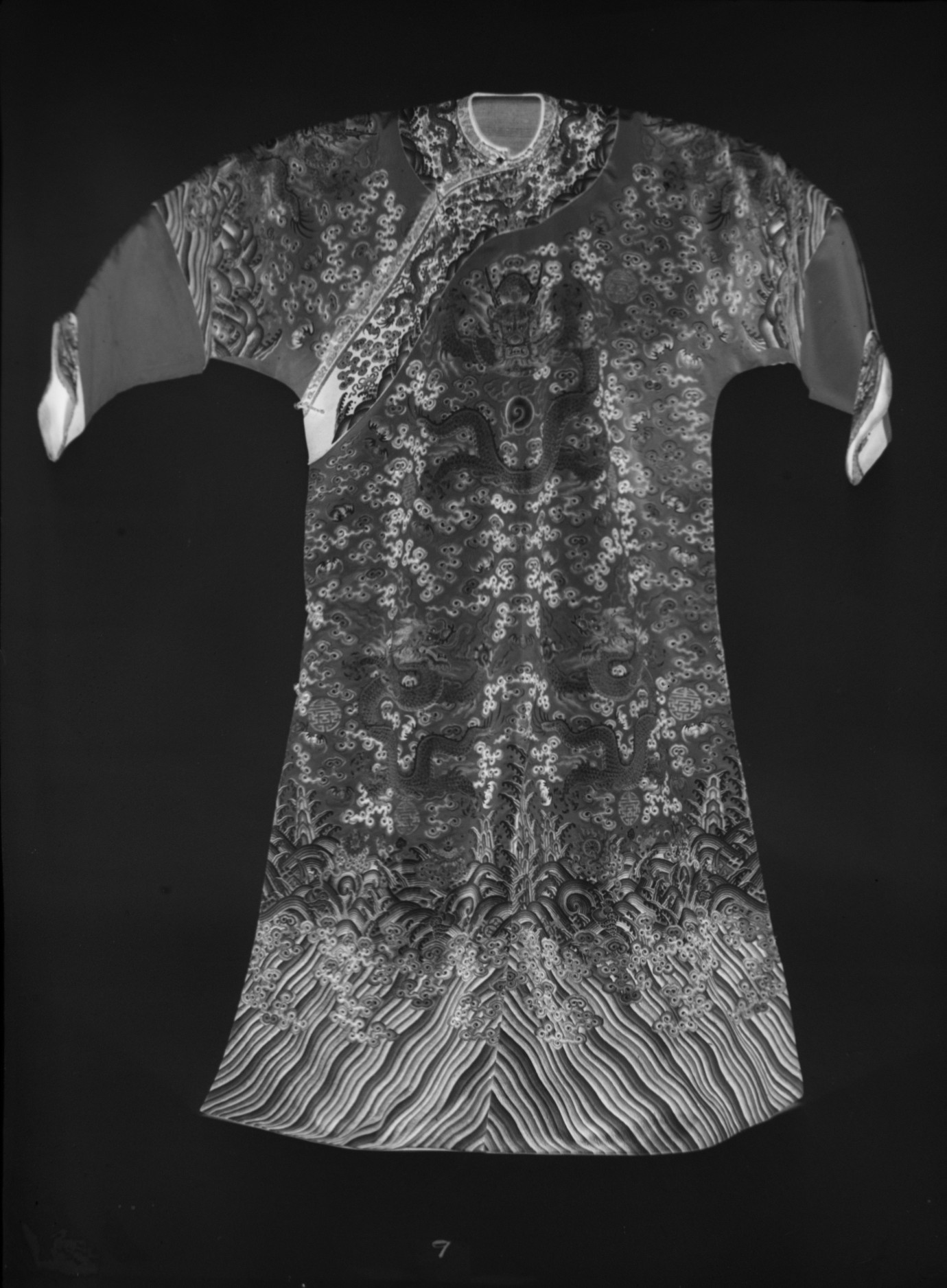
The Imperial Court Robe: A Study in Power, Symbolism, and Artisanal Mastery
At Katherine Fashion Lab, we approach couture not merely as garment construction but as a dialogue between history, materiality, and cultural identity. The Imperial Court Robe from China, rendered in silk and metallic thread, represents an apex of sartorial sophistication—a wearable artifact that transcends fashion to embody dynastic authority, cosmological order, and unparalleled craftsmanship. This standalone analysis dissects the robe’s design language, technical execution, and symbolic resonance, offering insights that inform contemporary haute couture practices.
Historical and Cultural Context: The Robe as Imperial Edict
The Imperial Court Robe, often associated with the Qing Dynasty (1644–1912), was not merely ceremonial attire but a codified instrument of state. Worn by emperors, empresses, and high-ranking officials, each robe adhered to strict sumptuary laws that dictated color, motif, and construction. The silken foundation—a lustrous, hand-woven fabric—signified wealth and access to rare resources, while the metallic thread, typically gold or silver wrapped around a silk core, denoted divine favor and imperial mandate. The robe’s silhouette, with its wide sleeves, cross-collared closure, and floor-length hem, was designed to project gravitas and immobility, reinforcing the emperor’s role as the “Son of Heaven” whose movements were deliberate and symbolic.
In a standalone context, this robe demands analysis as a narrative object. Its construction is a testament to the Ming and Qing dynasties’ sophisticated textile workshops, where artisans spent months—sometimes years—on a single garment. The use of metallic thread, for instance, required meticulous twisting and gilding techniques that few modern ateliers can replicate. For Katherine Fashion Lab, this robe serves as a benchmark for couture as cultural stewardship, where preservation of technique is as vital as innovation.
Material Analysis: Silk and Metallic Thread as Mediums of Power
The choice of materials in the Imperial Court Robe is neither arbitrary nor purely aesthetic. Silk, harvested from the cocoons of Bombyx mori, was a closely guarded Chinese monopoly for centuries. Its natural luster, tensile strength, and ability to absorb dyes made it the ideal canvas for intricate embroidery. In this robe, the silk is likely a satin weave, characterized by a smooth, reflective surface that amplifies the brilliance of metallic threads. The weight of the silk—often between 8 and 12 momme—provides structure without sacrificing drape, allowing the robe to fall in controlled, regal folds.
The metallic thread is equally deliberate. Historically, gold thread was created by wrapping thin strips of gold leaf around a silk core, a process known as couching. This technique not only preserved precious metal but also allowed for flexible, intricate designs. In the robe, metallic threads form the dragon motifs—five-clawed for the emperor—and cloud patterns, which together symbolize cosmic authority and the emperor’s role as mediator between heaven and earth. The interplay of light on these threads creates a dynamic visual effect: the robe appears to shimmer with movement, as if animated by imperial breath.
From a couture perspective, the materiality of this robe offers lessons in luxury as endurance. Unlike modern fast fashion, these materials were chosen for longevity. Silk resists degradation when properly stored, and metallic thread does not tarnish if protected from humidity. For contemporary designers, this underscores the value of investing in high-quality, sustainable materials that age with grace—a principle Katherine Fashion Lab champions in our own collections.
Design and Symbolism: The Grammar of Imperial Motifs
The robe’s design is a lexicon of Chinese cosmology. The dragon, or long, is the most prominent motif, representing yang energy, imperial power, and good fortune. On this robe, the dragon is depicted with five claws, a privilege reserved exclusively for the emperor. Its sinuous body, often surrounded by flaming pearls—symbols of wisdom and spiritual energy—suggests the emperor’s ability to navigate the heavens and earth. The placement of dragons on the chest, back, and shoulders creates a protective armor, reinforcing the ruler’s invincibility.
Secondary motifs include clouds, waves, and mountains. The clouds, often rendered in swirling metallic thread, signify transcendence and the emperor’s connection to celestial realms. The li shui (standing water) pattern at the robe’s hem—a series of parallel, wavy lines—represents the seas and the emperor’s dominion over all territories. Mountains, often depicted as triangular peaks, symbolize stability and the earth’s foundation. Together, these motifs form a microcosm of the Chinese worldview: a harmonious universe where the emperor maintains order between heaven, earth, and water.
Color, too, is a critical signifier. The imperial yellow ground—achieved through dyes derived from the Sophora japonica tree or turmeric—was exclusively for the emperor. This hue, associated with the center of the universe in Chinese five-element theory, distinguished the ruler from all others. The contrast between the yellow silk and gold metallic thread creates a monochromatic opulence that is both subtle and commanding. In contemporary couture, this principle of chromatic restraint—using a limited palette to maximize impact—is a hallmark of sophisticated design.
Craftsmanship and Technique: The Atelier as Temple
The construction of the Imperial Court Robe exemplifies the highest standards of Chinese embroidery, particularly the satin stitch and couching technique. The satin stitch, used for filling large areas like dragon scales, involves long, parallel threads that create a smooth, reflective surface. Couching, used for metallic threads, involves laying the metal filament on the fabric and securing it with small, invisible stitches of silk. This method prevents the metallic thread from fraying and allows for precise, curved lines—essential for the dragon’s flowing form.
The robe’s seams are equally refined. The cross-collared closure (jiaoling youren) is secured with silk knots or small jade buttons, ensuring a clean, symmetrical front. The sleeves, wide enough to accommodate multiple layers, are lined with a contrasting silk to prevent wear. The hem is reinforced with a narrow band of brocade, preventing fraying from contact with the ground. Every detail, from the hand-stitched button loops to the invisible interior finishing, speaks to an atelier culture where perfectionism is non-negotiable.
For Katherine Fashion Lab, this robe underscores the importance of artisanal collaboration. The creation of such a garment would have involved a team of specialists: dyers, weavers, embroiderers, and tailors, each with generations of tacit knowledge. In our own practice, we seek to replicate this model by partnering with master artisans in silk weaving and hand embroidery, ensuring that these techniques survive into the 21st century.
Contemporary Relevance: Lessons for Modern Couture
The Imperial Court Robe is not a relic but a living blueprint for modern haute couture. Its emphasis on narrative-driven design—where every stitch tells a story—challenges today’s fashion industry to move beyond trend cycles and toward timelessness. The robe’s use of sustainable materials (natural silk, precious metals) and slow production (months of handwork) aligns with contemporary calls for ethical luxury. Moreover, its gender-neutral silhouette—voluminous, structured, and devoid of overt sexualization—offers a model for inclusive design that prioritizes presence over provocation.
In conclusion, this standalone study of the Imperial Court Robe reveals a garment that is at once a political statement, a cosmological map, and a masterpiece of textile engineering. For Katherine Fashion Lab, it reaffirms our commitment to couture as a vessel for cultural memory—a practice that honors the past while inspiring the future. As we continue to explore global textile traditions, we invite our audience to see in this robe not just a historical artifact, but a call to elevate fashion into an art form worthy of emperors.