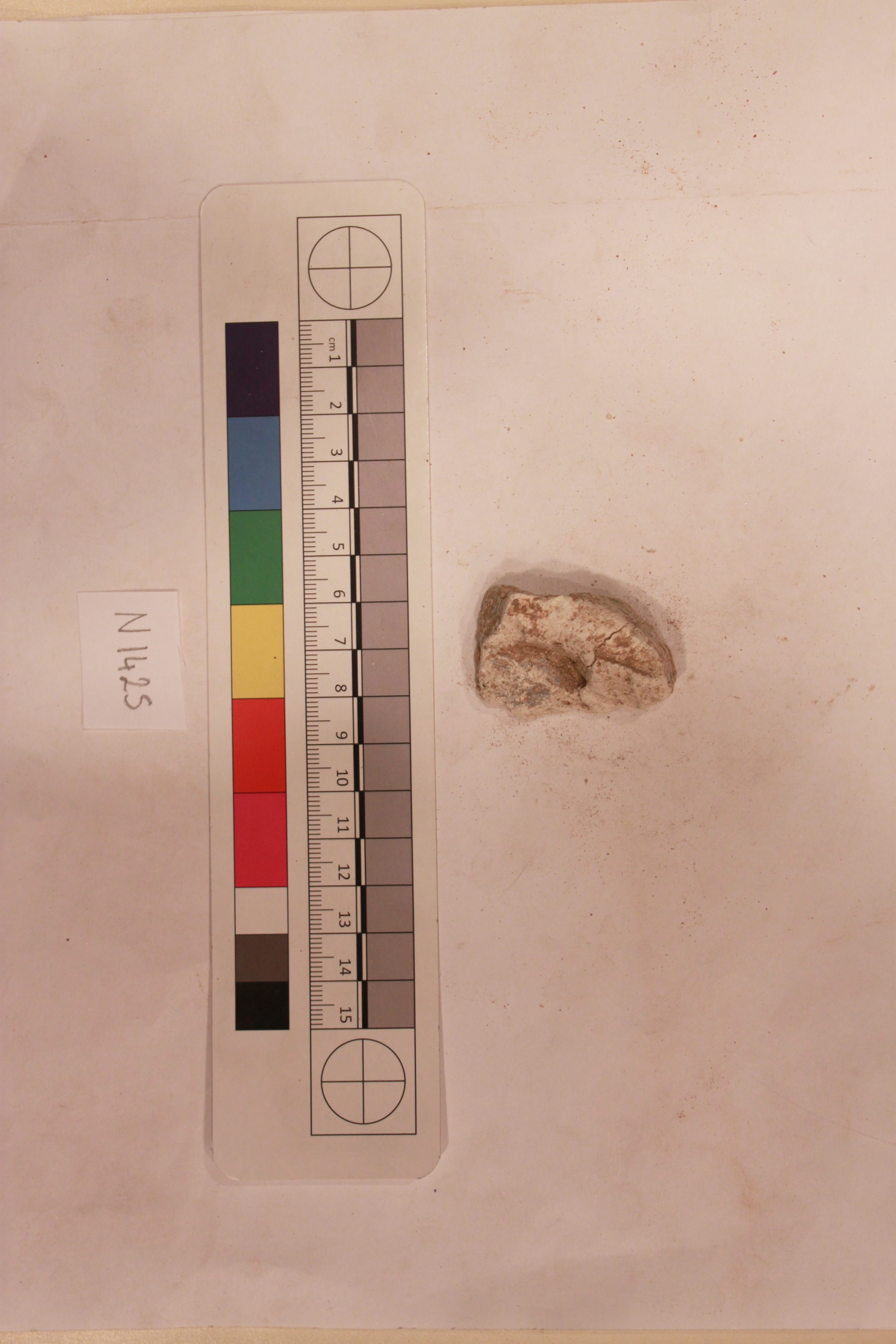
Executive Heritage Analysis: Stucco Fragment as a Strategic Artifact for Katherine Fashion Lab
This research paper presents a comprehensive heritage analysis of a carved and painted stucco fragment from an ancient civilization, commissioned by Katherine Fashion Lab for strategic standalone research. The artifact, composed of mortar and adorned with intricate carving and polychrome pigmentation, offers profound insights into symbolic power, historical adornment, and spiritual meaning. By decoding these ancient visual languages, Katherine Fashion Lab can derive actionable strategies for a 2026 high-end luxury collection that bridges timeless cultural resonance with contemporary exclusivity.
Symbolic Power: Decoding Authority and Status in Mortar
The stucco fragment, though fragmented, retains a potent lexicon of symbolic power. In ancient civilizations, stucco was not merely a structural material but a medium for encoding hierarchical authority. The carved motifs—likely geometric patterns, mythological figures, or zoomorphic forms—served as visual markers of divine or royal legitimacy. For instance, in Mesoamerican cultures such as the Maya, stucco reliefs on temples and palaces depicted rulers in communion with deities, reinforcing their semi-divine status. Similarly, in the ancient Near East, stucco friezes in palaces like those of Persepolis communicated imperial reach through repetitive, symmetrical imagery of tribute-bearers and guardians.
The painted surface, even with pigment loss, indicates intentional color symbolism. Red ochre often signified life force or sacrifice, blue represented the heavens or water, and yellow denoted wealth or the sun. For Katherine Fashion Lab, this symbolic density offers a template for luxury branding as coded authority. In 2026, high-end consumers seek not just products but narratives of provenance and power. By integrating stucco-inspired motifs—such as carved geometric borders or pigment-derived color palettes—into accessories or textiles, the brand can evoke visual sovereignty, positioning each piece as a talisman of heritage and status.
Historical Adornment: The Body as a Canvas for Stucco Artistry
Stucco was also a medium for personal adornment, particularly in ancient Egypt, Greece, and Rome, where it was used to create jewelry, headdresses, and funerary masks. The fragment’s carved texture and painted details suggest it once adorned a ceremonial object or architectural element that was intimately tied to human presentation. In Roman contexts, stucco reliefs decorated walls in villas, framing the bodies of elites during banquets and rituals. In Egypt, painted stucco masks for mummies served as eternal portraits, blending adornment with immortality.
This historical function of stucco as adornment for the living and the dead resonates with contemporary luxury fashion’s emphasis on personal identity and legacy. For Katherine Fashion Lab, the fragment’s materiality—its tactile, layered surface—can inspire textural innovation in 2026 collections. Consider stucco-finish leather goods with embossed patterns, or resin-based jewelry that mimics carved mortar. The painted element invites chromatic storytelling: a capsule collection using ancient pigment hues (cinnabar red, lapis blue, ochre yellow) could evoke historical depth while remaining avant-garde. This approach aligns with the luxury sector’s growing demand for artisanal, hand-finished pieces that tell a story of craftsmanship across millennia.
Spiritual Meaning: Mortar as a Vessel for the Divine
The spiritual dimension of stucco fragments is perhaps their most profound aspect. In many ancient civilizations, stucco was used to create cult images, temple decorations, and funerary goods—objects that mediated between the human and the divine. The carving on this fragment likely depicted a deity, ancestor, or sacred symbol, while the paint activated its ritual power. For example, in Minoan Crete, painted stucco frescoes in palaces like Knossos depicted religious processions, linking architecture to cosmology. In Buddhist contexts, stucco statues of the Buddha were gilded and painted to embody enlightenment.
This spiritual charge offers a powerful framework for luxury as ritual. In 2026, high-end consumers are increasingly drawn to brands that provide meaning beyond materiality—what strategists call “sacred consumption.” Katherine Fashion Lab can leverage the stucco fragment’s spiritual resonance by creating a collection themed around protection, transformation, or rebirth. For instance, a line of “talismanic” stucco-inspired pendants or cuffs, each carved with ancient symbols (e.g., the ankh, the lotus, or the spiral), could be marketed as modern amulets. Limited-edition packaging could include a miniature replica of the fragment’s motif, reinforcing the narrative of divine connection. This strategy not only differentiates the brand but also fosters emotional loyalty among clients who view their purchases as extensions of personal spirituality.
2026 High-End Luxury Strategy: From Fragment to Fashion Icon
Translating the stucco fragment’s heritage into a 2026 luxury strategy requires a multi-layered approach that balances authenticity with innovation. Below are key strategic recommendations for Katherine Fashion Lab.
Material Alchemy: Stucco-Inspired Textures and Finishes
Develop a proprietary material treatment—branded as “Stucco Antiqua”—that replicates the fragment’s carved, layered surface. This could be applied to leather goods, footwear, or eyewear frames using embossing, laser etching, or hand-painted resin. The tactile experience of stucco’s roughness and smoothness in alternation will appeal to the sensory luxury trend, where touch and texture are as important as visual design. Collaborate with artisans skilled in historical plaster techniques to create limited-edition handbags or jewelry boxes that are literal stucco sculptures.
Color Story: The Ancient Pigment Palette
Extract a core color palette from the fragment’s surviving pigments: deep terra-cotta, faded cerulean, ochre gold, and charcoal black. Use these as the foundation for a 2026 ready-to-wear or accessories line, with each color tied to a symbolic meaning (e.g., terra-cotta for earth and vitality, cerulean for the cosmos). This chromatic narrative can be reinforced through marketing materials—lookbooks shot against archaeological backdrops, or digital content explaining the pigment’s historical significance. The palette also aligns with the “quiet luxury” trend, favoring muted, earthy tones over flashy neons.
Narrative Marketing: The Fragment as Brand Archetype
Position the stucco fragment as a brand archetype for Katherine Fashion Lab’s 2026 campaign, titled “Eternal Fragments.” Each product in the collection could reference a specific aspect of the artifact: a carved motif becomes a print, a pigment shade becomes a signature color, and the fragment’s incompleteness becomes a metaphor for imperfect beauty—a nod to the Japanese wabi-sabi aesthetic that resonates with luxury connoisseurs. Use storytelling to connect the fragment’s origin to modern craftsmanship: produce a short film showing artisans in a studio recreating the carving process, bridging ancient and contemporary worlds.
Experiential Activation: The Stucco Salon
Create an immersive retail experience called “The Stucco Salon” in flagship stores for the 2026 season. The space would feature actual stucco fragments (on loan from museums or private collections) alongside interactive stations where clients can touch carved surfaces or watch pigment-mixing demonstrations. This phygital approach (physical + digital) allows clients to engage with the heritage directly, fostering a sense of discovery and exclusivity. Limited-edition pieces could be sold only in this salon, with a certificate of authenticity referencing the original fragment.
Strategic Partnerships: Archaeology and Art Institutions
Forge collaborations with archaeological institutes or art museums specializing in ancient civilizations. A co-branded capsule collection—e.g., “Katherine Fashion Lab x [Museum Name]”—would lend intellectual credibility and access to exclusive motifs. Proceeds could fund preservation efforts, aligning the brand with cultural stewardship, a value increasingly important to Gen Z and Millennial luxury buyers. This partnership also generates PR coverage in art and fashion media, reinforcing the brand’s heritage positioning.
Conclusion: The Fragment as a Blueprint for Timeless Luxury
The stucco fragment, though a small remnant of an ancient civilization, contains a universe of symbolic, adornment, and spiritual meaning. For Katherine Fashion Lab, this artifact is not merely an inspiration but a strategic blueprint for 2026 high-end luxury. By decoding its carved and painted language, the brand can create products that resonate with consumers seeking authenticity, craftsmanship, and narrative depth. The fragment’s enduring power lies in its ability to transcend time—a quality that defines true luxury. As Katherine Fashion Lab moves toward 2026, this heritage analysis provides a foundation for collections that are not just fashionable but culturally significant, positioning the brand as a curator of timeless stories in a rapidly evolving market.