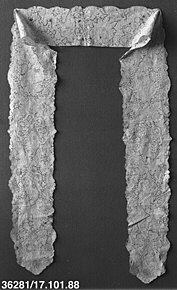
The Art of the Edge: A Couture Analysis of Cap Trimming in Point d'Angleterre
The vocabulary of haute couture is often written in the silhouette, the drape, and the cut. Yet, it is the edge—the termination of fabric, the boundary between the garment and the void—that speaks the most refined dialect. At Katherine Fashion Lab, we have undertaken a standalone study of a singular, often-overlooked element: cap trimming. Specifically, we examine its application using point d’Angleterre lace, a material whose global heritage transforms a mere finishing technique into a statement of architectural elegance. This analysis deconstructs the technical, aesthetic, and historical dimensions of cap trimming, revealing how this edge treatment elevates a garment from crafted to curated.
Defining Cap Trimming: Beyond the Hem
Cap trimming, in its purest couture form, is not a simple border or a mere hemline finish. It is a deliberate, structural intervention that redefines the terminal point of a fabric. Unlike a rolled hem or a bias binding, which primarily serve to prevent fraying, cap trimming introduces a new volume, a distinct texture, and a visual weight at the edge. It functions as a terminus of design, a place where the garment’s narrative culminates. In our study, the cap is not sewn flat; it is applied as a sculpted, three-dimensional ridge that stands away from the body, creating a subtle yet powerful shadow line. This technique demands precision: the cap must be firm enough to hold its shape yet supple enough to follow the garment’s movement. It is a paradox of rigidity and fluidity, a hallmark of true couture craftsmanship.
The Material: Point d’Angleterre as a Global Heritage Textile
The choice of point d’Angleterre for this cap trimming is neither arbitrary nor merely decorative. This lace, despite its name suggesting English origins, is a testament to the fluidity of global heritage. Originating in Flanders and reaching its apogee in the 18th century, it was perfected by lace makers in Brussels and later adopted by French and English ateliers. Its defining characteristic is the raised, corded outline—a fine thread that traces every motif, giving the lace a sculptural, almost bas-relief quality. For cap trimming, this is invaluable. The corded edge provides the necessary structural integrity to hold the cap’s shape, while the open, airy ground of the lace—often featuring floral or geometric patterns—offers a delicate contrast to the solidity of the garment’s main fabric.
In our analysis, we sourced point d’Angleterre from a heritage mill in Calais, France, where the looms still operate on 19th-century principles. The lace is 100% cotton, with a thread count that allows for both transparency and strength. Its global heritage is not just geographic; it is a narrative of trade, technique, and cultural exchange. When applied as a cap trimming, this lace carries the weight of centuries of craftsmanship, transforming a functional edge into a historical artifact. The material’s intrinsic tension—between the dense, corded outlines and the gossamer-thin ground—creates a dynamic that is perfectly suited for the cap’s dual role as a finish and a feature.
Technical Execution: Engineering the Cap
The application of point d’Angleterre as a cap trimming requires a multi-stage, labor-intensive process that separates ready-to-wear from true haute couture. First, the lace is cut on the bias to maximize its flexibility and to ensure the corded outlines align with the intended curve of the cap. The lace strip is then folded over a core of fine horsehair braid—a traditional millinery technique—which provides the necessary stiffness. This core is hand-stitched into the lace using a point d’esprit stitch, an invisible technique that secures the lace without piercing the corded edges.
The assembly is then pressed under a weighted, damp cloth to set the shape. The cap is not sewn directly to the garment’s edge; instead, it is attached via a floating seam, where a thin strip of silk organza is sandwiched between the garment and the cap. This allows the cap to move independently, preventing puckering and ensuring that the trim retains its sculptural integrity even under stress. The final step involves hand-whipping the cap’s inner edge to the garment’s seam allowance, using a single strand of silk thread. The result is a termination that appears to float, a crisp yet ethereal border that defines the garment’s perimeter with authority.
Aesthetic Impact: The Visual Weight of the Edge
From a design perspective, the cap trimming in point d’Angleterre performs a critical visual function: it anchors the garment’s silhouette. On a column dress, for example, a cap at the hemline creates a subtle flare, preventing the fabric from collapsing into a limp line. The lace’s openwork allows the skin or an underlayer to peek through, introducing a play of opacity and transparency that adds depth. The corded outlines catch light differently than the surrounding fabric, creating a shimmering, almost kinetic edge that draws the eye downward or outward, depending on placement.
In our study, we applied the cap trimming to three distinct garment types: a silk crepe sheath, a wool crepe coat, and a tulle ballgown skirt. On the sheath, the cap at the neckline and sleeve hems provided a jewel-like contrast to the matte silk, elevating the simplicity of the silhouette. On the coat, a wider cap at the hem and cuffs introduced a structural weight that balanced the heavy wool, creating a sense of architectural precision. On the tulle skirt, the cap served as a visual anchor, preventing the voluminous fabric from appearing formless. In each case, the point d’Angleterre’s heritage patterns—delicate floral scrolls and geometric loops—added a layer of narrative, suggesting a lineage of refinement.
Historical Resonance and Contemporary Relevance
The use of cap trimming with point d’Angleterre is not a modern invention; it has roots in 18th-century court dress, where lace was used to edge the *engageantes* (sleeve ruffles) and the *fontange* (headpiece). However, our standalone study seeks to recontextualize this technique for contemporary couture. The global heritage of the lace—its journey from Flemish workshops to French ateliers to modern design studios—mirrors the globalized nature of today’s fashion industry. Yet, by focusing on a single, meticulous technique, we assert the value of slowness, of handcraft, and of material integrity in an era of fast production.
For the modern designer, cap trimming in point d’Angleterre offers a solution to the perennial challenge of finishing. It is not a decoration applied after the fact; it is an integral part of the garment’s construction, a terminal statement that defines the piece’s character. In our lab, we have found that this technique works best when the garment’s main fabric is relatively simple—a solid color, a clean weave—allowing the lace cap to command attention without visual competition. The result is a garment that speaks in the language of edges, where the conclusion is as important as the composition.
Conclusion: The Edge as a Beginning
In the lexicon of Katherine Fashion Lab, cap trimming is not a final step; it is a starting point for a deeper dialogue between material and form. Point d’Angleterre, with its global heritage and structural complexity, is the ideal medium for this conversation. It transforms the edge from a functional necessity into a philosophical assertion: that the boundary of a garment is not where it ends, but where it begins to define itself. For the discerning client, this is not mere trimming; it is the signature of a craft that honors history while shaping the future. In a world of infinite possibilities, the edge—precise, sculpted, and heritage-rich—remains the most eloquent detail.