Deconstructing the Throne of Contemplation: A Couture Analysis of the Global Heritage Chair
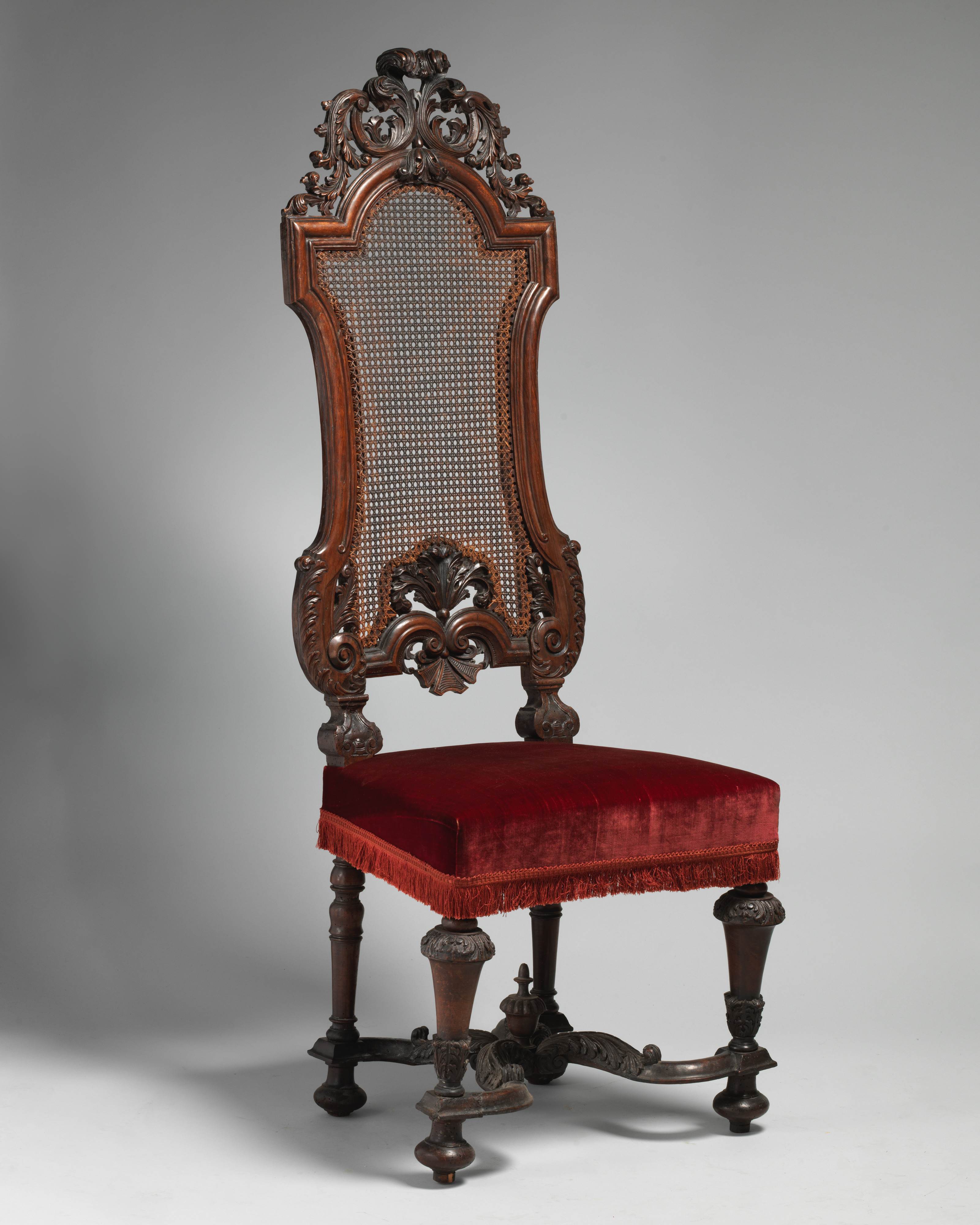
Within the curated silence of a standalone study, a chair is never merely a place to sit. It is a proposition, a framework for thought, and a silent interlocutor in the dialogue between creator and creation. This particular specimen, one of a set of six with Global Heritage origins, crafted from walnut and caning with later velvet upholstery, presents a profound case study for Katherine Fashion Lab. To analyze it through a couture lens is to move beyond antique appraisal and into a realm of structural integrity, material dialogue, and the enduring narrative of form—principles that are directly analogous to the construction of an iconic garment. It is a study in balanced contrasts: between strength and suppleness, exposure and enclosure, the enduring frame and the ephemeral touch.
The Architecture of the Frame: Walnut as Tailored Structure
The walnut frame is the foundational *toile* or muslin of the piece, the underlying structure upon which all else depends. Like a meticulously drafted pattern cut from the finest woolen suiting, the walnut has been selected and shaped for its inherent characteristics. Walnut offers a tensile strength that allows for elegant, refined lines—note the slender yet confident turn of the legs, the gentle sweep of the arms. There is no excessive bulk; instead, we see a mastery of proportional engineering, akin to the internal boning of a corset or the hidden seams of a couture jacket that provide shape without revealing their method.
This is not the flamboyant carving of a Baroque throne but the considered, architectural approach of a master tailor. Each joint, each turned spindle, speaks to a joinery that mirrors the precision of a lapped seam or a perfectly set sleeve. The frame’s rich, deep patina, earned through years of use and atmospheric conversation, is the equivalent of a garment’s lived-in elegance—the way a perfect blazer softens and molds to its wearer. It is a testament to integrity over time, the very essence of heritage in fashion: a classic silhouette that transcends temporal whims.
The Textile Dialogue: Caning and Velvet in Counterpoint
Here lies the piece’s most compelling sartorial dialogue: the juxtaposition of the original caned seat and back with the later addition of a velvet cushion. The caning is a tour de force of textile craft, a rigid, open-weave technique that provides structural support while maintaining visual permeability. It is analogous to a masterful piece of lacework or macramé used in couture—a fabric that is defined as much by its voids as its substance. It offers containment without confinement, a breathable, resilient surface that engages with the sitter through texture and give.
The introduced velvet cushion, by contrast, is an act of luxurious intervention and personalization. It is the plush velvet collar on a tailored wool coat, the sumptuous lining of a structured bag. This velvet is not original to the frame, and this is precisely where its narrative power resides. It represents a later chapter, a wearer’s decision to impart a new layer of comfort, opulence, and color onto an established form. This addition mirrors the fashion principle of accretive styling and anachronistic harmony—think of a vintage denim jacket paired with a silk faille skirt. The velvet does not seek to mimic the original; it converses with it, offering softness against rigidity, opaque density against open weave, tactile indulgence against disciplined craft. It is a reminder that true heritage is not static but accommodates the patina of personal use.
Context as Catalyst: The Standalone Study
The specified context—a standalone study—is not incidental; it is the runway upon which this piece performs. In this intimate, intellectual space, the chair is liberated from the collective identity of its set (one of six). It stands as an individual statement piece, much like a singular, avant-garde ensemble in a curated wardrobe. The study, a realm of thought and creation, demands furniture that inspires rather than merely accommodates.
Here, the chair’s dual nature becomes actively functional. The supportive caning promotes an alert, engaged posture—ideal for deep reading or writing. The velvet cushion invites a moment of relaxed reflection, a sinking into thought. This versatility of posture mirrors the functional versatility of transformative couture: a coat that can be worn multiple ways, a dress that transitions from day to evening. The chair becomes a tool for the mind’s work, its design facilitating different modes of intellectual engagement. Its heritage grounds the space in tradition, while its material contrasts stimulate a modern, sensory awareness crucial to the creative process.
Couture Conclusions: Heritage as a Living Construct
Through the analytical framework of Katherine Fashion Lab, this Global Heritage chair emerges as a profound metaphor for enduring design principles. It demonstrates that true luxury lies in the integrity of construction—the flawless walnut frame. It celebrates textural intelligence and contrast as drivers of experiential depth—the dialogue between caning and velvet. Most importantly, it posits that heritage is not a sealed archive but a living, adaptable narrative.
The velvet, a later addition, is not a flaw but an evolution. It is the personal alteration, the inherited piece restyled, the vintage fabric repurposed into a contemporary masterpiece. It challenges the purist notion of preservation and instead advocates for respectful, creative dialogue across time. This chair, in its standalone study, stands as a testament to the idea that the most resonant designs—in furniture or in fashion—are those that possess a strong, immutable core yet remain open to the chapters of lived experience. They are not merely preserved; they are continuously curated, worn in, and reimagined, accruing value not in spite of their layers, but because of them.