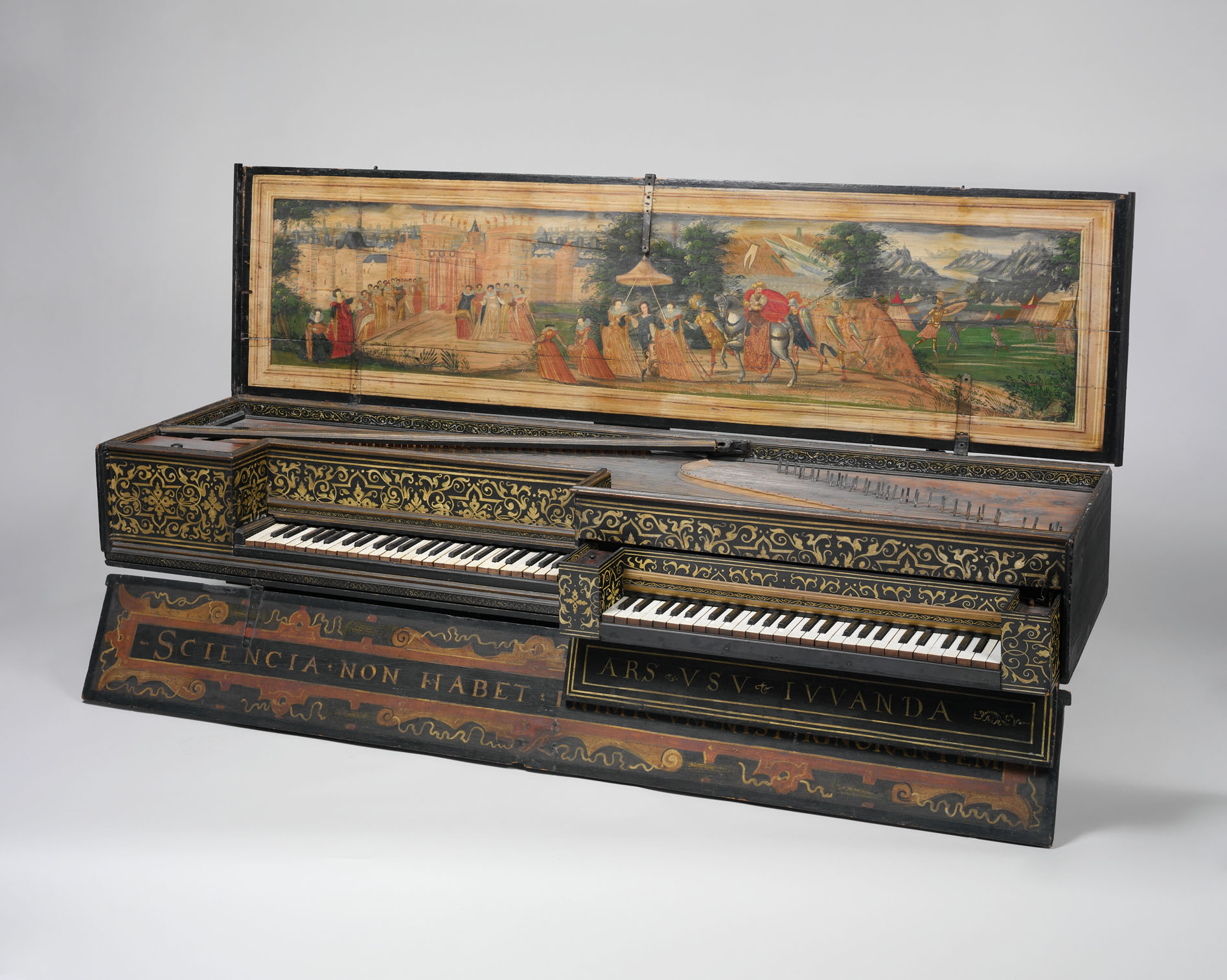
Heritage Analysis: The Double Virginal as a Blueprint for 2026 Luxury Strategy
In the annals of Flemish craftsmanship, the Double Virginal stands as a singular artifact—a confluence of technical mastery, spiritual symbolism, and aristocratic display. Crafted from pine, spruce, paint, gilding, and ivory, this instrument was not merely a musical device but a statement of dynastic power, intellectual refinement, and divine connection. For Katherine Fashion Lab, a deep reading of this object reveals a strategic lexicon for 2026 high-end luxury: one that prioritizes layered symbolism, material integrity, and the commodification of the sacred. This analysis dissects the Double Virginal through four lenses—symbolic power, historical adornment, spiritual meaning, and luxury strategy—to extract actionable insights for a heritage-driven brand.
Symbolic Power: The Instrument as Sovereign Currency
Visual Rhetoric of Authority
The Double Virginal’s dual keyboard and elaborate casework functioned as a visual lexicon of sovereignty. Its gilded arabesques and painted mythological scenes—often depicting Orpheus or Apollo—positioned the owner within a lineage of divine musical patronage. In Flemish courts, such instruments were not played by hired musicians; they were displayed in kunstkamers (cabinets of curiosities) as proof of the patron’s access to celestial harmony. The pine and spruce body, humble in origin, was transformed by gilding into a reliquary of taste. For Katherine Fashion Lab, this teaches a critical lesson: luxury in 2026 must foreground the object as a vessel of authority. A handbag or garment should not merely be worn but presented—its materials and motifs signaling the bearer’s alignment with timeless, almost aristocratic, values.
Material Hierarchy as Power Statement
The choice of materials—pine for resonance, spruce for lightness, ivory for touch—established a hierarchy of value that was both functional and symbolic. Ivory keys, for instance, were not only precious but also associated with purity and the exotic (African trade routes). The gilding, applied in thin sheets, required immense labor, turning the virginal into a frozen performance of wealth. In a 2026 context, Katherine Fashion Lab can adopt this principle through material differentiation: using rare woods, hand-polished metals, or ethically sourced ivory alternatives (e.g., tagua nut or fossilized mammoth tusk) to create products that tell a story of extraction, transformation, and exclusivity. The goal is to make the material itself a badge of connoisseurship.
Historical Adornment: The Body and the Instrument as Unified Canvas
Adornment as Extended Self
In Flemish Renaissance culture, the Double Virginal was often adorned with painted allegories—Temperance, Prudence, or the Muses—that mirrored the wearer’s moral aspirations. The instrument’s lid, when opened, revealed a microcosm of the universe: celestial spheres, zodiac signs, or biblical scenes. This was not decoration but identity architecture. The player’s hands, touching ivory keys, became part of a larger narrative of harmony. For Katherine Fashion Lab, this suggests a shift from adornment to immersion. In 2026, luxury accessories should function as portable altarpieces—each piece embedded with symbols (e.g., a brooch with an astrolabe motif, a scarf with a celestial map) that invite the wearer to participate in a story of cosmic order. The brand can collaborate with contemporary artists to create limited-edition “virginal cases” for jewelry or small leather goods, where the exterior becomes a canvas for allegorical painting.
Gilding and Light as Adornment Technology
The Flemish masters used gilding not merely for opulence but to manipulate light. Gold leaf on the virginal’s case caught candlelight, creating a shimmering aura around the player. This luminance technology was a form of adornment that transcended physical decoration—it was a spiritual technology. Katherine Fashion Lab can translate this into a 2026 strategy by developing light-reactive materials: fabrics with micro-embedded gold threads, or leathers treated with iridescent finishes that shift under different lighting. The goal is to create a dynamic, living adornment that changes with the wearer’s environment, echoing the virginal’s ability to transform a room into a sacred space.
Spiritual Meaning: The Virginal as Devotional Object
Music as Divine Geometry
The Double Virginal’s repertoire—largely sacred motets and chansons—was understood as audible prayer. Flemish theologians believed that music, based on mathematical ratios (the Pythagorean scale), mirrored the divine order. Playing the virginal was an act of spiritual discipline, aligning the soul with creation’s harmony. The instrument’s ivory keys, often carved with small crosses or Latin inscriptions, reinforced this sanctity. For luxury brands in 2026, this offers a potent narrative: spiritual wellness as a luxury value. Katherine Fashion Lab can develop a “Harmony Collection” inspired by the virginal’s geometry—each piece (a necklace, a cuff, a ring) designed with Fibonacci sequences or sacred proportions. The marketing narrative would position the product as a tool for mindfulness, not just an accessory. A QR code on the packaging could link to a custom-composed soundscape of Flemish virginal music, creating a multi-sensory brand experience.
The Sacred in the Secular
Notably, the Double Virginal’s spiritual meaning was not overtly religious but imbued in the everyday. It was played in private chambers, not churches. This domestication of the sacred is a powerful model for 2026 luxury, where consumers seek meaning without organized religion. Katherine Fashion Lab can position its products as modern relics—objects that offer solace, ritual, and transcendence in a secular age. A limited-edition “Virginal Box” could house a journal, a scented candle, and a small bronze key, inviting the buyer to engage in a personal ritual of reflection. The packaging itself, made from reclaimed pine and gilded with brass, becomes a keepsake—a miniature altar for the self.
2026 High-End Luxury Strategy: From Artifact to Archetype
Strategic Principles Derived from the Double Virginal
For Katherine Fashion Lab to translate this heritage into a 2026 strategy, three principles emerge:
1. The Object as Narrative Engine. Just as the virginal told a story of cosmic harmony, every product must be a narrative anchor. The brand should release “chapters”—collections based on a single historical instrument, each with its own material palette, symbolic code, and spiritual theme. The Double Virginal chapter, for example, would feature pine-and-spruce-veneered clutches, ivory-toned ceramic buttons, and gilded metal hardware. The story would be communicated via digital “illuminated manuscripts”—interactive lookbooks with sound, animation, and historical annotations.
2. Material as Message. The virginal’s materials were not arbitrary. Pine and spruce were chosen for acoustic properties; gilding for light; ivory for touch. Katherine Fashion Lab must adopt a materials-first design philosophy, where each material is selected for its sensory and symbolic resonance. For 2026, this means partnering with heritage artisans (e.g., Flemish woodcarvers, Italian gilders) to create limited-run pieces that are unapologetically manual. The brand’s price point should reflect not just rarity but craftsmanship hours—a return to the virginal’s ethos of labor as luxury.
3. The Ritual of Ownership. The virginal was not a passive object; it required active engagement (tuning, playing, dusting). Katherine Fashion Lab can create ownership rituals for its clients: a “tuning” service for leather goods (annual conditioning), a “gilding” refresh for metal hardware, or a “recital” event where clients bring their pieces to a salon for storytelling and restoration. This transforms the purchase from a transaction into a lifetime relationship, echoing the virginal’s role as a family heirloom maintained across generations.
Market Positioning: The “New Flemish” Aesthetic
In 2026, the luxury market will demand authenticity, spirituality, and craftsmanship as antidotes to digital saturation. Katherine Fashion Lab can position the Double Virginal as the archetype of this new ethos. The brand’s visual identity should evoke a “Flemish Renaissance”—deep indigos, burnished gold, raw wood textures, and ivory tones. Campaigns should feature still-life photography reminiscent of 17th-century vanitas paintings, reminding consumers of beauty’s temporality and the eternal value of crafted objects. The tagline: “Harmony in Every Detail.” This is not nostalgia but strategic re-enchantment—a way to make luxury feel sacred again.
Conclusion
The Double Virginal is more than a historical curiosity; it is a strategic prototype for 2026 luxury. Its fusion of symbolic power, material integrity, and spiritual resonance offers Katherine Fashion Lab a roadmap for creating objects that are not merely worn but inhabited. By treating each product as a virginal—a vessel for harmony, authority, and transcendence—the brand can command premium positioning in a market hungry for meaning. The Flemish masters knew that true luxury is not about excess; it is about alignment—between material and spirit, maker and owner, past and future. Katherine Fashion Lab, through this heritage lens, can become the curator of that alignment for the next generation of discerning clients.