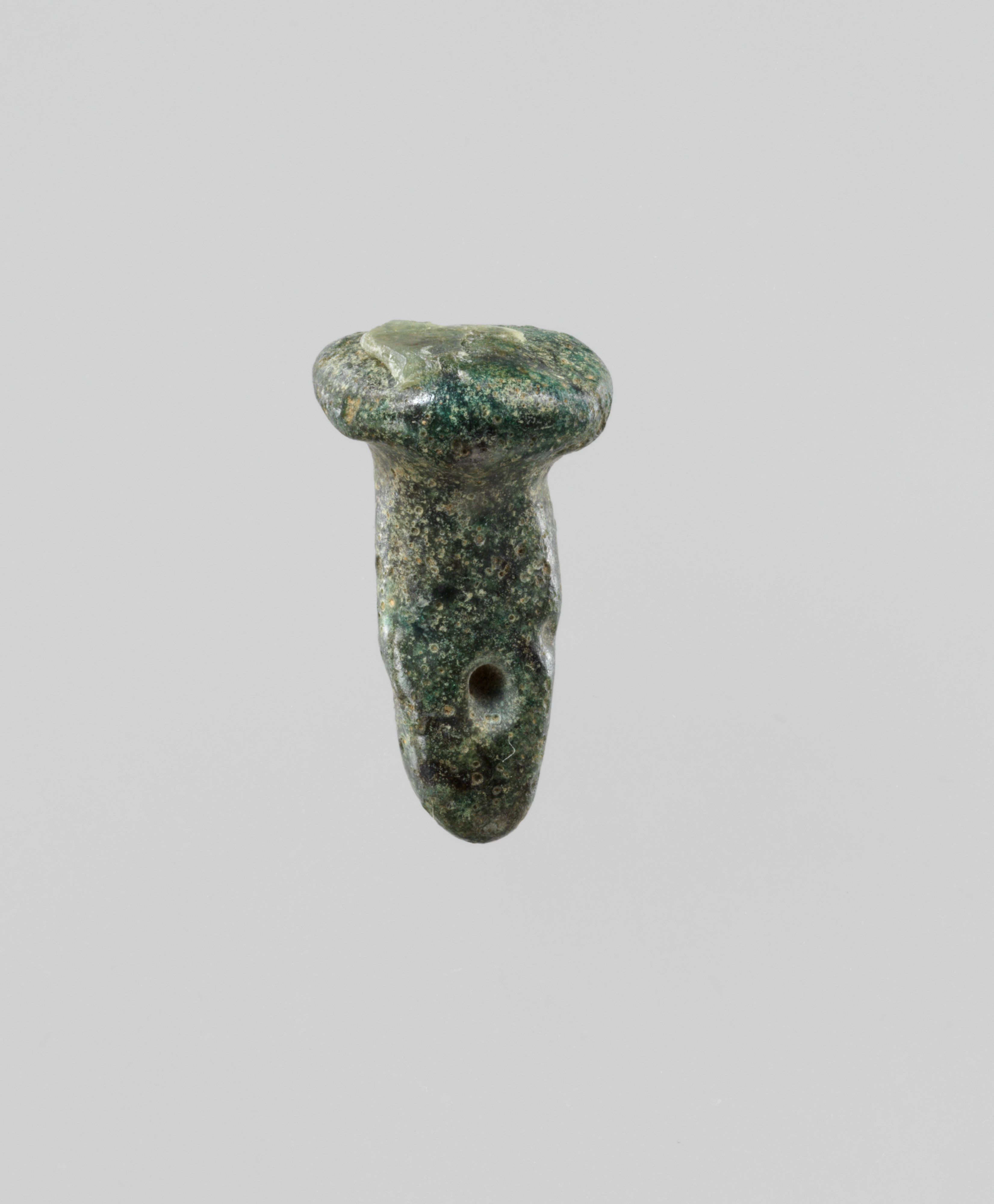
Executive Heritage Analysis: The Seal Amulet as a Strategic Luxury Archetype
In the context of Katherine Fashion Lab’s 2026 high-end luxury strategy, the seal amulet—crafted from faience in an ancient civilization—emerges as a profound artifact of symbolic power, historical adornment, and spiritual meaning. This analysis deconstructs the amulet’s heritage value and translates its core attributes into actionable insights for luxury brand positioning. The seal amulet, often associated with Mesopotamian, Egyptian, or Indus Valley cultures, served not merely as a personal ornament but as a functional talisman of authority, identity, and cosmic protection. Its medium, faience—a sintered-quartz ceramic glazed in vibrant blues and greens—was a technological marvel of its time, mimicking precious stones like turquoise and lapis lazuli. For a modern luxury house, the seal amulet offers a blueprint for merging tangible heritage with intangible aspiration, leveraging scarcity, symbolism, and material mastery.
Symbolic Power: Authority, Ownership, and the Mark of Distinction
The Seal as a Signifier of Status
In ancient civilizations, the seal amulet was a personal insignia, often engraved with unique motifs—animals, deities, or geometric patterns—that identified its owner in legal, commercial, and ceremonial contexts. This symbolic power derived from its dual function: as a stamp that authenticated documents and as a protective amulet worn on the body. For Katherine Fashion Lab, this translates into a luxury strategy emphasizing exclusivity through personalization. In 2026, high-end consumers seek artifacts that confer identity and status without overt logos. The seal amulet’s heritage suggests a product line where each piece is uniquely coded—perhaps through bespoke engraving, limited-edition motifs, or digital authentication—mirroring the ancient practice of marking ownership and power. The amulet’s symbolic weight lies in its ability to transform the wearer from a passive consumer into an active participant in a narrative of legacy and authority.
Strategic Application: The Modern “Seal of the Collector”
A luxury strategy inspired by the seal amulet could involve a “Seal Collection” where each piece is accompanied by a narrative of its ancient counterpart. For example, a faience-inspired pendant might feature a micro-engraved pattern that, when scanned via proprietary technology, unlocks a digital certificate of authenticity and a historical dossier. This approach leverages the amulet’s symbolic power of authentication—turning the accessory into a key that grants access to an exclusive community. In 2026, where digital and physical realms converge, such a strategy aligns with the desire for tangible proof of belonging, a modern echo of the seal’s ancient role as a mark of distinction.
Historical Adornment: Faience as a Medium of Prestige and Durability
The Material Legacy of Faience
Faience, with its glassy surface and vivid hues, was a medium of choice for ancient artisans because it could be molded, glazed, and fired to resemble more costly materials. Its production was labor-intensive, requiring precise control of silica, alkali, and metallic oxides—a process that imbued each piece with artisanal value. Historically, faience seal amulets were worn by elites, priests, and scribes, often suspended from necklaces or bracelets, as both adornment and functional tool. The material’s durability and colorfastness made it ideal for daily wear and ritual use, symbolizing eternal life and divine favor in cultures like Ancient Egypt.
Translating Historical Adornment into 2026 Luxury
For Katherine Fashion Lab, faience offers a material strategy rooted in heritage craftsmanship. In an era of mass-produced luxury, reviving faience or its modern equivalents—such as high-fire ceramics with lustrous glazes—can signal a commitment to artisanal scarcity. The 2026 high-end consumer values materials with a story; faience’s historical association with immortality and status can be leveraged through limited-edition runs, each piece hand-finished by master ceramists. The amulet’s form—often cylindrical, conical, or scarab-shaped—can inspire contemporary silhouettes that balance ancient geometry with modern ergonomics. For instance, a faience pendant might incorporate a hidden compartment for a micro-chip, blending historical adornment with wearable technology, a nod to the amulet’s original dual role as ornament and tool.
Spiritual Meaning: Protection, Cosmic Connection, and Ritual Significance
The Amulet as a Spiritual Anchor
Beyond its practical function, the seal amulet held profound spiritual meaning. In Mesopotamian and Egyptian cultures, it was believed to channel protective forces, ward off evil, and connect the wearer to the divine. The engraved symbols—such as the Eye of Horus, the ankh, or cuneiform prayers—were not decorative but functional, serving as conduits for spiritual energy. This aspect of the amulet speaks to a universal human need for meaning, security, and transcendence—a need that luxury brands increasingly address through storytelling and experiential design.
Strategic Application: Spiritual Luxury in a Secular Age
In 2026, the luxury market is witnessing a resurgence of “spiritual luxury,” where consumers seek products that offer inner resonance and emotional protection. Katherine Fashion Lab can position the seal amulet as a modern talisman for well-being and intention. This could involve collaborations with contemporary artists or historians to reinterpret ancient symbols for a global audience, or offering a “blessing ritual” at point of sale, where each amulet is charged with a specific intention (e.g., creativity, resilience, clarity). The spiritual meaning of the amulet can be further amplified through packaging that resembles a miniature shrine, complete with a card detailing its historical provenance and symbolic meaning. This strategy transforms a physical product into a ritual artifact, aligning with the consumer’s desire for authenticity and emotional depth in a fragmented digital world.
2026 High-End Luxury Strategy: The Seal Amulet as a Brand Archetype
Integrating Heritage into Brand DNA
For Katherine Fashion Lab, the seal amulet is not merely a product concept but a strategic archetype that can inform broader brand positioning. Its three core attributes—symbolic power, historical adornment, and spiritual meaning—map directly onto the pillars of exclusivity, craftsmanship, and transcendence that define 2026 luxury. The brand can leverage this heritage to create a narrative of “timeless authority,” where each collection draws on ancient motifs but is executed with contemporary precision. For example, a flagship “Amulet Collection” could include faience-inspired pendants, rings, and cufflinks, each with a unique seal pattern that customers can customize. The collection would be marketed not as fashion but as “heirloom artifacts,” with a price point reflecting the labor and lore behind each piece.
Strategic Tactics for Market Penetration
- Limited Edition Drops: Release seal amulets in numbered series, each tied to a specific ancient civilization (e.g., Mesopotamian, Minoan, Indus Valley), creating a collectible ecosystem.
- Digital Twins: Offer a blockchain-authenticated digital version of the amulet, granting access to virtual events or exclusive content, mirroring the seal’s original function as a key.
- Collaborative Curation: Partner with museums and archaeologists to ensure historical accuracy, lending the brand academic credibility and a unique storytelling angle.
- Experiential Retail: Design pop-up spaces that resemble ancient workshops, where customers observe artisans hand-glazing faience, reinforcing the value of slow craftsmanship.
Conclusion: The Seal as a Strategic Compass
The faience seal amulet from an ancient civilization offers Katherine Fashion Lab a rich heritage template for 2026 luxury. Its symbolic power underscores the importance of personalization and authentication; its historical adornment highlights the value of artisanal materials; and its spiritual meaning taps into the growing demand for products that offer emotional and metaphysical resonance. By translating these ancient attributes into modern luxury strategies—limited editions, digital integration, and ritualistic experiences—the brand can position itself at the intersection of heritage and innovation. In a market saturated with ephemeral trends, the seal amulet stands as a reminder that true luxury is not about novelty but about enduring significance—a lesson as relevant today as it was in the dawn of civilization.