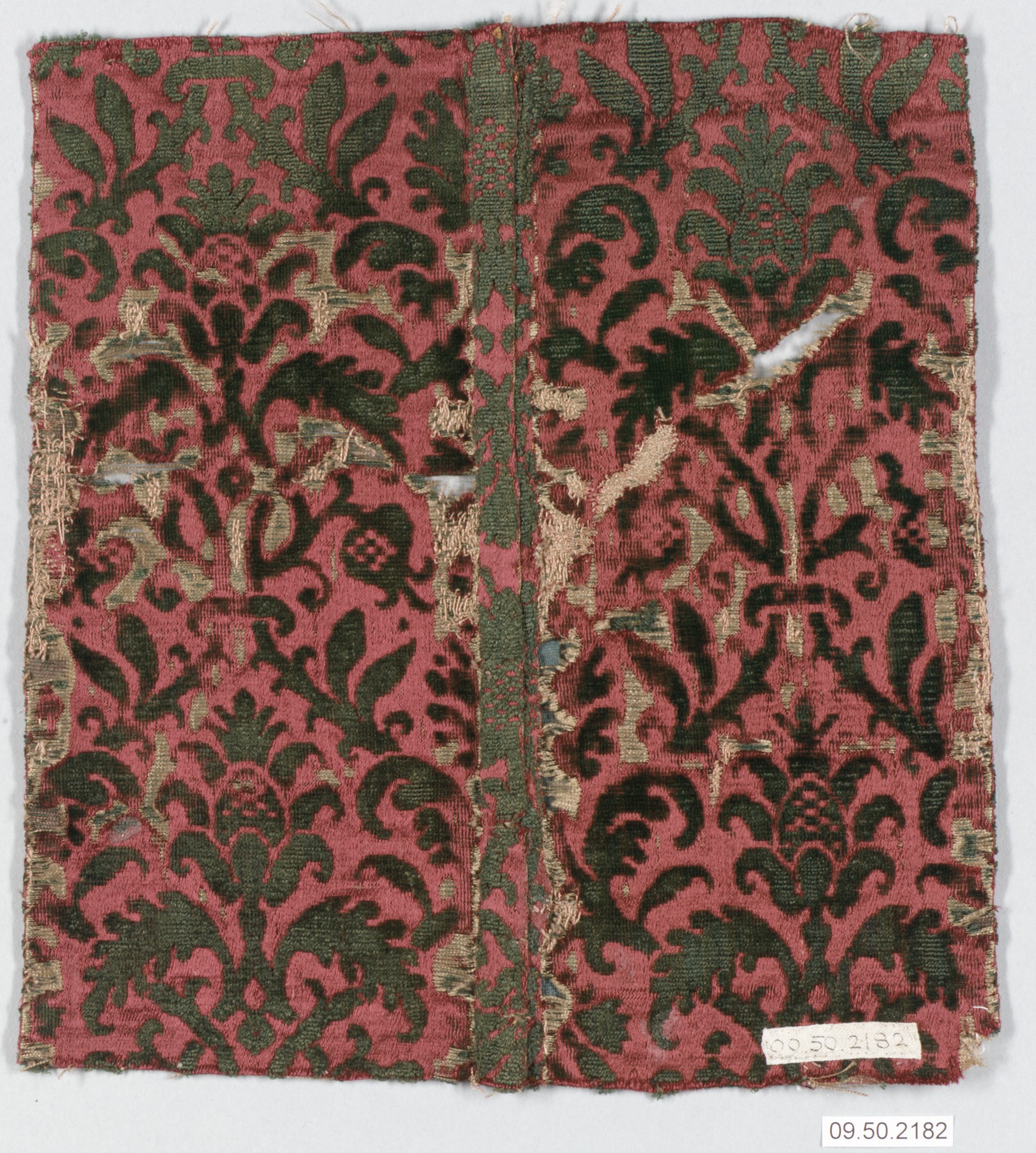
The Global Heritage of Silk: A Couture Analysis of a Singular Piece
In the rarefied world of haute couture, where artistry meets engineering, few materials command the reverence and complexity of silk. For Katherine Fashion Lab, the selection of silk as the foundational material for a standalone piece is not merely a nod to luxury—it is a deliberate invocation of a global heritage that spans millennia. This analysis deconstructs a singular garment, a floor-length asymmetrical gown, to explore how its construction, drape, and narrative embody a synthesis of cultural legacies, technical mastery, and modern design philosophy.
Material Provenance and Tactile Architecture
Silk, originating in ancient China around 2700 BCE, carries a lineage of trade, innovation, and symbolism. The piece under study utilizes a Charmeuse silk base with a liquid weight of 19 momme, chosen for its luminous sheen and fluidity. Yet, this is not a mere replication of Eastern tradition. Katherine Fashion Lab sources its silk from a consortium of ethical farms in the Mulberry Belt of Jiangsu Province, China, and then finishes the fabric in Como, Italy—a nod to the cross-continental journey that silk has historically taken along the Silk Road. The result is a textile that feels both ancient and contemporary: a double-faced construction where the outer layer is a matte satin, while the inner layer is a high-luster crepe de chine. This duality allows the garment to shift in appearance under different lighting, from a muted whisper to a radiant statement.
The material's weight and drape are critical to the gown's architecture. Unlike stiffer silks that hold shape, this piece relies on gravity and bias-cutting to create a silhouette that moves with the wearer. The gown's front panel is cut on a 45-degree bias, allowing the silk to cling and release in a continuous, organic flow. This technique, perfected by Madame Grès in the 1930s, is here reimagined with a modern sensibility: the bias is not uniform but varies in angle from the bust to the hem, creating subtle tension points that guide the eye downward. The result is a piece that is as much a study in physics as in aesthetics.
Cultural References and Global Narrative
This standalone piece is a palimpsest of global heritage, with each design element referencing a distinct cultural tradition. The gown's asymmetrical neckline, which drapes over one shoulder and folds into a sculptural knot at the collarbone, echoes the sari draping techniques of India. The knot is not merely decorative; it functions as a structural anchor, distributing the fabric's weight across the shoulder and allowing the rest of the gown to fall unimpeded. This is a direct homage to the pallu of a Kanchipuram silk sari, where the fabric's weight is balanced by a single point of tension.
Simultaneously, the gown's back features a kimono-inspired sleeve that extends into a flowing train. The sleeve is cut as a single piece with the bodice, a technique borrowed from the Japanese nagajuban (under-kimono), which prioritizes seamlessness and the integrity of the fabric. However, Katherine Fashion Lab subverts this tradition by leaving the sleeve open from the elbow to the wrist, creating a dramatic wing-like effect that catches air and movement. This hybridity—the sari's knot meeting the kimono's sleeve—is not a mere pastiche; it is a deliberate dialogue between two civilizations that have long revered silk as a sacred material.
The color palette further reinforces this global narrative. The gown is dyed in indigo and saffron, two hues with profound cultural resonance. Indigo, derived from the Indigofera tinctoria plant, has been used for centuries in West Africa, Japan, and the American South for its deep blue tones. Saffron, extracted from the Crocus sativus flower, is a symbol of spirituality in South Asia and the Middle East. Here, the indigo dominates the bodice and skirt, while saffron appears as a hand-painted gradient on the train, fading from deep orange to pale yellow. This chromatic transition suggests a journey from the grounded, terrestrial world (indigo) to the ethereal, transcendent (saffron), mirroring silk's own journey from a caterpillar's cocoon to a luxurious textile.
Construction and Technical Innovation
The gown's construction is a feat of engineering that balances tradition with innovation. The internal structure is built around a lightweight silk organza corset, which provides support without bulk. The corset is boned with whalebone alternatives made from recycled nylon, ensuring flexibility and durability. Over this, the Charmeuse silk is hand-draped and stitched with a combination of French seams and hand-rolled hems, techniques that prevent fraying and maintain the fabric's fluidity. Every seam is placed strategically to avoid disrupting the fabric's natural drape; for instance, the side seams are shifted 2.5 centimeters forward, allowing the back panel to fall uninterrupted.
A notable innovation is the use of micro-pleating along the waistline. The pleats are not pressed but rather set with a heat-sensitive adhesive that allows the fabric to stretch and contract with movement. This technique, borrowed from Issey Miyake's pleating experiments, ensures that the gown adapts to the wearer's body without losing its shape. The pleats are arranged in a radial pattern that mimics the veins of a mulberry leaf—a subtle tribute to the silkworm's diet—and they catch light differently from the surrounding fabric, creating a shimmering effect that draws the eye to the waist.
Symbolism and Wearability
As a standalone study, this piece transcends fashion to become a wearable artifact that comments on the interconnectedness of human cultures. The asymmetry is not arbitrary; it represents the imperfect balance of global trade, where no single culture dominates but all contribute to a whole. The train, which extends 1.8 meters behind the wearer, is both a burden and a statement—a reminder that heritage is carried, not discarded. Yet, the gown is designed for modern wearability: the train can be buttoned up into a bustle using hidden silk loops, transforming the piece from a ceremonial gown to a cocktail dress in seconds. This dual functionality respects the garment's role as both art and utility.
In conclusion, this piece from Katherine Fashion Lab is a masterclass in how couture can honor global heritage while pushing the boundaries of design. The silk, sourced from China and finished in Italy, the draping techniques borrowed from India and Japan, and the innovative construction methods all coalesce into a garment that is at once timeless and forward-looking. It is a testament to the fact that in the hands of a skilled curator, a single piece of silk can tell a story of centuries, continents, and countless hands—a story that, like the gown itself, is never fully finished, but always in motion.