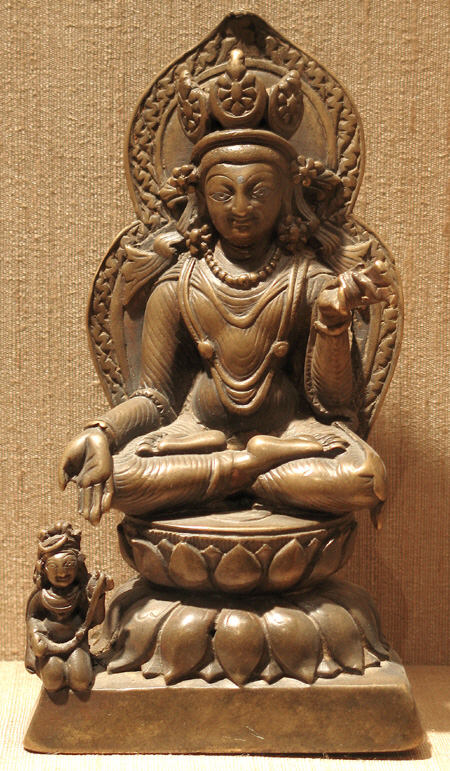
Heritage Analysis: Crowned and Jeweled Buddha
Introduction: The Sovereign as Sacred
The Crowned and Jeweled Buddha represents a singular convergence of spiritual authority and temporal sovereignty. Originating from the ancient kingdom of Kashmir, within the present-day region of Jammu and India, this artifact—crafted from copper with meticulous silver inlay—embodies a theological and artistic shift that occurred between the 7th and 12th centuries CE. For Katherine Fashion Lab, this object is not merely a religious relic; it is a strategic symbol of transcendent luxury, where adornment becomes a declaration of enlightenment and power. This analysis explores the symbolic architecture, historical adornment practices, spiritual significance, and the actionable luxury strategy for 2026, positioning the Crowned Buddha as a foundational archetype for high-end brand narrative.
Symbolic Power: The Crown as Enlightenment
The crown, in Buddhist iconography, is not a marker of earthly kingship but a representation of spiritual victory. In the Kashmiri tradition, the crowned Buddha—often referred to as Mahābodhi or the "Great Enlightenment"—wears a five-pointed diadem, each point symbolizing one of the five Dhyani Buddhas, or cosmic embodiments of wisdom. The copper medium, with its warm, burnished glow, evokes the earth element, while the silver inlay—typically used for the urna (the mark on the forehead) and jewelry—represents the lunar, reflective quality of enlightened mind.
For luxury strategy, the crown signifies authority earned through mastery, not inheritance. This is a critical distinction: the Crowned Buddha’s power is derived from inner realization, not external lineage. In a 2026 context, this translates to a brand ethos where exclusivity is not about birthright but about curated achievement. The silver inlay, contrasting with the copper base, becomes a metaphor for the interplay between raw material (heritage) and refined detail (innovation). This dual symbolism—earthly grounding and celestial refinement—offers a powerful narrative for high-end jewelry or accessory lines that celebrate both origin and transcendence.
Historical Adornment: The Kashmiri Synthesis
The ancient kingdom of Kashmir was a crucible of artistic and religious exchange, positioned along the Silk Road. The Crowned and Jeweled Buddha reflects a syncretic aesthetic that blended Gupta Indian naturalism with Central Asian and Persian influences. The copper with silver inlay technique, known as koftgari in later Indian metalwork, was a hallmark of Kashmiri artisanship. The Buddha is depicted wearing elaborate earrings, necklaces, and armlets—adornments that were historically reserved for royalty and deities. This jeweled presentation was revolutionary: it asserted that enlightenment does not require renunciation of beauty but rather its transformation.
Historically, these sculptures were commissioned by royal patrons and placed in monasteries as objects of veneration and political legitimization. The act of adorning the Buddha with precious metals and stones was a ritual of merit-making, where the patron’s wealth was consecrated. For Katherine Fashion Lab, this historical context provides a rich narrative for a patronage model of luxury. In 2026, high-end consumers increasingly seek objects that feel consecrated—pieces that carry meaning beyond their material value. The Kashmiri Buddha’s adornment is not decorative; it is sacramental. This insight can be leveraged to design collections that treat each piece as a ritual object, complete with provenance stories and limited-edition consecration ceremonies.
Spiritual Meaning: The Jewel in the Lotus
In Mahayana and Vajrayana Buddhist traditions, the Crowned Buddha embodies the concept of sambhogakaya—the "enjoyment body" of a Buddha, which appears in celestial forms to guide practitioners. The jewels are not mere ornament; they are dharma symbols. The crown’s central gem often represents the cintamani, or wish-fulfilling jewel, a metaphor for the enlightened mind’s ability to manifest compassion and wisdom. The silver inlay on the urna and ushnisha (the cranial protuberance) signifies the third eye and the crown chakra—gateways to infinite perception.
This spiritual architecture offers a profound framework for experiential luxury. The 2026 luxury consumer is not satisfied with product alone; they seek transformation. The Crowned Buddha teaches that adornment is a vehicle for inner awakening. A strategic line could include pieces designed to align with specific chakras or meditation practices, with the copper and silver materials chosen for their energetic properties. Copper is known in traditional Indian medicine for its conductive, healing qualities; silver is associated with lunar clarity. Together, they create a wearable technology of transcendence—a concept that resonates deeply with the wellness-integrated luxury market.
2026 High-End Luxury Strategy: The Crowned Collection
To translate this heritage into a market-differentiating strategy, Katherine Fashion Lab should consider the Crowned Buddha as a brand archetype rather than a single product. The following strategic pillars emerge from this analysis:
1. Archetype of the Sovereign Seeker
Position the brand as serving the sovereign seeker—an individual who pursues mastery and meaning, not status. The Crowned Buddha’s narrative of earned enlightenment through adornment becomes the brand’s core myth. Marketing materials should emphasize ritual, craftsmanship, and provenance. Each piece should be accompanied by a dharma card explaining its symbolic meaning, mirroring the historical practice of consecration.
2. Material Philosophy: Copper and Silver as Sacred Assets
Copper and silver are not merely metals; they are energetic materials with deep cultural resonance. For 2026, launch a limited-edition Koftgari Collection, directly referencing the Kashmiri inlay technique. Each piece should be handcrafted in collaboration with master artisans from the region, ensuring cultural authenticity and economic empowerment. This creates a heritage-to-haute narrative that justifies premium pricing and fosters emotional connection.
3. Experiential Retail: The Consecration Chamber
Design flagship retail spaces as consecration chambers—quiet, meditative environments where clients can learn about the symbolism of their chosen piece. Incorporate copper and silver finishes, soft lighting, and curated soundscapes. Offer private appointments where a dharma specialist (trained in art history and meditation) guides the client through the meaning of the Crowned Buddha’s adornments. This transforms a purchase into a transformative ritual.
4. Strategic Partnerships: Museums and Monasteries
Forge partnerships with institutions holding Kashmiri Buddhist art, such as the Metropolitan Museum of Art or the Norton Simon Museum. Co-host exhibitions or exclusive previews for top-tier clients. Additionally, collaborate with contemporary Buddhist teachers or wellness retreats to create curated experiences that link the collection to meditation and mindfulness practices. This elevates the brand from fashion to cultural stewardship.
Conclusion: The Crown as a Call to Consciousness
The Crowned and Jeweled Buddha of Kashmir is far more than a historical artifact; it is a strategic blueprint for luxury that transcends materialism. By embracing its symbolism of earned authority, its history of sacred adornment, and its spiritual promise of transformation, Katherine Fashion Lab can position itself at the vanguard of a new luxury paradigm—one where beauty is a path to enlightenment, and every jewel is a reminder of the sovereign within. In 2026, the crowned consumer will not ask, "What does this cost?" but "What does this mean?" The answer lies in the copper and silver of a Buddha who wears his enlightenment as a crown.