Heritage Analysis: Kajikazawa in Kai Province and Its Application to 2026 High-End Luxury Strategy
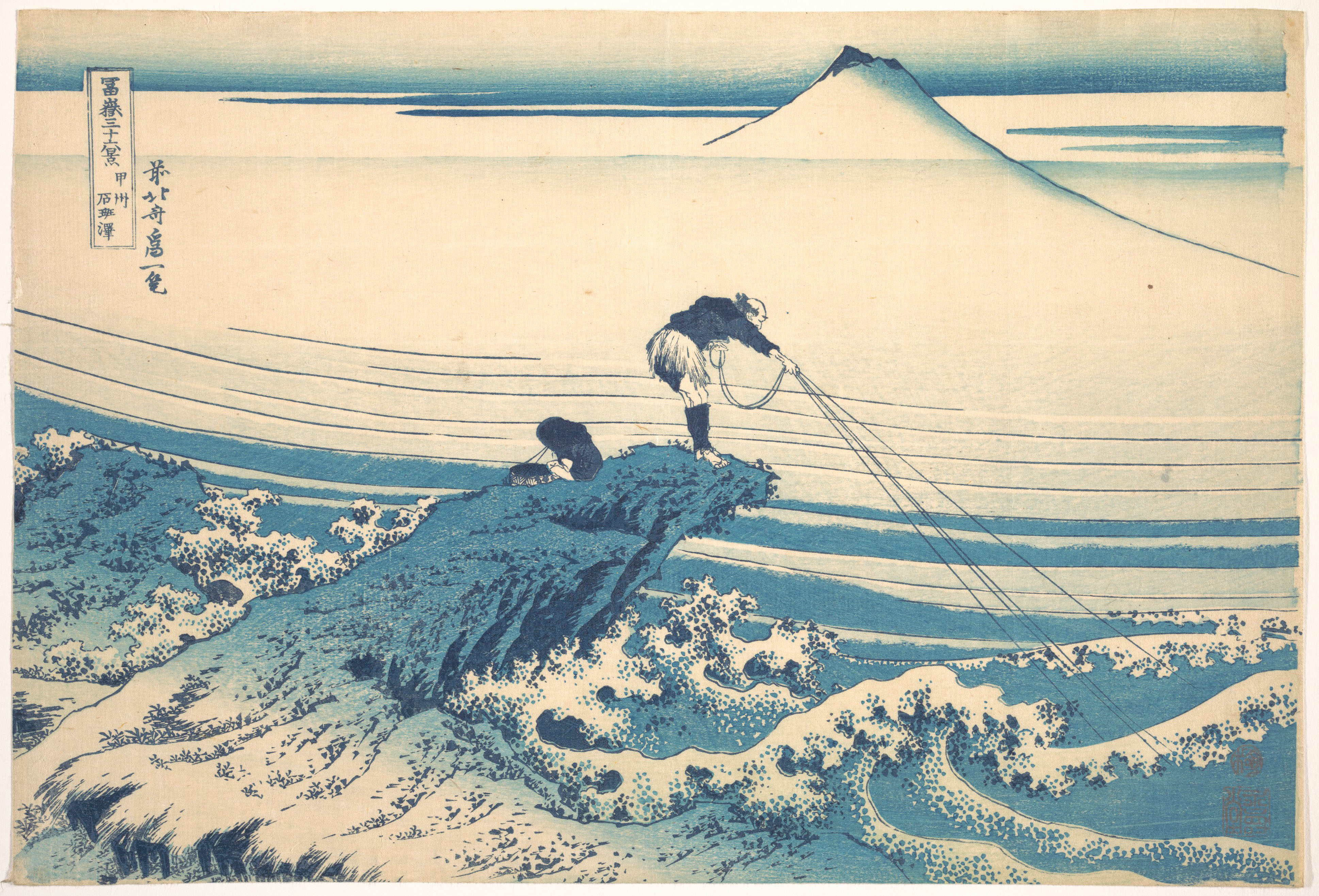
Katsushika Hokusai’s Kajikazawa in Kai Province (Kōshū Kajikazawa), from the iconic series Thirty-six Views of Mount Fuji, is a masterwork of ukiyo-e woodblock printing that transcends its 19th-century origins. As a Lead Heritage Curator for Katherine Fashion Lab, I analyze this print through the lenses of symbolic power, historical adornment, spiritual meaning, and its strategic relevance for the 2026 high-end luxury market. This analysis is conducted as a standalone research piece, intended to inform brand positioning, collection development, and narrative architecture for a discerning global clientele.
Symbolic Power: The Intersection of Nature, Labor, and Transcendence
Hokusai’s composition in Kajikazawa in Kai Province is a study in dynamic contrast. The foreground depicts a lone fisherman, poised on a rocky outcrop, casting a net into the turbulent waters of the Fuji River. Behind him, the monumental, snow-capped peak of Mount Fuji rises with serene, geometric precision. This juxtaposition is not merely aesthetic; it embodies a profound symbolic power. The fisherman represents human perseverance and the daily struggle for sustenance, while Mount Fuji symbolizes the eternal, the sacred, and the unattainable. The tension between the ephemeral human act and the timeless mountain creates a narrative of resilience and aspiration.
For Katherine Fashion Lab, this symbolic duality offers a potent metaphor for the luxury consumer in 2026. The modern elite seeks not just material wealth but meaning and transcendence. The fisherman’s labor, rendered with exquisite detail, speaks to the value of craftsmanship and the beauty found in disciplined effort. The mountain, by contrast, represents the aspirational brand identity—an unshakeable, immutable icon of perfection. In a luxury strategy, this translates to collections that celebrate the artisanal process (the fisherman’s net, the woodblock’s chisel) while offering the consumer a connection to something greater than themselves (the brand’s heritage, its spiritual core).
Historical Adornment: The Aesthetic Language of Ukiyo-e
Hokusai’s woodblock print is a testament to the adornment of the everyday. The fisherman’s attire—a simple straw coat (mino) and conical hat (kasa)—is rendered with bold, flowing lines that emphasize functionality over ornamentation. Yet, within this simplicity lies a sophisticated aesthetic. The blue of the river, the deep indigo of the mountains, and the crisp white of Fuji’s snow create a color palette that is both restrained and emotionally resonant. The woodblock technique itself, with its layered, translucent inks, produces a texture that is tactile and rich, even in two dimensions.
Historical adornment in ukiyo-e is about elevating the mundane. The fisherman’s gear is not decorative in the Western sense, but it is deeply considered. The straw’s weave, the hat’s curve, the net’s geometry—all are elements of a visual language that values form, function, and harmony with nature. For Katherine Fashion Lab’s 2026 luxury strategy, this suggests a move away from overt embellishment toward material integrity and subtle sophistication. Consider fabrics that mimic the texture of mino straw—perhaps a jacquard weave in recycled silk—or accessories that echo the fisherman’s net, reinterpreted in hand-forged gold mesh. The historical adornment of Hokusai’s world offers a blueprint for quiet luxury, where beauty is found in the details of construction and the honesty of materials.
Spiritual Meaning: Shinto, Zen, and the Sacred Mountain
Mount Fuji is not merely a geographical feature in this print; it is a spiritual axis mundi. In Shinto belief, mountains are kami—divine spirits—and Fuji is among the most venerated. The print captures this sacrality through its compositional hierarchy: Fuji dominates the upper third of the image, unblemished and ethereal, while the human world churns below. The fisherman, though physically separate, is spiritually connected to the mountain through his labor and his gaze. This reflects the Zen Buddhist concept of everyday mindfulness—the sacred is found not in retreat from the world, but in the full engagement with it.
For the 2026 luxury consumer, spiritual meaning is a growing priority. Research indicates that high-net-worth individuals are increasingly seeking experiential and transcendent consumption. Katherine Fashion Lab can leverage this by embedding ritual and intention into its brand narrative. A collection inspired by Kajikazawa in Kai Province might include not just garments, but a curated experience: a limited-edition silk scarf printed with the exact waves of Hokusai’s river, accompanied by a hand-bound book on the Zen of fishing, or a pop-up event at a mountain retreat. The spiritual meaning of the print—that the mundane and the divine coexist—can be translated into a brand philosophy of mindful luxury, where each purchase is a meditation on beauty and impermanence.
2026 High-End Luxury Strategy: Translating Heritage into Market Leadership
The heritage analysis of Kajikazawa in Kai Province yields three strategic pillars for Katherine Fashion Lab’s 2026 high-end luxury approach:
Pillar 1: The Artisan Narrative
Hokusai’s print is the product of a collaborative process—designer, carver, printer, publisher. This artisanal ecosystem is a powerful model for luxury production. In 2026, Katherine Fashion Lab should partner with master artisans in Japan and beyond to create limited-run, handcrafted pieces that celebrate the same level of skill and patience. The fisherman’s net, for example, can inspire a hand-knotted silk gown, each knot tied by a single artisan over weeks. The narrative of labor and mastery becomes the product’s ultimate value.
Pillar 2: Chromatic and Textural Minimalism
The print’s palette—indigo, white, muted earth tones—offers a refined visual identity that resonates with contemporary minimalism. For 2026, Katherine Fashion Lab should develop a signature color system based on ukiyo-e dyes, using natural pigments and sustainable processes. Textures should prioritize depth over flash: think of raw silk, hand-dyed linen, and woven metallic threads that catch light like the surface of Hokusai’s river. This approach aligns with the luxury trend toward understated elegance and environmental consciousness.
Pillar 3: Experiential and Spiritual Branding
Finally, the spiritual meaning of the print must be woven into the brand’s customer journey. Katherine Fashion Lab can launch a 2026 Heritage Collection that includes immersive storytelling: digital AR experiences that allow clients to “step into” Hokusai’s landscape, private viewings of original woodblocks, or a bespoke service where each garment is accompanied by a personal meditation guide reflecting the Zen of the print. The goal is to transform a purchase into a ritual of connection—to nature, to history, and to self.
Conclusion
Kajikazawa in Kai Province is far more than a historical artifact; it is a strategic asset for high-end luxury in 2026. Its symbolic power speaks to the human desire for transcendence; its historical adornment offers a blueprint for quiet sophistication; and its spiritual meaning provides a foundation for mindful consumption. By translating these elements into a cohesive brand strategy, Katherine Fashion Lab can position itself as a leader in heritage-driven luxury, appealing to a clientele that values story, craftsmanship, and soul. The print’s enduring lesson is that the most powerful luxury is not about possession, but about participation in a timeless narrative. Hokusai’s fisherman, casting his net against the eternal mountain, is the ultimate emblem of this truth.