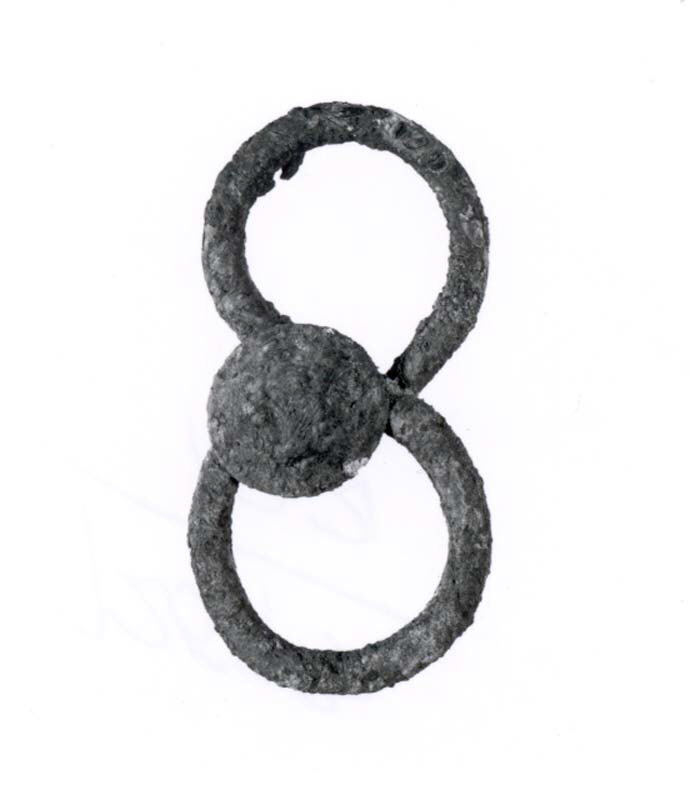
Strategic Heritage Analysis: The Persian Buckle as a Foundational Luxury Code
For Katherine Fashion Lab, the pursuit of heritage is not an archival exercise but a strategic excavation of profound symbolic capital. This analysis examines a specific artifact—the Persian buckle or ornament from Iran, crafted in copper and bronze—to decode its intrinsic narrative power and extract actionable principles for a 2026 high-end luxury strategy. Positioned as standalone research, this investigation moves beyond aesthetic appreciation to frame the object as a nexus of cultural memory, spiritual authority, and corporeal adornment. In an era where luxury demands authenticity and depth, the metallurgical and symbolic lexicon of ancient Persia offers a resonant, untapped vocabulary for contemporary distinction.
Historical Context & Materiality: Copper, Bronze, and the Body Politic
The selection of copper and bronze as primary media is the first layer of strategic significance. In ancient Iran, particularly during the Achaemenid (c. 550–330 BCE) and subsequent Sassanian (c. 224–651 CE) empires, these metals were not mere substitutes for gold. They were functional and symbolic choices. Bronze, an alloy of copper and tin, represented early technological sophistication—strength, durability, and the mastery of fire and earth. Copper, with its distinctive warm glow, was associated with the goddess Anahita, a deity of waters, fertility, and wisdom. The use of these materials in buckles and ornaments, often for ceremonial belts, horse trappings, and armor, situated the wearer within a complex web of meanings: technological prowess, martial readiness, and divine favor. The patina acquired over time was not degradation but a narrative of use, a lived history, a concept directly transferable to luxury’s appreciation of provenance and aging with grace.
Symbolic Power and Spiritual Meaning: The Buckle as Cosmic Mandala
Far beyond a functional clasp, the Persian buckle was a concentrated field of symbolic power. Its circular or rectangular form often served as a canvas for intricate iconography. Recurring motifs—the lion (symbol of royal power and the sun), the simurgh (a benevolent, mythical bird representing union between earth and sky), and floral rosettes (evoking the eternal gardens of Paradise)—transformed the buckle into a portable cosmos. It acted as a spiritual amulet, a protective seal for the core of the body. In Zoroastrian cosmology, the belt (kusti) holds profound ritual significance, girding the faithful and separating the spiritual from the material. Thus, a buckle was not just an accessory; it was a sanctifier of the human form, a marker of identity and belief. For Katherine Fashion Lab, this translates to a design philosophy where closure is ceremony, and every fastening is an act of alignment with a deeper narrative.
Adornment as Armor: The Dialectic of Protection and Display
Historical adornment in the Persian context elegantly dissolved the boundary between armor and ornament. A bronze belt buckle could secure a warrior’s cuirass or a courtier’s robe, embodying a dual function of protection and status proclamation. This duality is critically relevant for modern luxury, which increasingly serves as both social armor and a means of personal expression. The weight of the metal, the solidity of its form, and the authority of its iconography conferred an immovable confidence upon the wearer. The artifact teaches us that true luxury is assertive and grounding. It does not merely decorate the body; it fortifies the persona. For a 2026 strategy, this suggests collections where hardware is hero—where buckles, clasps, and closures are designed as the focal points of garments and accessories, engineered not just to fasten but to transform the silhouette and attitude of the wearer.
Strategic Integration: A 2026 Luxury Code for Katherine Fashion Lab
The translation of this heritage into a forward-facing luxury strategy requires a nuanced, non-literal approach. The objective is to codify, not copy. We propose a four-pillar integration framework for 2026:
1. The Material Archive: Launch a dedicated "Metallurgy Lab" exploring contemporary alloys and patination techniques that reference copper and bronze. Develop proprietary finishes—a "Persian Patina" or "Anahita Copper"—that tell a story of alchemy and time. This creates a tangible, technical link to the source material.
2. Symbolic Abstraction: Move beyond direct motif replication. Instead, abstract the core principles: the cosmic order (through geometric tessellation in hardware), the protective mandate (through assertive, architectural forms), and the fusion of dualities (hard/soft, ancient/futuristic). This allows for modern silhouettes imbued with ancient resonance.
3. Narrative Adornment: Position key pieces, particularly outerwear, leather goods, and belts, within a narrative of "ceremonial armor." Each collection can explore a facet of the historical symbolism (e.g., "The Simurgh Collection" focusing on feather-light yet resilient textures; "The Lion Guard" focusing on bold, protective shapes). Marketing must articulate this depth, connecting the act of wearing to a legacy of power and spirituality.
4. Experiential Provenance: Create client experiences that mirror the artifact’s spiritual and ceremonial role. This could involve private consultations on the symbolism of pieces, or immersive events that evoke the grandeur of Persian gardens and courtly rituals, thereby building an emotional and intellectual ecosystem around the product.
Conclusion: From Artifact to Archetype
The Iranian copper and bronze buckle is a masterclass in condensed meaning. It demonstrates how an object of daily use can be elevated to a vessel of cosmic symbolism, spiritual protection, and temporal authority. For Katherine Fashion Lab, this analysis provides more than inspiration; it offers a strategic blueprint. By internalizing the artifact’s principles—its meaningful materiality, its narrative iconography, and its philosophy of adornment-as-armor—the Lab can develop a unique and defensible luxury code for 2026. In a saturated market, heritage leveraged with this level of analytical depth and creative abstraction becomes a formidable tool for differentiation. It allows us to not just create products, but to cultivate modern archetypes, offering the discerning client not merely an accessory, but an anchor to a timeless lineage of power and beauty.