The Dialectics of Exposure: A Couture Analysis of Katherine Fashion Lab’s “Strip”
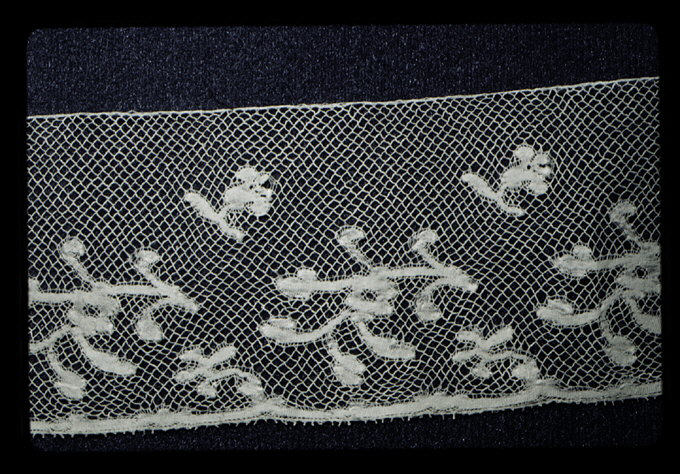
In the rarefied echelons of haute couture, where fabric becomes narrative and silhouette speaks philosophy, Katherine Fashion Lab’s latest standalone study—titled “Strip”—emerges as a provocative meditation on vulnerability, restraint, and the architecture of absence. At first glance, the collection appears to be a minimalist exercise in reduction. Yet upon deeper examination, “Strip” reveals itself as a masterclass in the tension between revelation and concealment, executed through an unexpected medium: bobbin lace. Drawing from a global heritage of textile craftsmanship, this analysis dissects how the collection deconstructs the very notion of the “strip” as both a physical form and a conceptual gesture.
The Conceptual Framework: Strip as Syntax
The title “Strip” operates on multiple semantic planes. It evokes the act of undressing, the linearity of a ribbon, and the surgical precision of removal. Katherine Fashion Lab eschews the vulgarity of literal nudity; instead, the collection uses the strip as a grammatical unit—a syntactical element that organizes space around the body. Each garment is composed of interlocking strips of bobbin lace, arranged not as mere decoration but as structural ribs that define volume and negative space. The result is a silhouette that is simultaneously skeletal and ethereal, a lattice of light and shadow that challenges the binary of dressed versus undressed.
The global heritage lens is critical here. Bobbin lace, historically rooted in 16th-century European convents and later adapted across Flemish, Italian, and Spanish traditions, carries connotations of patience, piety, and meticulous labor. By appropriating this technique for a study on exposure, the Lab inverts its original purpose: lace was once a symbol of modesty; here, it becomes a tool for strategic revelation. The collection draws equally from non-Western traditions of body adornment—such as the intricate netting of Native American ceremonial garments or the geometric perforations of African textile arts—to assert that the strip is a universal language of boundary-making.
Materiality and Technique: Bobbin Lace as Structural Armature
Bobbin lace is notoriously labor-intensive, requiring the intertwining of multiple threads wound on bobbins, pinned to a pillow, and manipulated into patterns. In “Strip,” Katherine Fashion Lab elevates this craft from ornament to engineering. The lace is not applied as trim but forms the primary fabric of each piece. The strips are woven with varying densities—some open and diaphanous, others densely knotted—creating a gradient of opacity that mimics the visual rhythm of a strip being pulled taut or relaxed.
The material’s inherent fragility is paradoxically its strength. The lace strips are stiffened through a proprietary process involving natural starches and resins, allowing them to hold their shape without a supporting underlayer. This technique renders the garment as a kind of exoskeleton, where the body becomes both the wearer and the architecture. The interplay of light through the lace’s negative spaces creates a moiré effect, constantly shifting the viewer’s perception of where the garment ends and the skin begins. This optical ambiguity is central to the collection’s thesis: the strip is not a boundary but a threshold.
One standout piece—a floor-length gown with asymmetrical strips cascading from a single shoulder—demonstrates the Lab’s mastery of tension. The strips are anchored at the waist and hip, then released to fall in staggered lengths, creating a visual echo of a curtain being parted. The effect is both regal and raw, as if the wearer is perpetually in the act of undressing or being unveiled. The bobbin lace’s floral motifs, traditionally associated with innocence, are here rendered in charcoal and rust tones, lending a melancholic, almost Gothic sensibility.
Global Heritage: The Strip as Cultural Palimpsest
The “Global Heritage” origin of “Strip” is not merely a marketing descriptor but a deeply researched ethos. The collection references the sash of Japanese kimono culture, where the obi strip cinches and defines the torso; the strip-woven textiles of the Andean region, where narrow bands are sewn together to form larger garments; and the ribbon work of the Woodland Native Americans, where silk ribbons are appliquéd in layers to create dimensional patterns. Katherine Fashion Lab synthesizes these traditions into a cohesive visual lexicon, stripping them of their original cultural contexts to create a new, universal grammar of the strip.
For instance, a corset-like top in the collection uses bobbin lace strips arranged in a chevron pattern, reminiscent of the zigzag motifs found in West African strip-weaving. Yet the lace’s translucence subverts the corset’s historical function of constriction; here, it suggests liberation through controlled exposure. Similarly, a pair of wide-leg trousers features strips that are braided at the side seams, mimicking the sashiko stitching of Japanese boro textiles, but rendered in delicate lace rather than indigo-dyed cotton. The result is a dialogue between strength and fragility, utility and ornament.
Standalone Study: The Body as Exhibition Space
As a standalone study, “Strip” is not intended for mass production or even seasonal rotation. It is a focused investigation into a single formal problem: how can a strip—a linear, bounded element—create a garment that is both cohesive and fragmented? The answer lies in the Lab’s radical approach to negative tailoring. Rather than cutting and sewing fabric to fit the body, the garments are constructed by pinning and tying the lace strips directly onto a mannequin, then stabilizing them with heat-set adhesives. This process results in seams that are not sewn but suspended, allowing the garment to breathe and move with the wearer.
The collection’s palette is deliberately monochromatic—shades of ivory, bone, and ash—to foreground the play of texture and shadow. The absence of color forces the eye to focus on the structural logic of the strips. Each piece is a study in asymmetry, with strips that vary in width from a quarter-inch to three inches, creating a rhythmic counterpoint of thick and thin. The hems are intentionally unfinished, with loose threads and raw edges left exposed, reinforcing the theme of incompletion and the beauty of the “unraveled.”
Perhaps the most daring piece is a backless jumpsuit where the strips converge at the nape of the neck, fanning out like a peacock’s tail before wrapping around the waist. The back is entirely open, save for a single vertical strip that bisects the spine. This design forces a confrontation with the viewer: the wearer is both shielded and exposed, the strip acting as a line of defense and a point of entry. It is a powerful metaphor for the modern condition—the constant negotiation between privacy and visibility.
Conclusion: The Strip as a Statement of Intent
Katherine Fashion Lab’s “Strip” is a triumph of intellectual and material rigor. By elevating bobbin lace from a decorative craft to a structural medium, and by weaving global heritage into a singular conceptual framework, the collection redefines the strip as a symbol of agency rather than submission. It asks us to reconsider what it means to reveal, to conceal, and to occupy space. In a fashion landscape often dominated by excess or austerity, “Strip” finds its power in the liminal—the space between, the line that both divides and connects. This is not fashion as adornment; it is fashion as philosophy, stitched in lace and suspended in light.