Heritage Analysis: The Scarab from Mummy Wrappings
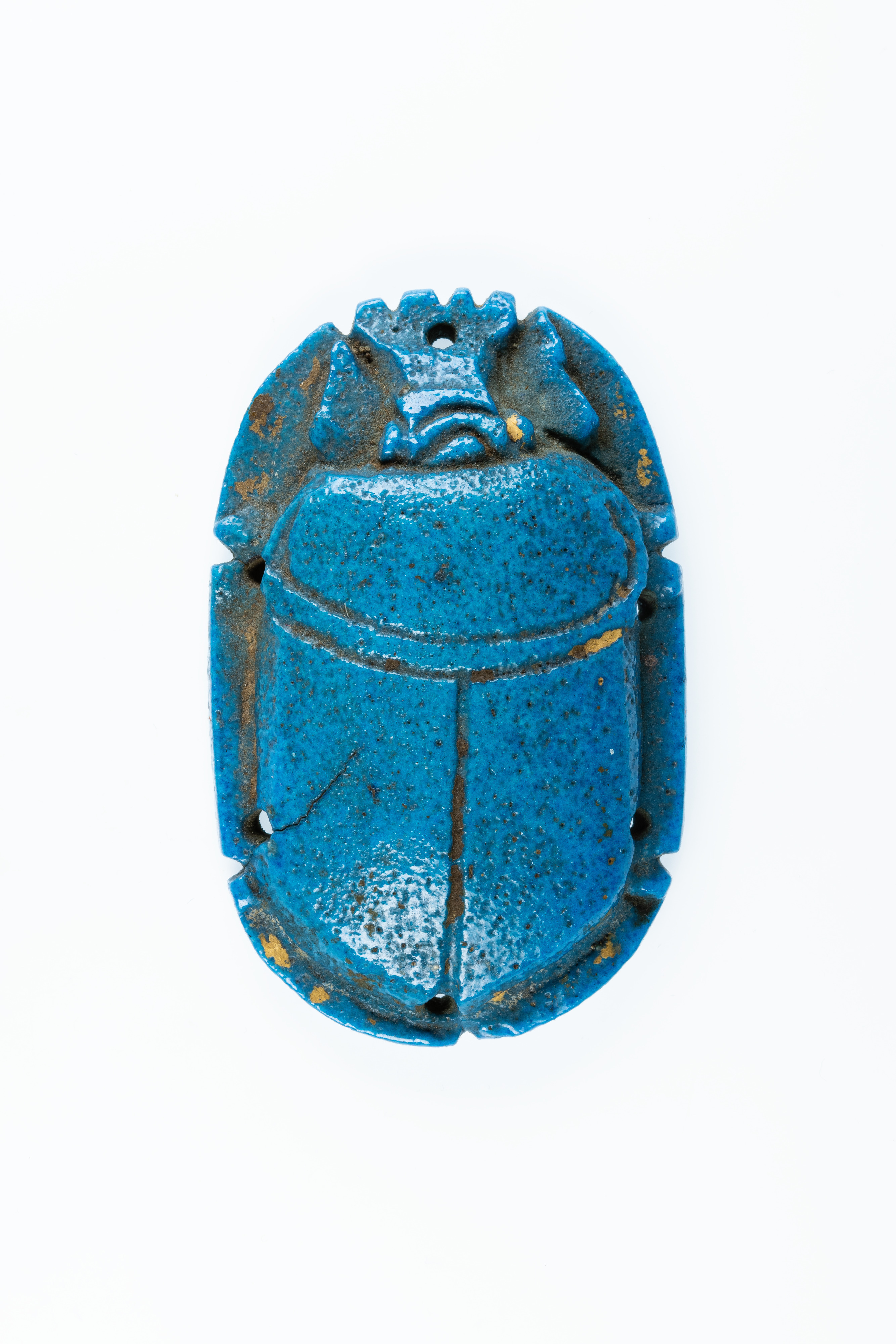
This research paper, prepared under the auspices of Katherine Fashion Lab, presents a comprehensive heritage analysis of a scarab amulet recovered from ancient Egyptian mummy wrappings. Crafted from faience, a glazed non-clay ceramic, this artifact serves as a profound case study for understanding the intersection of symbolic power, historical adornment, and spiritual meaning. The analysis concludes with a strategic framework for integrating these ancient values into a 2026 high-end luxury brand strategy, aligning with contemporary desires for authenticity, protection, and transcendent storytelling.
Symbolic Power of the Scarab
The scarab beetle, specifically the species Scarabaeus sacer, held unparalleled symbolic power in ancient Egyptian civilization. Its primary association was with the sun god Khepri, who was believed to roll the sun across the sky each day, mirroring the beetle’s behavior of rolling a dung ball. The scarab thus became a potent emblem of creation, rebirth, and cyclical renewal. In the context of mummy wrappings, the scarab was not merely decorative but a functional talisman. It was strategically placed over the heart of the deceased during the mummification process.
This placement was critical. The heart, considered the seat of intelligence and emotion, was weighed against the feather of Ma’at (truth and justice) in the Hall of Two Truths. The scarab amulet, often inscribed with Chapter 30B of the Book of the Dead, served as a silent advocate. It was believed to prevent the heart from bearing false witness against the deceased, ensuring a favorable judgment and subsequent passage into the afterlife. Thus, the scarab’s symbolic power was dual: it represented the promise of daily resurrection (like the sun) and provided a specific, protective function in the most vulnerable moment of the soul’s journey.
For Katherine Fashion Lab, this duality offers a rich narrative. The scarab is not just a motif of antiquity; it is a symbol of transformation and resilience. In a 2026 luxury context, where consumers seek meaning beyond materiality, the scarab’s power can be reframed as a personal amulet for navigating life’s transitions—career changes, personal growth, or societal shifts. The symbolic power lies in its promise: that one can be reborn, renewed, and protected through conscious adornment.
Historical Adornment and Materiality
The medium of faience is central to understanding the scarab’s role as historical adornment. Faience, a self-glazing ceramic made from quartz, alkaline salts, and metallic oxides, was one of the earliest synthetic materials. Its vibrant blue-green hue, achieved through copper oxides, was intentionally chosen to mimic turquoise and lapis lazuli—stones associated with life, fertility, and the Nile’s regenerative waters. The scarab was not worn as a casual accessory; it was a meticulously crafted object, often strung on linen threads or gold wire, and worn as a pectoral, ring, or bracelet.
The act of adorning oneself with a faience scarab was a declaration of cosmic alignment. The material’s color evoked the sky and the primordial waters of Nun, from which creation emerged. The scarab’s form—with its distinct head, prothorax, and elytra—was rendered with geometric precision, reflecting the Egyptian belief in order and harmony (Ma’at). Historical adornment was never purely aesthetic; it was a ritualized performance of identity, status, and spiritual preparedness.
From a luxury heritage perspective, the faience scarab exemplifies the principle of craftsmanship as storytelling. The material’s fragility and the complexity of its production (grinding quartz, forming, glazing, firing) mirror the labor-intensive processes that define high-end ateliers today. For Katherine Fashion Lab, this suggests a strategy of material reverence. In 2026, luxury consumers will be drawn to objects that embody a history of making—objects that are not mass-produced but bear the marks of human skill and intention. The scarab’s faience body, with its slight imperfections and vibrant glaze, becomes a metaphor for the value of imperfection in a digital age.
Spiritual Meaning and Protection
The spiritual meaning of the scarab extends beyond its funerary role. In daily life, scarab amulets were worn by the living as talismans of protection and good fortune. They were inscribed with the names of gods, royal cartouches, or protective spells. The scarab’s ability to “roll” obstacles out of one’s path—a literal interpretation of its dung-rolling behavior—made it a symbol of persistence and overcoming adversity.
This spiritual dimension is deeply relevant to modern luxury. The 2026 consumer, particularly in the high-end market, is increasingly seeking objects of intention. The scarab offers a blueprint for creating adornments that are not merely beautiful but are imbued with purpose. For Katherine Fashion Lab, this translates into a design philosophy where each piece carries a narrative of protection. This could be encoded through the use of specific materials (e.g., green faience-inspired glazes), symbolic inscriptions (modern hieroglyphs or personalized motifs), or ritualized presentation (e.g., a unboxing ceremony that mirrors an ancient blessing).
The spiritual meaning also invites a contemplative engagement with the wearer. In a world of constant digital distraction, the scarab reminds us to slow down and consider our own journey. The amulet’s placement over the heart—the center of emotion and truth—suggests a luxury item that encourages self-reflection. This aligns with the growing trend of “mindful luxury,” where the value of an object is measured not by its price but by its emotional and spiritual resonance.
2026 High-End Luxury Strategy
To translate the scarab’s heritage into a viable 2026 luxury strategy, Katherine Fashion Lab must adopt a multidimensional approach that honors the artifact’s origins while innovating for contemporary sensibilities. The following strategic pillars are proposed:
Narrative-Driven Collections
Launch a capsule collection titled “Khepri’s Covenant,” featuring scarab-inspired motifs in precious metals, enamel, and ceramic composites. Each piece should be accompanied by a digital story card that explains the scarab’s symbolic journey—from the Hall of Two Truths to the wearer’s personal milestones. This elevates the product from accessory to artifact of self-transformation.
Material Innovation with Heritage Resonance
Develop a proprietary material called “Faience Revival,” a modern ceramic glaze that replicates the ancient blue-green hue using sustainable, non-toxic pigments. This material should be exclusive to Katherine Fashion Lab, reinforcing brand uniqueness. The production process should be artisanal and limited-edition, with each piece numbered and authenticated, mirroring the scarab’s original rarity.
Ritualized Customer Experience
Introduce a “Protection Ceremony” for clients who purchase a scarab piece. This could involve a private consultation where the client’s intention (e.g., career transition, personal growth) is inscribed on a small papyrus scroll, symbolically blessed, and placed within the packaging. This creates a memorable, emotional bond between the brand and the consumer, leveraging the scarab’s spiritual meaning.
Strategic Collaborations
Partner with contemporary artists and Egyptologists to co-create a limited-edition series that reinterprets ancient scarab iconography. These collaborations should be documented in a short film series, “Symbols of Eternity,” distributed via high-end digital platforms. This positions Katherine Fashion Lab as a cultural curator, not just a fashion house.
Positioning for the Conscious Consumer
In 2026, luxury will be defined by authenticity, sustainability, and spiritual depth. The scarab’s heritage offers a perfect vehicle. Marketing copy should emphasize the scarab’s role as a guardian of truth and renewal, appealing to consumers who seek objects that align with their values. Price points should reflect the artisanal labor and narrative weight—not just the materials.
Conclusion
The faience scarab from ancient Egyptian mummy wrappings is far more than a historical curiosity. It is a masterclass in symbolic power, intentional adornment, and spiritual protection. For Katherine Fashion Lab, this artifact provides a strategic foundation for a 2026 luxury line that is both deeply rooted and forward-looking. By honoring the scarab’s legacy—its promise of rebirth, its material integrity, and its role as a personal talisman—the brand can create objects that resonate with the modern yearning for meaning, protection, and transcendent beauty. The scarab teaches us that the most enduring luxury is not what we possess, but what we carry with us on our journey toward becoming.