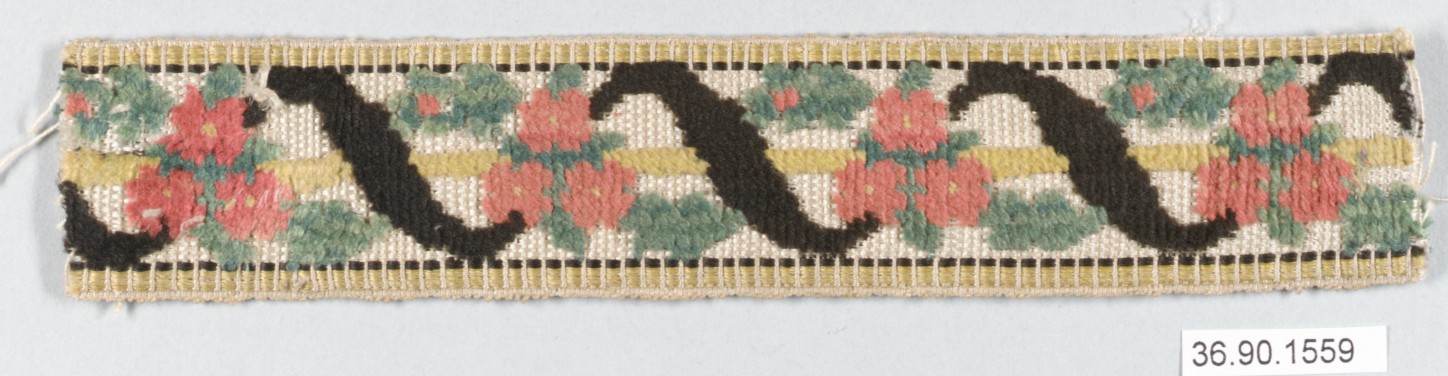
The Couture Analysis of Galloon: A Study in Silk and Global Heritage
In the rarified atmosphere of haute couture, where every stitch is a narrative and every fiber a testament to artistry, few materials command the reverence of silk. Yet, within the Katherine Fashion Lab’s standalone study of ornamental trims, one element emerges as a silent protagonist of luxury: galloon. This intricate, often metallic-edged braid has long been a staple of ecclesiastical vestments, military regalia, and royal court attire. But when reimagined through the lens of global heritage and executed in pure silk, galloon transcends its decorative function to become a profound statement of cultural synthesis and textile innovation. This analysis deconstructs galloon’s journey from a humble trim to a couture cornerstone, examining its materiality, historical roots, and contemporary relevance within the Katherine Fashion Lab’s ethos of elevated craftsmanship.
Materiality and the Silk Imperative
At its core, galloon is defined by its construction: a narrow, woven or braided tape, often featuring a scalloped or zigzag edge, historically reinforced with metallic threads. In the Katherine Fashion Lab’s study, the substitution of synthetic or cotton bases with pure silk redefines the trim’s physical and aesthetic properties. Silk’s natural luster, tensile strength, and hypoallergenic qualities allow galloon to drape with a fluidity that stiff metallic alternatives cannot achieve. The lab’s artisans have engineered a galloon where the silk warp and weft are tightly packed, creating a dense, almost liquid surface that catches light in cascading highlights. This is not merely decorative; it is structural. The silk galloon can be shaped, seamed, and layered onto couture garments without the bulkiness of traditional trims, enabling designers to use it as a primary accent or as a subtle, continuous line that defines silhouette.
The choice of silk also introduces a tactile dimension that synthetic galloon lacks. When fingers trace the braid, the cool smoothness of the silk contrasts with the subtle, raised texture of the braiding pattern. This sensory experience is central to the lab’s philosophy: couture must be felt as much as seen. The silk galloon’s ability to absorb and reflect color differently under varying light conditions—from a matte, understated sheen in soft daylight to a vibrant, almost iridescent glow under spotlight—gives designers a dynamic tool for controlling visual perception. Whether used to edge a collar, define a waistline, or create intricate latticework on a bodice, the silk galloon becomes a chameleon, adapting its character to the garment’s narrative.
Global Heritage: Threads Across Continents
The term “galloon” itself carries a rich etymological tapestry, derived from the Old French galon, meaning a ribbon or braid, and further linked to the Italian gallone. However, the technique of weaving decorative trims predates European naming by millennia. In the Katherine Fashion Lab’s study, global heritage is not a static reference but a living dialogue. The lab has traced galloon’s antecedents to the Byzantine Empire, where silk-embroidered borders adorned imperial robes, and to the Mughal courts of India, where intricate zardozi work—using silk threads and precious metals—created opulent trims for ceremonial attire. Similarly, the Chinese dynasties perfected the art of silk braiding, using it to signify rank and status in courtly dress. The Katherine Fashion Lab’s galloon synthesizes these traditions, blending the geometric precision of European braiding with the fluid, organic patterns of Indian and Chinese textile art.
This global heritage is not merely intellectual; it is embedded in the production process. The lab sources its silk from mulberry silkworms cultivated in the Jiangsu region of China, renowned for their long, uniform fibers. The braiding techniques, however, are a hybrid: the core structure follows a traditional Italian passementerie method, while the decorative scallops are inspired by Ottoman sirma embroidery. The result is a galloon that speaks multiple cultural dialects without losing its cohesive identity. This approach aligns with the lab’s commitment to cultural stewardship, ensuring that each trim honors its origins while evolving for contemporary use. The galloon becomes a wearable artifact, a thread that connects a 21st-century gown to the Silk Road, to the courts of Versailles, and to the temples of Kyoto.
Contextual Applications in Standalone Couture
Within the Katherine Fashion Lab’s standalone study, galloon is examined not as an accessory but as a primary design element. The lab’s designers have developed a capsule collection where silk galloon dictates the entire garment architecture. For example, a floor-length column gown uses galloon as the sole structural component: the trim is woven into a lattice that forms the bodice, with the scalloped edges creating a scalloped neckline and hem. The silk’s tensile strength allows this lattice to hold its shape without internal boning, resulting in a garment that is both airy and sculptural. Another piece, a tailored jacket, uses galloon as a continuous, spiraling appliqué that traces the seams, mimicking the lines of a tailored suit while introducing an organic, almost botanical rhythm.
The lab’s study also explores galloon’s potential in negative-space design. By leaving gaps in the braided pattern, the silk galloon creates a mesh-like effect that reveals the skin or an underlying fabric. This technique, inspired by filet lace from Renaissance Europe, is reimagined with the galloon’s metallic-silk blend, producing a shimmering, translucent surface that plays with modesty and exposure. The standalone context allows for extreme experimentation: one dress features galloon as a single, unbroken line that spirals from the left shoulder, around the waist, and down to the right ankle, creating a dynamic, asymmetrical silhouette. The trim’s flexibility and durability ensure that this line remains crisp and unyielding, even during movement.
Artisanal Precision and the Future of Ornamentation
The production of silk galloon at the Katherine Fashion Lab is a testament to the value of slow fashion and artisanal mastery. Each yard of galloon requires hours of hand-braiding on a custom-built loom, with the silk threads tensioned manually to achieve uniform density. The scalloped edges are not cut but formed during the braiding process, requiring the artisan to anticipate the pattern’s rhythm and adjust the tension in real time. This level of precision is rare in an era of machine-made trims, and it imbues the galloon with a unique, almost human quality. Slight variations in the braid’s tightness, which would be considered flaws in mass production, are celebrated as evidence of handcraft.
Looking forward, the Katherine Fashion Lab’s standalone study positions silk galloon as a catalyst for sustainable couture. Because the trim is so structurally versatile, it reduces the need for additional materials like linings, interlinings, or synthetic reinforcements. A single, well-designed galloon can replace multiple components, minimizing waste and simplifying the garment’s lifecycle. Furthermore, the silk itself is biodegradable and sourced from ethical farms, aligning with the lab’s commitment to environmental responsibility. The galloon becomes a symbol of luxury without excess, a trim that carries the weight of history and the promise of a more thoughtful future.
In conclusion, the Katherine Fashion Lab’s analysis of galloon reveals a material of extraordinary depth. Far from being a mere decorative afterthought, silk galloon emerges as a vehicle for cultural storytelling, a technical marvel of textile engineering, and a design tool of unparalleled flexibility. For the discerning couturier, it offers a way to imbue garments with the richness of global heritage while advancing the boundaries of what a trim can achieve. In a world increasingly defined by the ephemeral, the silk galloon stands as a permanent thread, weaving together the past, present, and future of fashion.