The Sconce as Sculpture: A Couture Analysis of Light, Labor, and Legacy
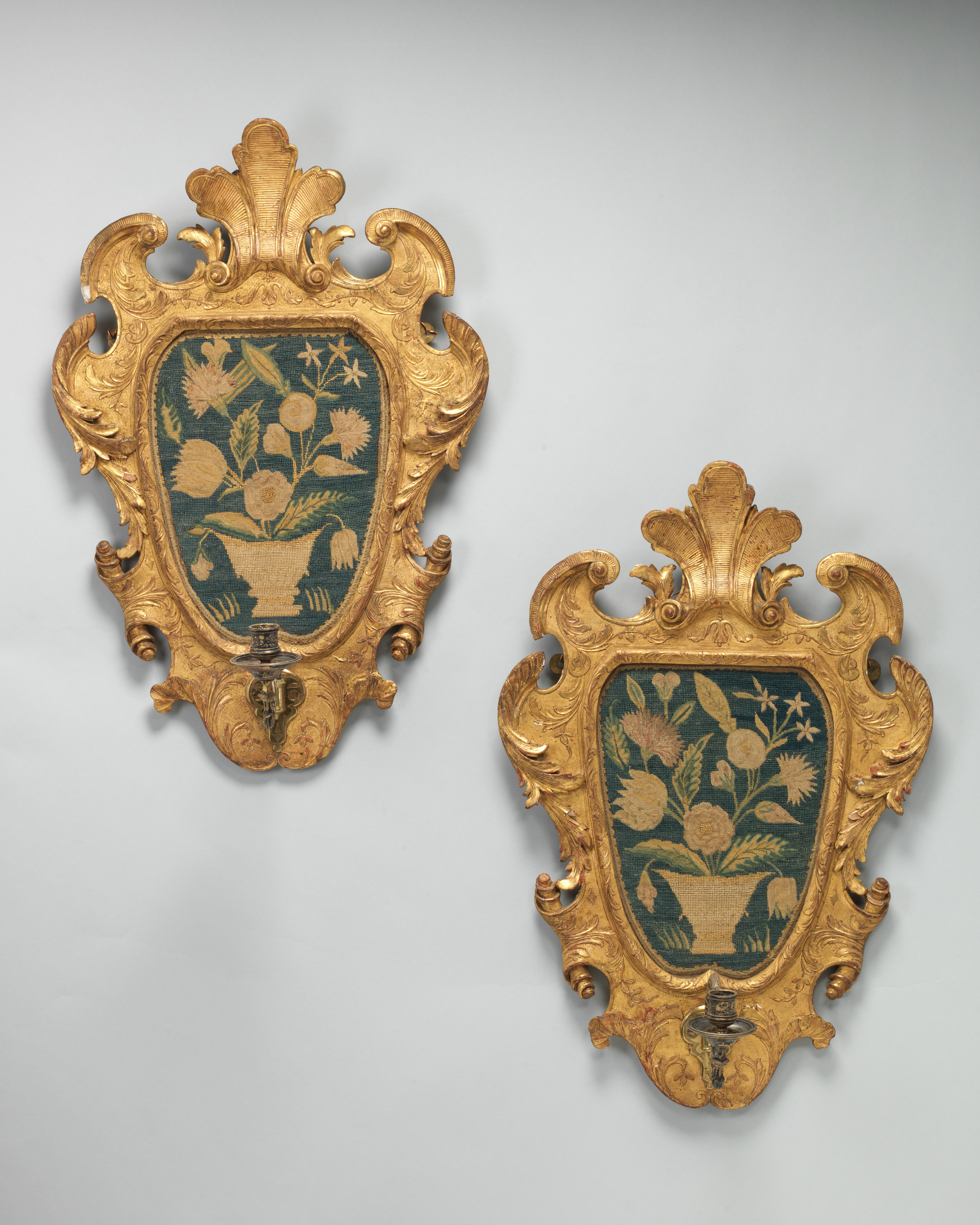
In the rarefied world of haute couture, the boundaries between fashion, interior architecture, and fine art are not merely blurred—they are deliberately dissolved. Katherine Fashion Lab’s latest curatorial subject, a single sconce from a pair, exemplifies this dissolution with breathtaking precision. At first glance, the object appears to be a functional light fixture. Yet, upon closer examination, its gilded pine and gesso structure, its silver reflectors, and its remarkable silk, wool tent, and cross-stitch on canvas textile elements reveal a narrative far deeper than mere illumination. This is a piece that demands to be read as a couture garment—a wearable sculpture frozen in time, yet alive with the global heritage of artisan hands.
Deconstructing the Material Choreography
The sconce’s foundational anatomy is a study in structural elegance. The gilded pine and gesso armature provides both physical support and a luminous, almost ethereal surface. Gesso, a traditional ground material used in Renaissance panel painting, here serves as a unifying primer that absorbs and reflects light in a manner akin to a couturier’s silk charmeuse. The gilding—applied in thin, burnished layers—transforms the wood into a golden skeleton, reminiscent of the intricate metalwork seen in haute joaillerie. This is not a mere fixture; it is a sculptural corset, shaping the space around it with the same precision that a master tailor shapes a bodice.
The silver elements—likely used for the candleholder or reflective backplate—introduce a cool counterpoint to the warm gilt. Silver, in couture, is often reserved for evening wear’s most dramatic accents: a silver-threaded embroidery on a black velvet gown, or a silver buckle on a patent leather pump. Here, it functions analogously, catching and redirecting ambient light to create a dynamic interplay of shadow and glow. The silver’s patina, if present, would add a layer of narrative wear, akin to the distress marks on a vintage Balenciaga jacket that tell a story of decades of elegant use.
The Textile Revolution: Silk, Wool, and the Hand of the Artisan
What elevates this sconce from decorative object to couture artifact is its textile component: silk, wool tent, and cross-stitch on canvas. This is not a simple lampshade; it is a meticulously constructed textile sculpture. The silk provides a lustrous ground, its natural sheen echoing the gilded wood. Silk, in couture, is the fabric of ceremony—of wedding gowns, of opera capes. Its presence here suggests that this sconce was designed for a space of ritual, perhaps a study where important decisions were made or where art was contemplated.
The wool tent stitch introduces a textural counterpoint. Tent stitch, a form of petit point, is a labor-intensive technique requiring thousands of tiny diagonal stitches per square inch. This is not machine work; it is the hand of an artisan who spent weeks, if not months, on this single panel. The wool’s warmth and durability contrast with the silk’s cool elegance, creating a tension that is both visual and tactile. In fashion, such a juxtaposition might appear in a double-faced coat: silk on one side, wool on the other, each fabric serving a different function yet united by a single silhouette.
The cross-stitch on canvas adds another layer of narrative. Cross-stitch, often associated with domestic crafts and folk traditions, is here elevated to haute technique. The canvas base—typically a linen or cotton ground—provides structure, while the cross-stitch patterns, likely geometric or floral motifs, evoke global textile traditions. This sconce could have been inspired by Byzantine iconography, Ottoman court textiles, or even Chinese silk embroideries. The global heritage of the piece is not a vague concept; it is encoded in every stitch, every thread, every burnished leaf of gesso.
Contextualizing the Standalone Study
The sconce’s placement in a standalone study is a curatorial masterstroke. A study is a space of introspection, of intellectual labor, of private luxury. Unlike a grand salon or a dining room, a study demands objects that reward close observation. This sconce, with its intricate textile work and layered materials, is designed to be examined at arm’s length. The light it casts—warm, diffused, and intimate—creates an atmosphere conducive to reading, writing, or silent contemplation. In this context, the sconce becomes a functional talisman, a bridge between the tangible and the intangible.
From a couture perspective, the study is akin to a private fitting room. Just as a couturier’s atelier allows for the meticulous adjustment of a garment to a client’s body, the study allows the sconce to be calibrated to the space’s specific light, shadow, and mood. The piece’s sculptural presence is not static; it changes with the angle of the sun, the flicker of a candle, the movement of a person across the room. This dynamism is a hallmark of great couture: a garment that moves with the wearer, revealing new details with each gesture.
The Economics of Craft: Valuing the Invisible Labor
To fully appreciate this sconce, one must consider the economics of its creation. The gilded pine and gesso alone require a master gilder’s expertise—a trade that has all but vanished in the age of mass production. The silver element demands a silversmith’s precision. The silk, wool tent, and cross-stitch represent hundreds of hours of handwork. In a world of fast fashion and disposable decor, this sconce stands as a testament to the value of slow, deliberate craft. Its price, if it were to be sold at auction, would reflect not just its materials but the accumulated knowledge of generations of artisans.
This economic reality mirrors the haute couture industry, where a single gown can require over a thousand hours of labor and command a six-figure price. The client who commissions such a piece is not buying a garment; they are buying a legacy. Similarly, the owner of this sconce is not simply acquiring a light fixture; they are acquiring a piece of global heritage, a conversation between cultures, a commitment to preserving techniques that might otherwise be lost.
Conclusion: The Sconce as Couture Manifesto
Katherine Fashion Lab’s analysis of this sconce reveals it as a manifesto for the fusion of fashion and interior art. Its gilded armature, silver accents, and hand-stitched textiles are not mere decoration; they are a declaration of intent. In a world increasingly dominated by digital reproductions and synthetic materials, this piece insists on the primacy of the handmade, the luminous, the tactile. It is a call to slow down, to look closely, to value the invisible labor that transforms raw materials into objects of enduring beauty.
As a standalone study piece, it invites the viewer to become a connoisseur—to read the language of its stitches, to trace the burnished gold of its gesso, to feel the weight of its silver. In doing so, it transforms the act of seeing into an act of understanding. This sconce is not just a source of light; it is a source of insight, a reminder that the most profound art often hides in plain sight, waiting for a discerning eye to unlock its secrets.