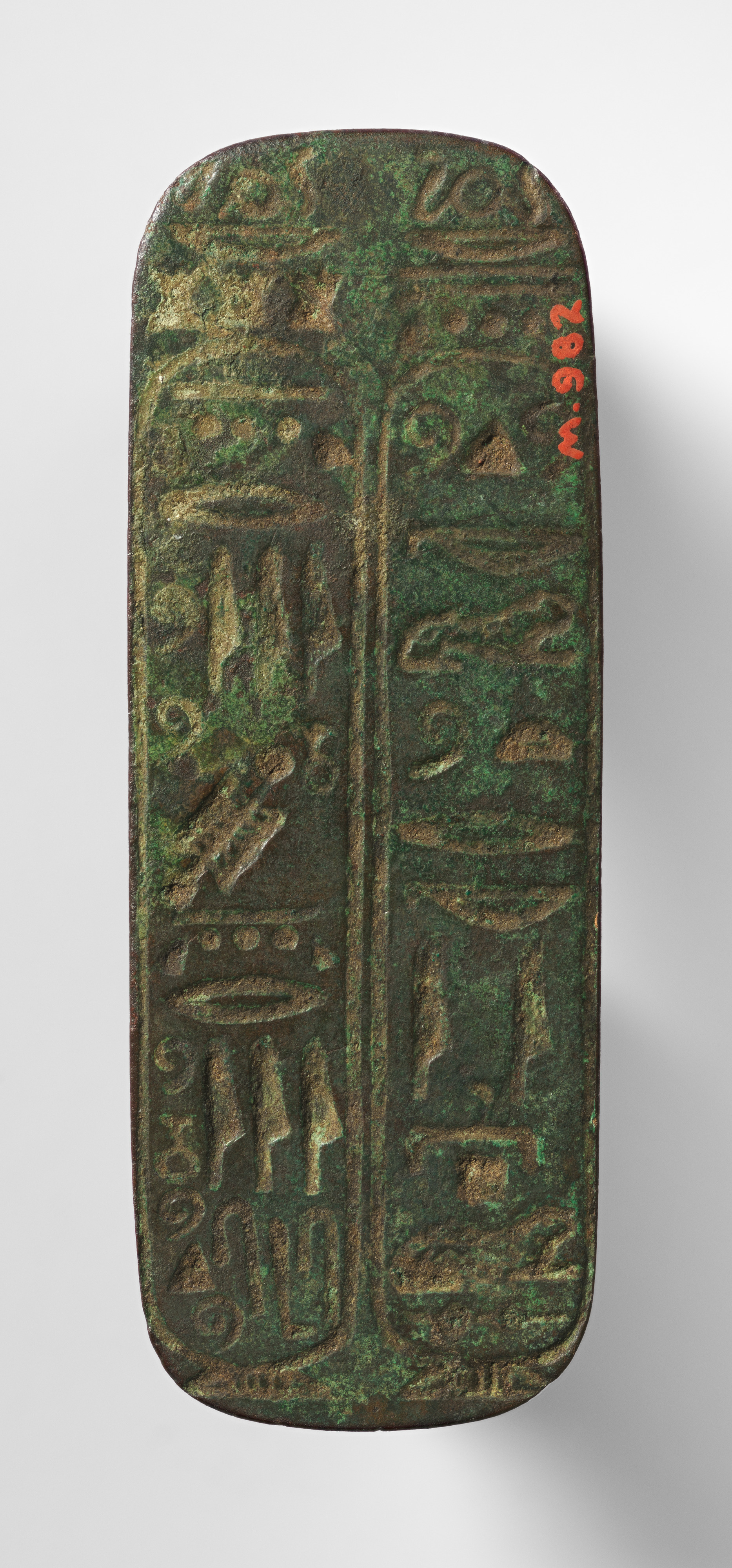
Heritage Analysis: Ring with Cartouches of Hadrian (?)
Introduction: Strategic Significance of the Artifact
This report presents a strategic heritage analysis of a bronze or copper alloy ring bearing cartouches attributed to Emperor Hadrian (reigned 117–138 CE). As a Lead Heritage Curator for Katherine Fashion Lab, I situate this object within the intersection of ancient symbolic power, historical adornment, and spiritual meaning. The ring, though modest in material, carries profound narrative weight that can inform a 2026 high-end luxury strategy. Its value lies not in precious metal but in its role as a wearable emblem of imperial authority, personal identity, and cosmic protection—a template for modern luxury that prioritizes meaning over material excess.
Symbolic Power: The Cartouche as Imperial Signature
The cartouche, a hallmark of Egyptian and later Roman iconography, functioned as a royal nameplate and protective seal. In this ring, the cartouches likely frame the name or titles of Hadrian, a ruler renowned for his consolidation of the Roman Empire and his philhellenic cultural policies. The use of bronze—a utilitarian yet durable alloy—suggests the ring was not a ceremonial ornament for the elite but a portable talisman for administrators, soldiers, or citizens seeking connection to imperial authority. Symbolically, the cartouche encircles and protects the emperor’s name, transforming the ring into a microcosm of state power. For Katherine Fashion Lab, this symbolism offers a blueprint for luxury branding: the ring becomes a signature object that confers status through intellectual and historical resonance, not ostentation. In 2026, high-end consumers increasingly seek authentication and lineage; a ring that carries an emperor’s mark—even in bronze—embodies a narrative of sovereignty and legitimacy.
Historical Adornment: Bronze as a Medium of Memory
Bronze and copper alloys were the workhorses of Roman material culture, used for coins, armor, and everyday jewelry. This ring’s medium is historically significant because it democratizes imperial symbolism. Unlike gold or silver, which signified wealth, bronze signaled utility and accessibility. The ring was likely worn on the finger of a person of moderate rank—a scribe, a soldier, or a provincial official—who claimed proximity to Hadrian’s authority by wearing his cartouche. Adornment in this context was not purely aesthetic but functional; it communicated loyalty, rank, and legal identity. For Katherine Fashion Lab, this reframes luxury as a dialogue between the wearer and history. A 2026 collection inspired by this ring could use patinated bronze or copper alloys to evoke antiquity, while the cartouche motif becomes a customizable signature for clients—a modern “seal” of personal empire. The historical lesson is that adornment’s power lies in its ability to anchor the wearer in a larger narrative of power and belonging.
Spiritual Meaning: The Ring as Cosmic Protector
The cartouche originated in ancient Egypt as a protective oval surrounding the pharaoh’s name, believed to ward off evil and ensure eternal life. Rome adopted this symbol, blending it with their own traditions of imperial cult and personal apotropaic magic. A ring with cartouches of Hadrian thus carried dual spiritual significance: it invoked the emperor’s divine favor (Hadrian was deified posthumously) and acted as a talisman against misfortune. The circular form of the ring itself—an unbroken loop—reinforced concepts of eternity, unity, and cosmic order. In a world where spiritual meaning is increasingly sought in luxury goods, this ring offers a model for embedding intentionality into design. For Katherine Fashion Lab’s 2026 strategy, the ring suggests a product that is not merely worn but activated—a piece that the owner charges with personal intention. This aligns with the rise of “meaningful luxury,” where consumers invest in objects that provide psychological and spiritual value. The ring’s spiritual dimension can be translated into limited-edition pieces inscribed with protective motifs or personalized cartouches, blending ancient magic with modern self-care.
2026 High-End Luxury Strategy: From Artifact to Archetype
To leverage this ring’s heritage for a 2026 high-end luxury strategy, Katherine Fashion Lab must transcend mere reproduction. The artifact’s power resides in its narrative of authority, identity, and protection. The following strategic pillars emerge:
- Narrative-Driven Design: Introduce a “Cartouche Collection” featuring rings, cuffs, and pendants in bronze, copper, and oxidized silver. Each piece carries a customizable cartouche—either a historical reference (e.g., “Hadrian”) or a client’s initials, rendered in an ancient script. This transforms the product into a personal seal of power.
- Material Authenticity: Bronze and copper alloys should be celebrated for their historical integrity, not dismissed as base metals. Position them as “patina-rich” materials that evolve with the wearer, echoing the aging of archaeological artifacts. This appeals to the 2026 consumer’s desire for authenticity and imperfection.
- Spiritual Commerce: Partner with cultural historians and spiritual practitioners to develop a “Ritual of Wearing” guide. The ring becomes a tool for daily intention-setting, aligning with wellness trends. Limited drops could include a certificate of provenance and a small papyrus scroll detailing the cartouche’s protective meaning.
- Exclusivity via Provenance: Each piece should be numbered and accompanied by a digital heritage dossier—a “provenance passport” that traces the design’s lineage from Roman Egypt to the present. This satisfies the luxury sector’s demand for traceability and exclusivity.
- Price Architecture: Position the collection at a premium accessible tier ($800–$2,500), bridging fine jewelry and heritage accessories. The value is not in material cost but in narrative depth, craftsmanship, and the psychological empowerment the ring confers.
Conclusion: The Enduring Allure of the Cartouche
The ring with cartouches of Hadrian is a deceptively simple object that encapsulates millennia of symbolic, historical, and spiritual meaning. Its bronze medium challenges conventional luxury hierarchies, proving that power and prestige can reside in humble materials when animated by narrative. For Katherine Fashion Lab, this artifact is a strategic asset that speaks directly to the 2026 luxury consumer’s hunger for authenticity, personal significance, and transcendent design. By honoring the ring’s heritage—its imperial cartouche, its protective function, its role as an everyday talisman—the Lab can create a collection that is not merely fashionable but foundational. In an era of fleeting trends, the cartouche ring offers permanence: a circle of identity, authority, and meaning, forged in bronze and ready for the future.