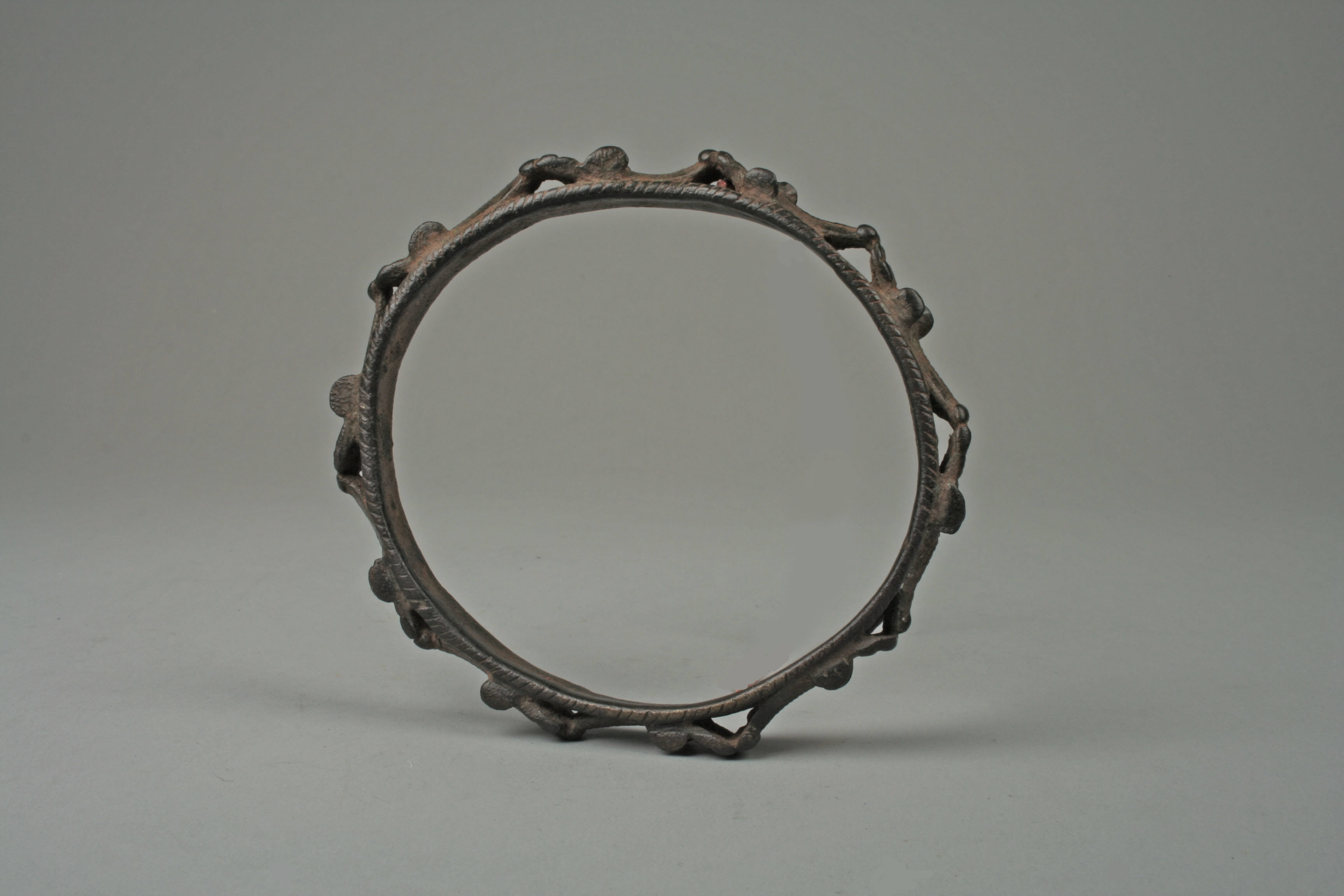
Heritage Analysis: Egba Bracelet with Crocodile Heads
The Egba bracelet, forged in brass by the Edo peoples of the historic Kingdom of Benin (present-day Nigeria), stands as a masterwork of symbolic engineering and spiritual authority. As a Lead Heritage Curator for Katherine Fashion Lab, I present this strategic standalone research to decode the bracelet’s layered meanings and translate its cultural resonance into a 2026 high-end luxury strategy. This analysis examines the object’s symbolic power, its role in historical adornment, its spiritual significance, and a forward-looking framework for luxury brand integration.
Symbolic Power: Crocodile as Sovereign Archetype
The crocodile, rendered in brass along the bracelet’s circumference, is not a mere decorative motif but a potent emblem of royal and spiritual dominion. In Edo cosmology, the crocodile (aghọ) embodies the liminal boundary between water and land, life and death, order and chaos. Its presence on the Egba bracelet—worn primarily by high-ranking chiefs, warriors, and members of the Oba’s court—signals the wearer’s ability to navigate these thresholds with impunity. The crocodile’s jaws, often depicted open or interlocked, represent the power to both protect and devour, a duality central to Edo governance.
Historically, the Oba of Benin commissioned brass castings through the lost-wax process, a technique reserved for royal regalia. The crocodile heads on the Egba bracelet thus function as a visual declaration of allegiance to the throne and a warning to adversaries. In the context of 2026 luxury, this symbolism translates into a narrative of controlled power. A high-end brand can leverage the crocodile as a motif of calculated strength—not aggression, but the quiet authority of one who commands respect without display. For Katherine Fashion Lab, this suggests a collection that emphasizes asymmetrical closures or interlocking hardware, echoing the crocodile’s jaws as a metaphor for exclusive access and guarded prestige.
Historical Adornment: Brass as the Metal of Immortality
Brass, an alloy of copper and zinc, held profound significance in the Benin Empire. Unlike iron, which was associated with warfare and Ogun (the god of iron), brass was reserved for the Oba and his court, symbolizing permanence, wealth, and divine right. The Egba bracelet was not simply jewelry; it was a portable shrine. Its weight—often substantial, with multiple crocodile heads encircling the wrist—anchored the wearer to the earth while elevating their status above commoners. Archaeological evidence from the 15th to 19th centuries shows that such bracelets were buried with elites, reinforcing their role as conduits to the ancestral realm.
For Katherine Fashion Lab’s 2026 strategy, the materiality of brass offers a tactile entry point. The metal’s warm, golden hue and its capacity to patina over time align with luxury’s current turn toward sustainable longevity. Unlike disposable fashion, a brass Egba bracelet gains character through wear—a concept that resonates with the heritage-as-investment ethos. We recommend a capsule collection of signature brass cuffs and modular link bracelets, each piece hallmarked with a crocodile head motif. To honor Edo craftsmanship, Katherine Fashion Lab should partner with contemporary Nigerian metalworkers, ensuring that the lost-wax technique is preserved and reimagined. This collaboration not only authenticates the design but also positions the brand as a steward of living heritage, a key differentiator in the crowded luxury market.
Spiritual Meaning: The Bracelet as Protective Talisman
Beyond its political and aesthetic functions, the Egba bracelet served a deeply spiritual purpose. The crocodile, in Edo belief, was an ebora—a spirit being capable of traversing worlds. Wearing its image was an act of spiritual armor. The bracelet’s circular form, unbroken and continuous, represented the cycle of life and the unending protection of the ancestors. It was common for priests to anoint these bracelets with palm oil and chalk before ceremonial use, activating their protective properties. The crocodile heads, often positioned to face outward, were thought to absorb malevolent forces, shielding the wearer from curses, envy, and spiritual attack.
In a 2026 luxury context, this spiritual dimension offers a powerful counter-narrative to the material excess often associated with high-end fashion. Consumers, particularly Gen Z and Millennial high-net-worth individuals, are increasingly drawn to meaningful objects that serve as personal totems. Katherine Fashion Lab can position the Egba-inspired bracelet as a modern talisman—a piece that combines aesthetic excellence with intentional symbolism. Marketing narratives should emphasize ritual and intention, perhaps through a limited-edition launch accompanied by a digital “activation guide” that educates wearers on the bracelet’s protective heritage. This transforms the purchase from a transaction into a rite of passage, elevating brand loyalty beyond the product itself.
2026 High-End Luxury Strategy: From Artifact to Archetype
To translate the Egba bracelet’s heritage into a commercially viable and culturally respectful luxury strategy, Katherine Fashion Lab must navigate three pillars: Authenticity, Exclusivity, and Narrative Depth.
Authenticity requires more than surface-level inspiration. We propose a Benin Residency Program, where Katherine Fashion Lab’s lead designers collaborate with Edo brass casters in Benin City. This ensures that the crocodile motif is rendered with technical fidelity and spiritual respect. Each piece should bear a certificate of provenance documenting the artisan’s lineage and the symbolic meaning of the crocodile. This transparency builds trust and justifies a premium price point—projected at $8,000–$15,000 per bracelet for the flagship line.
Exclusivity can be achieved through a numbered edition of 100 bracelets, each engraved with a unique identifier. The crocodile heads should be articulated, allowing subtle movement that mimics a living creature—a detail that elevates the piece from static jewelry to kinetic sculpture. Additionally, we recommend a private viewing experience in partnership with a select group of high-end galleries, where clients are invited to learn about Edo history while trying on the pieces. This experiential luxury aligns with the 2026 trend of curated, educational consumption.
Narrative Depth is the final pillar. Katherine Fashion Lab should commission a short documentary film titled The Crocodile’s Gaze, featuring Edo historians, living artisans, and contemporary fashion critics. The film, released exclusively on the brand’s digital platform, positions the bracelet as a bridge between eras—a conversation starter about power, protection, and the enduring relevance of African royal aesthetics. The campaign tagline, “Wear the Threshold,” encapsulates the crocodile’s liminal power, inviting the wearer to embody both grace and ferocity.
Conclusion: The Egba Bracelet as a Luxury Archetype
The Egba bracelet with crocodile heads is not a relic but a living symbol of sovereignty, spirituality, and artistry. For Katherine Fashion Lab, it represents a strategic opportunity to lead the 2026 luxury market by honoring heritage rather than appropriating it. By foregrounding the crocodile’s symbolic power, the brass medium’s historical weight, and the bracelet’s talismanic function, the brand can craft a collection that resonates with discerning consumers seeking depth and distinction. This is not fashion as ornament—it is fashion as armor for the soul, a declaration that true luxury is both seen and felt.