Executive Summary: The Tassel as a Strategic Heritage Asset
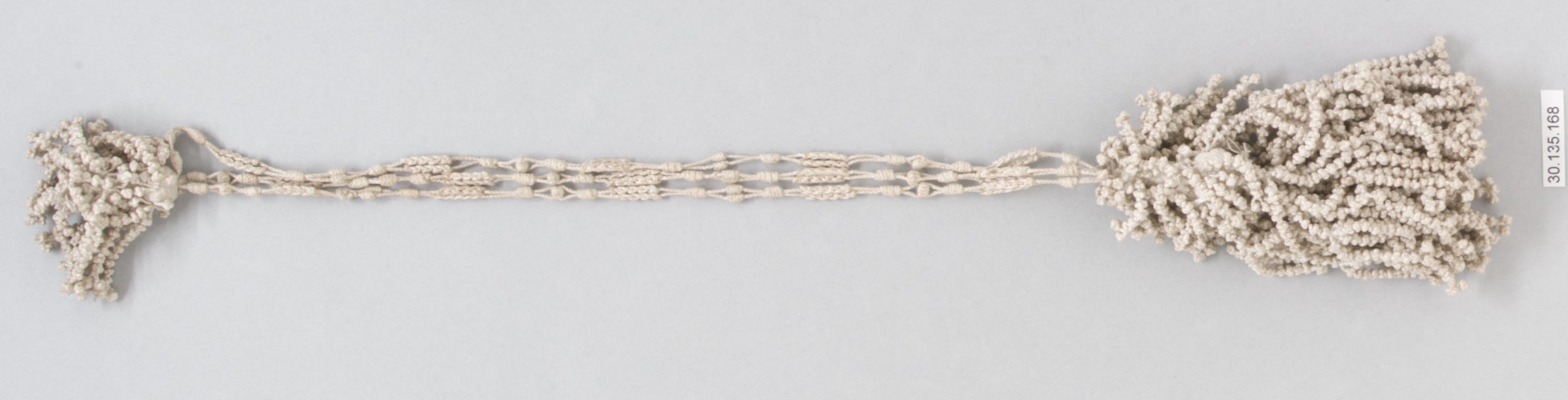
This strategic standalone research paper, prepared for the leadership of Katherine Fashion Lab, deconstructs the profound heritage value embedded within a singular artifact: a pair of linen tassels from an ancient civilization. Moving beyond superficial ornamentation, this analysis positions the tassel as a complex semiotic system—a nexus of symbolic power, spiritual meaning, and social adornment. By rigorously decoding its historical DNA, we unlock a potent framework for a 2026 high-end luxury strategy. This document argues that the authentic reactivation of this heritage, particularly through the medium of linen, can establish Katherine Fashion Lab as a house of intellectual luxury, where materiality is inseparable from narrative depth and cultural intelligence.
Archaeological Semiotics: Decoding the Symbolic Power
The tassel, in its ancient inception, was never a mere decorative afterthought. It was a meticulously crafted instrument of communication and authority. As a pendant object, its very structure—a bound culmination of threads culminating in a release—mirrored core societal principles: unity, hierarchy, and the channeling of energy or command.
The Knot as a Covenant
The point of suspension, the knot from which the tassel flows, served as a powerful ancient symbol of binding agreements, unbreakable oaths, and secured intentions. In civilizations from Mesopotamia to the Andes, knots recorded information and sealed promises. A tassel dependent from a garment, a cord, or a ceremonial staff thus transformed the wearer or object into a living testament to a covenant—be it with the divine, with sovereign authority, or with one's own social station. For Katherine Fashion Lab, this translates to a powerful brand narrative: each creation is not simply sold, but entered into, a covenant of craftsmanship, authenticity, and shared values with the client.
Fringe Authority and Social Stratification
Historical evidence from Ancient Egypt, Assyria, and the Minoan civilization clearly delineates the tassel as a regalia of rank. The length, complexity, color, and material of fringe and tassels were often codified by sumptuary laws. Linen, as a medium, is particularly significant here. In cultures like Egypt, where linen was associated with ritual purity, light, and the divine, linen tassels would have conveyed not only temporal power but also spiritual sanctity. This dual authority—secular and sacred—provides a rich template for luxury positioning. It allows for collections that speak to both external status (the visible code of the elite) and internal virtue (the values and integrity of the wearer).
Materiality and Spirituality: The Linen Vessel
The specification of linen as the medium is a critical component of this artifact's heritage value. Unlike wool or later silks, linen, derived from the flax plant, possessed a unique cosmological resonance in many ancient societies.
Purity, Light, and the Ethereal
In Ancient Egypt, linen was termed "woven moonlight," worn by priests and used in mummification for its symbolic purity and its ability to "contain" spiritual energy without contamination. A linen tassel, therefore, was not just an adornment but a conductive filament—a tool for mediating between the physical and spiritual realms. It could signify enlightenment, protection, or connection to ancestral forces. For the 2026 luxury consumer, increasingly engaged with mindfulness, authenticity, and holistic well-being, this spiritual materiality is a profound asset. It shifts linen from a simple summer fabric to a story-rich, experiential material with connotations of clarity, renewal, and sacred craftsmanship.
The Ritual of Making
The production of linen—from the harvesting of flax, to the retting, spinning, and weaving—was often a ritualized, communal act imbued with ceremony. The tassel, as the final, dynamic element of a textile, represented the culmination of this sacred process. This narrative directly fuels a modern luxury strategy centered on process transparency and artisanal reverence. Katherine Fashion Lab can champion the "ritual of making," documenting the journey from specific flax fields to the hand-knotting of tassels, thus embedding each piece with a tangible lineage and patience.
Strategic Reactivation: A 2026 Luxury Framework
The synthesized intelligence from this heritage analysis informs a concrete, three-pillar strategy for Katherine Fashion Lab's positioning in the 2026 high-end luxury landscape.
Pillar 1: Intellectual Adornment & Symbolic Storytelling
Move beyond logos. Introduce "Symbolic Signature" elements. Each collection can feature a specific tassel motif, its form (the knot structure, thread count, length) derived from a specific ancient covenant or principle (e.g., a "Harmony Tassel" based on Babylonian unity knots, a "Luminance Tassel" from Egyptian priestly garb). Accompanying each piece will be a discreet digital artifact—a short film or curated archive—decoding its symbolic DNA. This transforms the client into an initiate and curator, buying into a legacy of meaning.
Pillar 2: Linen as a Luxury Universe
Position Katherine Fashion Lab as the definitive modern arbiter of ultra-luxury linen. Develop proprietary linen weaves, perhaps integrating precious metal threads (echoing ancient royal fringes) or achieving unprecedented densities and drapes. Champion a "Linen Life" ethos, extending the material from apparel into curated lifestyle objects (home, travel) that all carry the tassel's symbolic covenant. This builds a cohesive, material-centric world.
Pillar 3: The Covenant Client Journey
Re-engineer the purchase and ownership experience to reflect the ancient "knot as covenant." This could involve bespoke services where clients select or co-create tassel elements for made-to-order pieces, physically "tying" them into the garment's story. Ownership includes membership to "The Tassel Archive"—an exclusive platform offering deep-dive heritage content, curator talks, and previews of archeological inspirations. Post-purchase care, such as professional re-knotting or linen conservation services, reinforces the lifelong, ritualistic relationship with the object.
Conclusion: From Artifact to Archetype
The pair of ancient linen tassels, through this analysis, is revealed as a microcosm of human desire: for meaning, for connection, for distinction, and for transcendence. For Katherine Fashion Lab, this artifact is not a relic but a strategic blueprint. By mastering the semiotics of the knot, the spirituality of linen, and the authority of fringe, the Lab can architect a luxury proposition for 2026 that is both intellectually formidable and deeply resonant. It is a strategy that does not borrow heritage but actively excavates and re-embodies it, offering the discerning modern client not just a product, but a portable piece of profound human history, re-consecrated for today. This is the path to becoming a true house of legacy, where every thread tells a story, and every tassel marks a covenant.