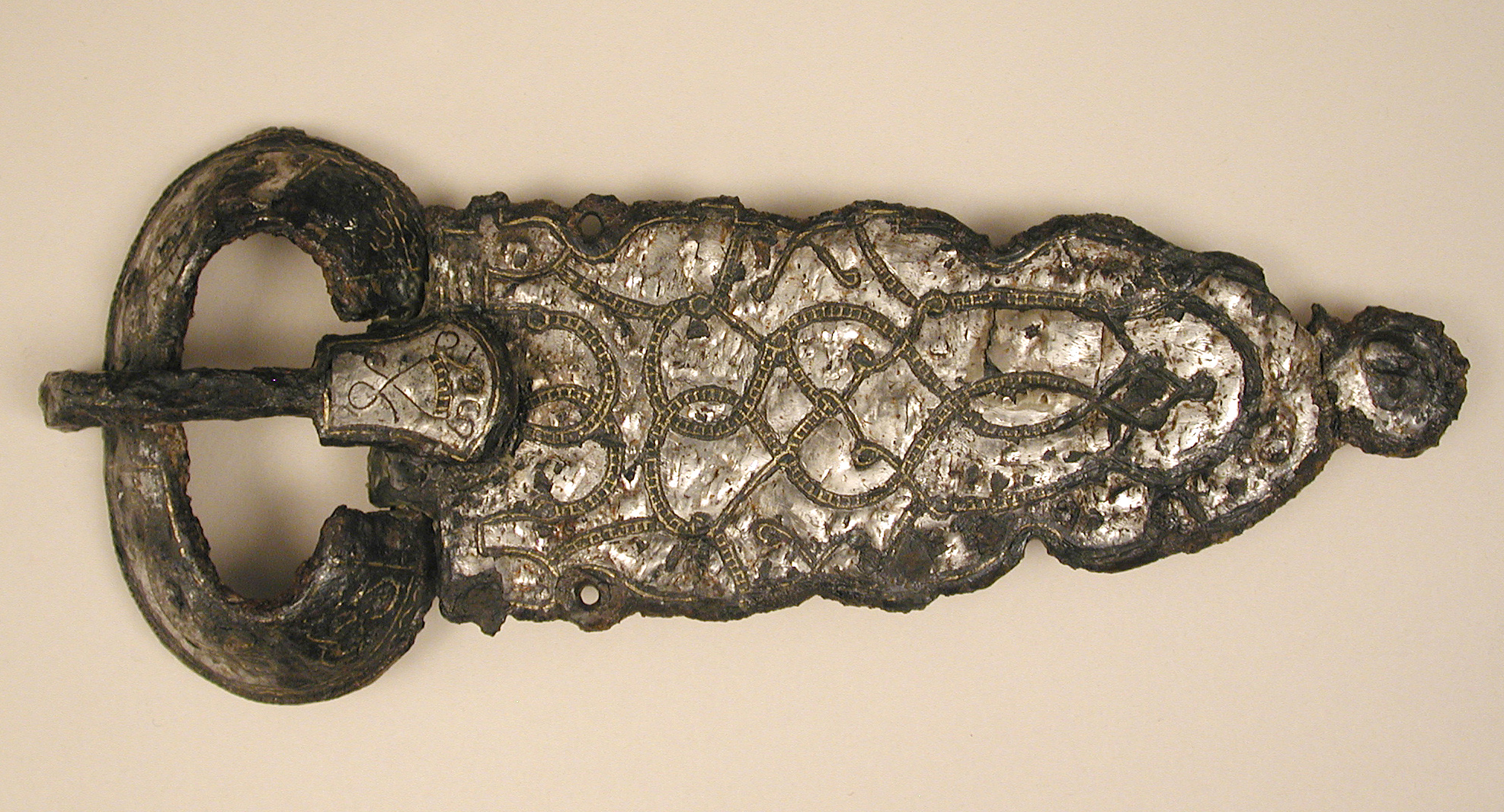
Executive Heritage Analysis: The Frankish-Burgundian Belt Buckle
This strategic standalone research paper, prepared for Katherine Fashion Lab, examines a Frankish or Burgundian belt buckle dating from the 5th to 7th century CE. Crafted from iron with silver and copper alloy inlay, this artifact represents a pivotal intersection of martial power, spiritual identity, and early medieval craftsmanship. The analysis focuses on four key dimensions: symbolic power, historical adornment, spiritual meaning, and a forward-looking 2026 high-end luxury strategy. By decoding the cultural DNA embedded in this object, Katherine Fashion Lab can harness its heritage to inform a distinctive, authoritative brand narrative for the next generation of luxury consumers.
Symbolic Power: The Belt as a Marker of Status and Authority
Martial Identity and Social Hierarchy
In Frankish and Burgundian societies, the belt buckle was far more than a functional fastener; it was a primary signifier of social rank and military authority. The iron base of this buckle, inlaid with precious silver and copper, indicates that its owner was a warrior of considerable status—likely a chieftain, noble, or high-ranking retainer. Unlike purely decorative ornaments, the belt buckle was a utilitarian object worn daily, visible in both ceremonial and practical contexts. Its prominent placement at the waist—the body’s center of gravity—emphasized the wearer’s physical strength and readiness for combat.
The choice of materials reinforces this symbolism. Iron, associated with weaponry and durability, represents earthly power and resilience. Silver and copper inlay, by contrast, introduce elements of refinement and wealth. This juxtaposition of functional strength and ornamental luxury created a visual hierarchy: the buckle communicated that its owner commanded both martial force and economic resources. For Katherine Fashion Lab, this duality offers a powerful template for modern luxury: objects that are simultaneously robust and exquisite, practical and prestigious.
Regional Distinctions: Frankish vs. Burgundian Craft
While both Frankish and Burgundian belt buckles share Germanic origins, subtle differences in design and inlay techniques reflect distinct tribal identities. Frankish buckles often feature geometric patterns and animal motifs, such as stylized birds or serpents, symbolizing protection and lineage. Burgundian examples, influenced by Roman and Celtic traditions, frequently incorporate interlace patterns and Christian symbols as the faith spread. This buckle’s iron-silver-copper inlay suggests a transitional period, where pagan warrior ethos began to merge with emerging Christian iconography. For a luxury brand, this blending of cultural influences offers a rich narrative of adaptation and synthesis—a reminder that true heritage is dynamic, not static.
Historical Adornment: The Art of Inlay and Wearability
Technical Mastery and Aesthetic Intent
The medium of iron, silver, and copper alloy inlay represents a sophisticated metallurgical technique known as damascening or niello. Artisans would carve channels into the iron base, then hammer in thin strips of silver and copper, creating intricate patterns that contrasted sharply with the dark iron. This labor-intensive process required exceptional skill, as the inlay had to withstand the stresses of daily wear and combat. The resulting buckle was not merely decorative; it was a testament to the artisan’s mastery and the owner’s ability to commission such work.
The choice of silver and copper also carries aesthetic significance. Silver, with its bright, reflective surface, would have caught light during movement, drawing attention to the wearer’s waist and emphasizing their stature. Copper, with its warm, reddish hue, provided a complementary contrast that added depth and richness. Together, these materials created a visual symphony that elevated the buckle from a practical item to a statement piece. For Katherine Fashion Lab, this underscores the importance of material storytelling in luxury design: the interplay of textures and tones can convey sophistication and power without overt branding.
Adornment as Social Currency
In early medieval society, adornment was a form of social currency. The belt buckle, along with brooches, arm rings, and sword fittings, formed part of a portable wealth system. A warrior’s status could be assessed at a glance through the quality and quantity of their metalwork. This buckle, with its precious inlays, would have been a significant investment—equivalent to multiple cattle or a small plot of land. It served as both a personal identifier and a collective symbol of tribal prestige. For a 2026 luxury strategy, this concept of portable heritage resonates strongly: consumers increasingly seek items that tell a story of craftsmanship and provenance, rather than simply displaying a logo.
Spiritual Meaning: Protection, Transition, and Cosmic Order
Amuletic and Funerary Significance
Belt buckles from this period often carried profound spiritual meaning. In Frankish and Burgundian burial practices, buckles were frequently interred with the deceased, suggesting a belief in their protective power in the afterlife. The buckle’s position at the waist—the body’s center—was thought to guard the soul’s passage between worlds. The iron base, associated with the earth and the underworld, provided grounding, while silver and copper, linked to the moon and sun, respectively, symbolized celestial guidance. This buckle may have been intended to protect the wearer from malevolent spirits, ensure safe passage, or affirm their status in the next life.
The inlaid patterns themselves likely held symbolic meaning. Geometric designs, such as spirals or interlocking loops, were common in Germanic art and represented the cyclical nature of life, death, and rebirth. Animal motifs, if present, could invoke the power of specific totems—the boar for courage, the eagle for vision, the snake for regeneration. For Katherine Fashion Lab, this spiritual dimension offers a powerful emotional hook. Modern luxury consumers, particularly in the Gen Z and Millennial cohorts, are drawn to objects that offer talismanic value—pieces that provide a sense of protection, identity, or connection to a larger narrative.
Transition to Christianity
By the 6th and 7th centuries, Frankish and Burgundian elites increasingly adopted Christianity, and belt buckles began to incorporate cross motifs and Christian symbols alongside traditional Germanic elements. This buckle, with its iron base and precious inlay, may represent a syncretic artifact—a material expression of a culture in transition. The buckle thus becomes a bridge between pagan warrior ethos and Christian humility, between tribal identity and universal faith. For a luxury brand, this narrative of transformation is highly relevant: it speaks to the enduring human need to reconcile tradition with change, a theme that resonates deeply in today’s rapidly evolving cultural landscape.
2026 High-End Luxury Strategy: Translating Heritage into Modern Desire
Positioning the Buckle as a Heritage Archetype
Katherine Fashion Lab can leverage this buckle as an archetype for a new luxury collection. The key is to extract its core symbolic elements—power, protection, craftsmanship, and cultural synthesis—and reinterpret them through a contemporary lens. The 2026 luxury consumer is not interested in mere replication; they seek authenticity, narrative depth, and emotional resonance. By positioning the buckle as a heritage talisman, the brand can create products that feel both timeless and urgent.
Strategic recommendations include:
- Material Innovation: Develop a capsule collection using oxidized iron, sterling silver, and rose gold inlay, echoing the original metal palette while introducing modern durability and hypoallergenic properties.
- Design Language: Incorporate geometric and interlace patterns inspired by Frankish and Burgundian motifs, but abstracted for a minimalist, architectural aesthetic. This bridges historical complexity with contemporary taste.
- Narrative Packaging: Each piece should come with a digital heritage card, detailing its symbolic origins and craftsmanship story. This transforms the buckle from a product into an artifact with provenance.
Targeting the Power of Symbolic Consumption
High-end luxury in 2026 will be defined by symbolic consumption—the purchase of meaning, not just objects. Katherine Fashion Lab should target consumers who value personal empowerment, cultural literacy, and spiritual depth. The belt buckle, reimagined as a unisex accessory, can serve as a statement of inner authority. Marketing campaigns should emphasize themes of protection, legacy, and transformation, using visual storytelling that evokes both medieval grandeur and modern minimalism.
Price positioning should reflect the artifact’s heritage value: a limited-edition run of 500 pieces, each numbered and accompanied by a certificate of authenticity from a collaborating historian. Retail prices in the range of $2,500 to $5,000 would align with the craftsmanship and narrative premium. Distribution should prioritize flagship stores and select online platforms with strong editorial content, ensuring an exclusive, curated experience.
Conclusion: The Buckle as a Strategic Asset
The Frankish-Burgundian belt buckle is not merely a historical curiosity; it is a strategic asset for Katherine Fashion Lab’s 2026 luxury vision. Its fusion of iron, silver, and copper inlay embodies a timeless dialogue between strength and refinement, utility and beauty, tradition and innovation. By decoding its symbolic power, historical adornment, and spiritual meaning, the brand can craft a narrative that resonates with today’s discerning consumers—those who seek not just fashion, but heritage, identity, and purpose. In an era of digital saturation, this buckle offers a tangible connection to the past, reimagined for the future.