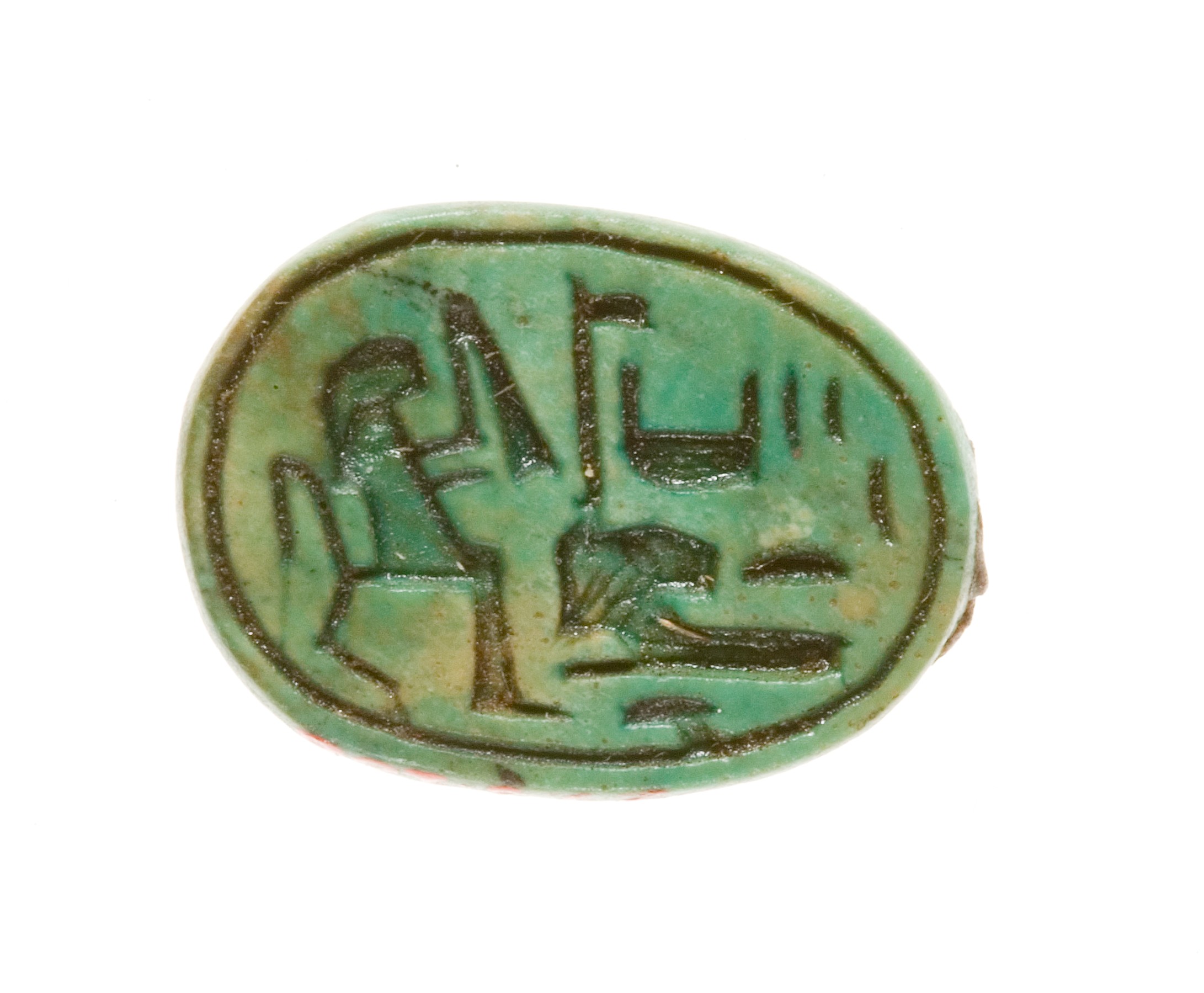
Heritage Analysis: Scarab Inscribed for the God's Wife Hatshepsut
Introduction to the Artifact
The Scarab Inscribed for the God's Wife Hatshepsut is a masterwork of ancient Egyptian craftsmanship, carved from glazed steatite and dating to the 18th Dynasty (circa 1479–1458 BCE). This small yet profoundly significant object—measuring approximately 1.5 centimeters in length—served as both a personal amulet and a royal insignia. Its surface bears hieroglyphic inscriptions that identify Hatshepsut as the "God's Wife," a prestigious religious title that placed her at the nexus of divine and temporal authority. As a strategic standalone research artifact for Katherine Fashion Lab, this scarab offers a rich repository of symbolic power, historical adornment practices, and spiritual meaning, all of which can be leveraged to inform a high-end luxury strategy for 2026.
Symbolic Power: The Scarab as a Royal Emblem
In ancient Egyptian cosmology, the scarab beetle (Scarabaeus sacer) was a potent symbol of transformation, regeneration, and solar rebirth. The beetle’s habit of rolling dung balls—mirroring the sun’s journey across the sky—associated it with the god Khepri, who pushed the sun into existence each dawn. For Hatshepsut, one of Egypt’s few female pharaohs, the scarab served as a deliberate assertion of legitimacy. By inscribing her name and title onto this amulet, she harnessed the scarab’s regenerative power to reinforce her divine right to rule, countering patriarchal norms that questioned her sovereignty.
From a luxury brand perspective, the scarab’s symbolic power translates into a narrative of authority and resilience. For Katherine Fashion Lab, this artifact embodies the concept of transformative leadership—a quality that resonates with high-net-worth clients seeking pieces that convey personal agency and timeless influence. The scarab’s dual role as a protective talisman and a royal marker offers a blueprint for creating accessories that are not merely decorative but imbued with narrative depth. In a 2026 strategy, this could manifest as a capsule collection titled "Khepri’s Legacy," where each piece is designed to empower the wearer through symbolic resonance.
Historical Adornment: The Scarab as a Wearable Statement
Scarabs like this one were typically mounted on rings, bracelets, or necklaces, serving as both jewelry and functional seals. The glazed steatite medium—a soft stone coated with a vitreous glaze—allowed for intricate carving while imitating the luster of more precious materials like turquoise or lapis lazuli. This technique highlights an ancient understanding of material alchemy: transforming a humble stone into a luminous object of desire. For Hatshepsut, wearing such a scarab was a public declaration of her closeness to the gods, her political acumen, and her role as a bridge between the mortal and divine realms.
In the context of historical adornment, the scarab exemplifies the principle of functional luxury—objects that serve both aesthetic and practical purposes. This is a key insight for Katherine Fashion Lab’s 2026 strategy, where modern consumers increasingly value pieces that offer utility alongside beauty. Consider a signet ring or a pendant that incorporates a scarab motif, complete with a hidden compartment for personal inscriptions or digital tokens. Such a design would echo the scarab’s original function as a seal—a tool for authentication and identity—while appealing to contemporary desires for personalization and security.
Spiritual Meaning: The Scarab as a Vessel of Transcendence
The spiritual significance of the scarab extends beyond its solar associations. In funerary contexts, scarabs were placed over the heart of the deceased to ensure a favorable judgment in the afterlife, as described in the Book of the Dead. The heart scarab was inscribed with spells to prevent the heart from testifying against the soul, securing eternal rebirth. For Hatshepsut, this scarab likely served a dual purpose: as a living amulet for protection and as a funerary token for her journey beyond death. This transcendent dimension elevates the scarab from a mere ornament to a spiritual anchor.
For a 2026 high-end luxury strategy, this spiritual meaning offers a compelling narrative of legacy and immortality. Katherine Fashion Lab could develop a line of "Legacy Amulets" that incorporate scarab motifs with modern materials—such as recycled gold or lab-grown gemstones—to symbolize sustainability and renewal. The spiritual resonance of the scarab aligns with the growing consumer demand for mindful luxury, where purchases are seen as investments in personal growth and planetary stewardship. By framing each piece as a talisman for positive transformation, the brand can forge deeper emotional connections with its clientele.
2026 High-End Luxury Strategy: Translating Heritage into Innovation
To operationalize these insights, Katherine Fashion Lab should adopt a three-pillar strategy rooted in the scarab’s heritage:
1. Symbolic Storytelling: Leverage the scarab’s narrative of power and rebirth to create a brand mythology. Each collection should be accompanied by a digital or physical "scroll" explaining the symbolic origins of the designs, akin to a museum label. This educational approach adds perceived value and positions the brand as a curator of cultural heritage.
2. Material Alchemy: Emulate the glazed steatite’s transformation by using innovative materials that blend tradition with modernity. For example, a scarab-shaped brooch could be crafted from recycled aircraft aluminum coated with a ceramic glaze, offering a lightweight yet durable finish. This aligns with the luxury sector’s shift toward ethical innovation.
3. Functional Spirituality: Design pieces that serve as modern talismans. A scarab-inspired cuff bracelet could incorporate a hidden QR code linking to a personalized meditation guide, merging ancient spirituality with digital wellness. This taps into the 2026 trend of tech-infused luxury, where objects enhance both appearance and well-being.
Finally, pricing should reflect the artisanal provenance of the scarab. Limited-edition pieces, each numbered and accompanied by a certificate of authenticity referencing Hatshepsut’s reign, can command premium prices while reinforcing exclusivity. By positioning itself as a custodian of ancient wisdom, Katherine Fashion Lab can differentiate itself in a crowded market, appealing to discerning clients who seek meaning as much as beauty.
Conclusion
The Scarab Inscribed for the God's Wife Hatshepsut is far more than a historical artifact; it is a strategic blueprint for luxury in the modern era. Its symbolic power, historical adornment practices, and spiritual depth offer Katherine Fashion Lab a rich foundation for a 2026 strategy that prioritizes narrative, innovation, and transcendence. By channeling the scarab’s essence—transformation, authority, and eternal renewal—the brand can create pieces that are not only worn but cherished as heirlooms of the future. In doing so, Katherine Fashion Lab will not merely sell luxury; it will curate legacy.